
Tag: The History of the Bible and Israel
-
Making Scrolls into The Bible
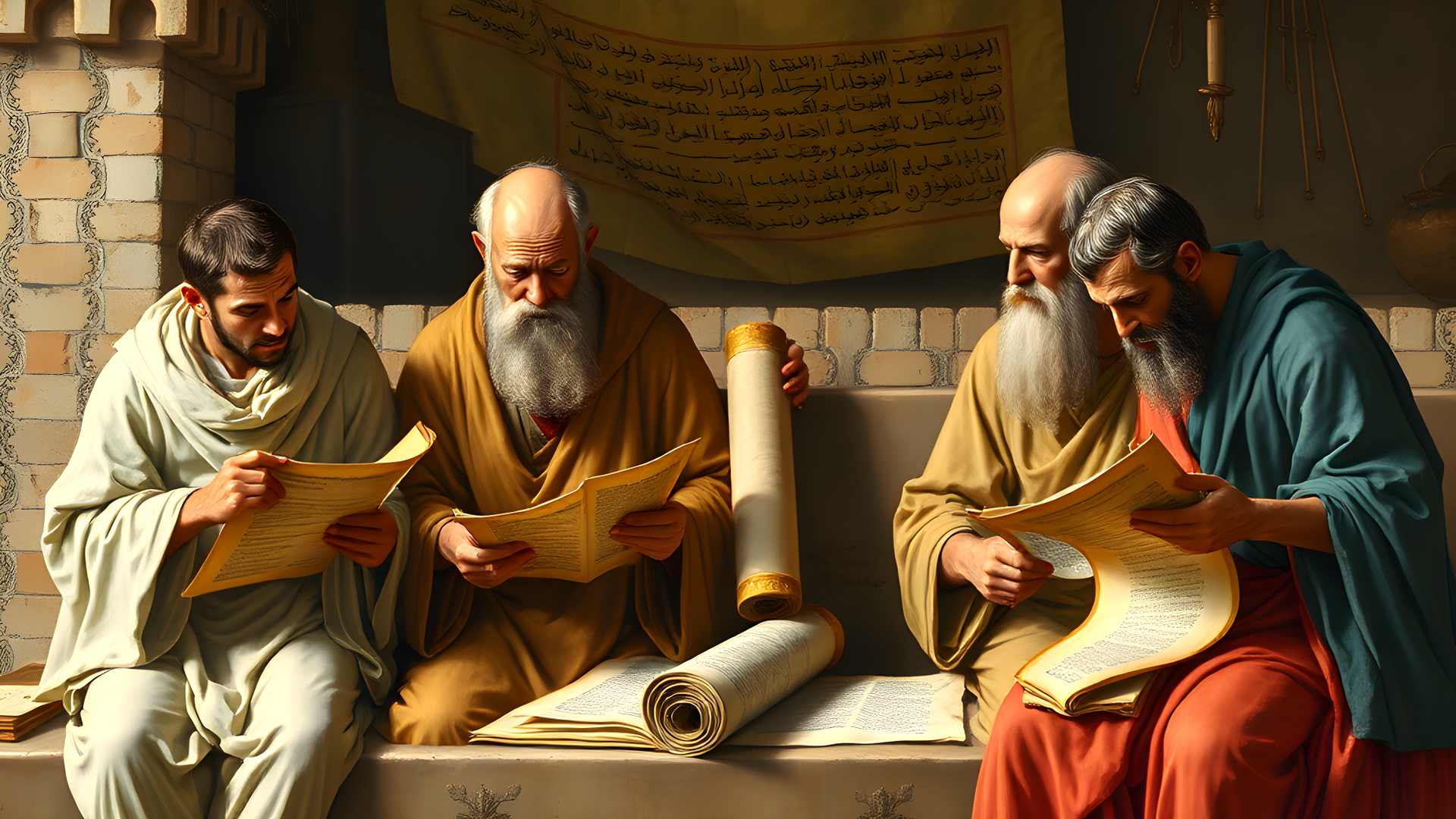
Most laypeople hold the traditionalist view that the Pentateuch – the Torah – was written by Moses sometime after Israel’s Mt. Sinai event. Further, they accept implicitly that Isaiah wrote Isaiah, Jeremiah, Jeremiah, and so forth. Key to these assumptions is that the authors were recording real-time events in Israel’s history, with no ulterior motives. This is not the general assumption subscribed to by biblical scholars, and has not been for hundreds of years. Their stock-in-trade is the study of biblical and extra-biblical texts to try to understand what material influenced the writing, where it might have been written, and…
-
The Strange Case of the Mishna

The Jewish Mishna is an enigma. Not its texts, per se. They are quite “practical” and plain as instructions on how to live the Jewish life. What is profoundly mysterious is the mentality of its authors in developing it between the 2nd half of the first century and the end of the second. You will likely notice that this time period includes the destruction of Jerusalem and its Temple in 70 AD, a sixty-year inter-war period of unrest, followed by the last Jewish-Roman war from 132-136 AD.
-
When Was The Book of Deuteronomy Written?

An old Jewish joke says that for every two Jews, you have three opinions, but that could also apply to biblical scholars. Because no two biblical scholars can agree on anything, and they oftentimes disagree with themselves, eagerly hedging their own theories, proposing counter-options. It is true that academics quarrel over theories for a living, but biblical scholarship takes it to a whole other level and is notorious for the complete lack of agreement on even the most basic views on the Bible. Who wrote what and when? For every two biblical scholars, you’ll get three opinions But there’s one…
-
The Development of Israel’s Idea of Righteousness
“Righteousness” to Israel came to mean being acceptable to God. Most know that the Ten Commandments given by God to Israel at Sinai served as the foundation for Israel’s idea of righteousness. The evolution of Israel’s received understanding of their position vis-à-vis the status of “righteous” before God was dependent on their progressive revelation by God of His will for therm. And, they had to fight through many false declarations intent on obscuring the truth to benefit men. While the Decalogue remained the bedrock of Israel’s moral imperative, their view did not remain static but developed through their history. Our…
-
Was Luke’s Gospel First?

For Bible Nerds: The “Synoptic Problem” is not a “problem” but a question: “How is it that we have three Gospels relating many of the same stories and sayings of Jesus in sometimes near-identical words?” Did they copy from each other? Did they copy from some common source we no longer have? And of these Gospels, which was written first? Luke?
-
Whatever Happened to Yom Kippur?
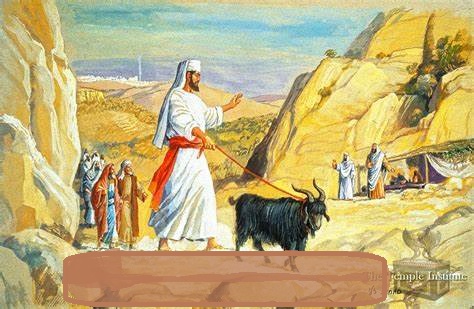
I spend virtually zero time reading the Talmud. However, I recently stumbled onto a video presentation that describes some radically strange stuff there having to do with the Yom Kippur ceremony, especially after 30 AD. Especially for Christians, this is a must-know piece of Jewish legend.
-
How Old is the Hebrew Bible?
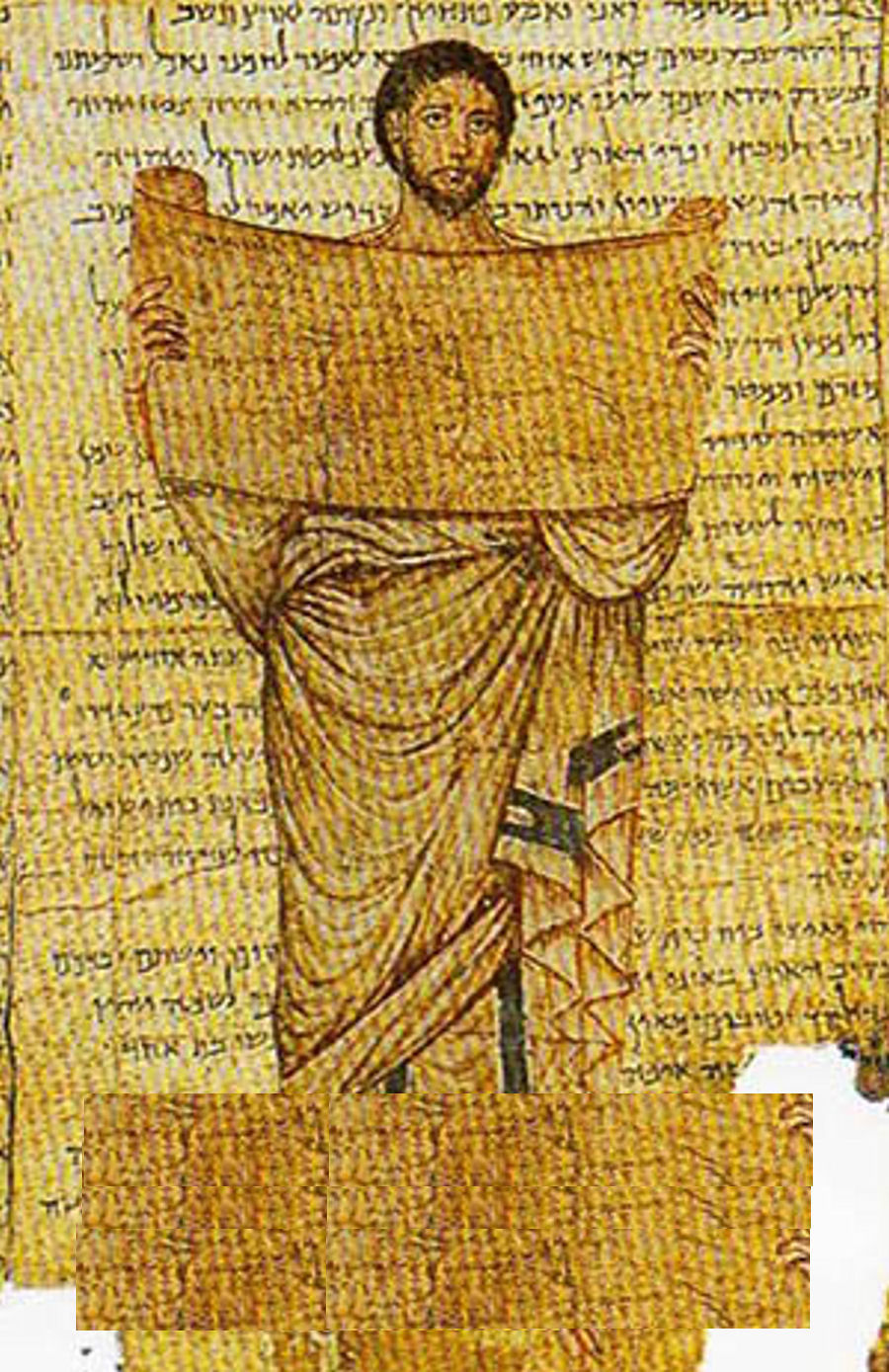
How old are the books of the Hebrew Bible, and why should we care? Since the Bible is likely the most influential book ever written, we deserve to know the truth of its composition and history.
-
Searching for the Bible’s Sources

Many laymen dispute that the Pentateuch was written by several distinct authors. Biblical scholars don’t. But they disagree on who those authors were and what they wrote. If we stipulate that the authors of the Documentary Hypothesis wrote the Pentateuch, what can we discover about their backgrounds and worldviews? Let’s see.
-
Searching for the Bible’s Sources

Many laymen dispute that the Pentateuch was written by several distinct authors. Biblical scholars don’t. But they disagree on who those authors were and what they wrote. If we stipulate that the authors of the Documentary Hypothesis wrote the Pentateuch, what can we discover about their backgrounds and worldviews? Let’s see.
-
The Origins of Judaism

When did “Judaism” begin to be widely practiced (i.e. widespread adherence to what we today recognize as the rules and calendar of the Pentateuch)? Irrespective of when the individual books of the Pentateuch were written, when did the majority of Judeans begin to live them out? The answer is quite shocking.
-
A Comparison of the Decalogues of the Moses Scroll, Exodus 20, and Deuteronomy 5
Comparison of the Decalogues of the Moses Scroll, Exodus 20, and Deuteronomy 5.
-
Moses’ Real Words?
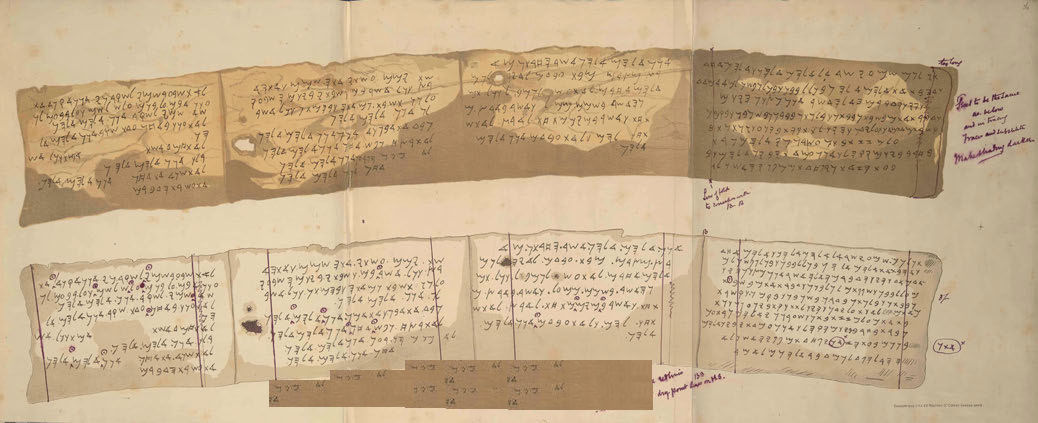
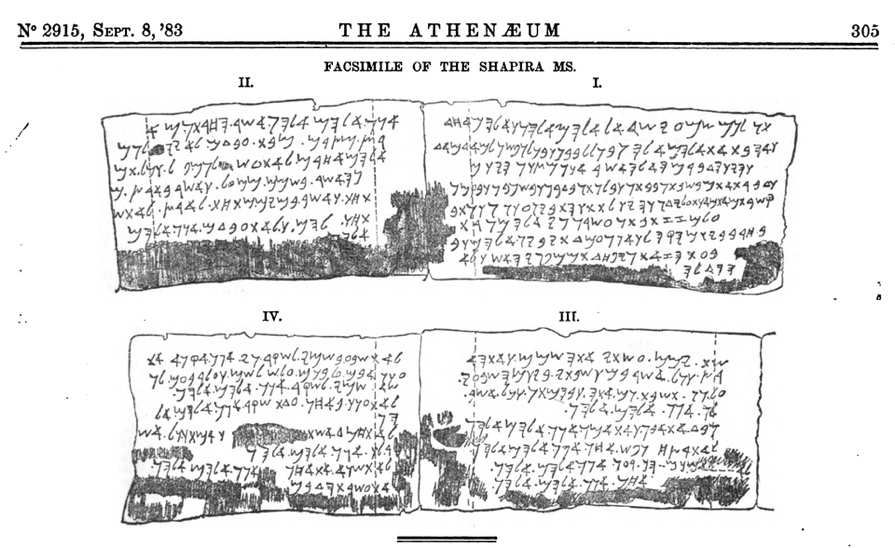
In the 1880’s an antiquities dealer in Jerusalem came into possession of an apparently ancient “scroll” consisting of fifteen strips of leather containing paleo-Hebrew texts. Within a period of five years of their “publication”, the fragments had been declared forgeries by “experts” in Europe, and shortly thereafter, the antiquities dealer, Moses Shapira, committed suicide in a Rotterdam hotel room in 1884. But what if they were authentic? That’s the question I want to pose and try to answer.
-
The Shapira Scroll Ten Words, Blessings, and Curses
Credit to Ross K. Nichols https://www.academia.edu/48985559/The_Decalogue_of_Moses_W_Shapiras_Leather_Strips?sm=b
-
Which Way to Horeb?
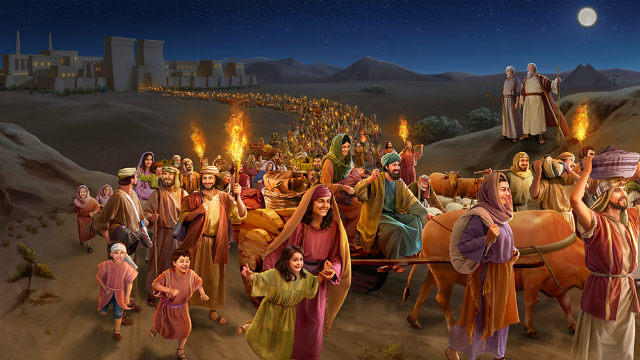
The Exodus itinerary is a riddle wrapped in a mystery inside an enigma. We don’t know where virtually any of its stopping points were. At best we know something about what was there, and, rarely, how long they traveled to get there. And, of course, there’s the inertia of the traditional explanation (i.e. via Sinai’s St. Catherine’s) and its advocates more or less dominating the discussion (and generating quite emotional reactions to any proposed alternative). Truth in advertising: I don’t subscribe to the most popular theories that have Israel crossing the Gulf of Aqaba either at Nuweiba or at its…
-
Israel’s Claim to the Land

Given the current situation in Israel, not to mention the context of the disputes over the past 80 years, I think it is worthwhile to evaluate what the Bible has to say about Israel’s claims to their land today. The Bible is overflowing with hundreds of instances of God promising the land of Israel (“Canaan”) to the Israelites, both post-Egypt and post-Assyrian and Babylonian exiles. Certainly, it is a popular opinion today that modern Israel – the nation established by the UN in 1948 – has some form of biblically mandated franchise on these promises of the land known as…
-
Who Wrote the Hebrew Bible?
Is it possible to figure out how the Hebrew Bible was written, by whom, and when? Those who study the text for a living would say “yes”. Among them is Richard Elliot Friedman, in his 1987 book “Who Wrote the Bible?” (updated in 2019). In it, Friedman makes an absolutely fascinating and substantially believable case for the origins and authorship of the Hebrew Bible. In this note, we’ll try to outline his major findings and summarize some of the textual data and analytical reasoning he uses to come to his conclusions. And, as we have done previously, we will ask…
-
A Reassessment of the Source(s) and Authenticity of the Hebrew Bible

All scripture is inspired by God and useful for teaching, rebuking, correcting and training in righteousness, that the man of God may be complete, equipped for every good work” (2 Tim 3:16-17). There is a festering dissonance today between the traditional view of the Bible by people of faith (both Jew and Christian), and the data uncovered within its text by those scholars known as Text- or Source-critics – people who study only the text to learn its dating, and authorship/sources. But, (and this will be my key point) I have concluded that the text-critical data concerning when or by…
-
Wrestling With the Origins of the Pentateuch

Modern Biblical scholarship has concluded that the majority of what we now have in the Biblical Pentateuch was substantially written in the seventh to fifth centuries BC. This creates a formidable problem for the traditionalist view (of both Jews and Christians) that holds that these foundational works were written by Moses, in Moses’ timeframe. But should it?
-
Did God Want a Temple, Sacrifices, or a Monarchy?
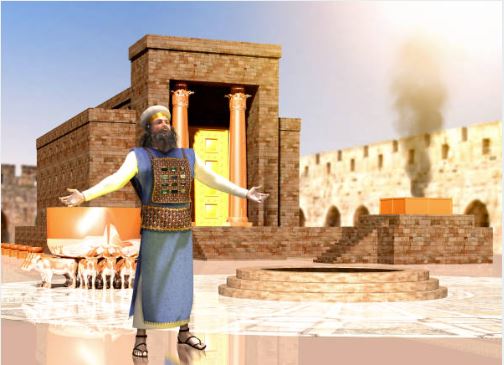
People casually familiar with the Hebrew Bible and its narrative of the history of Israel generally accept that the cultural symbols and practices that developed in that history were prescribed – even commanded – by their God Yahweh (YHWH). A little study, however, reveals a much more ambiguous situation.
-
Did God Deceive Israel?

People who read the Bible somewhat seriously are well aware of the Biblical story leading up to the nation of Israel; their near-total rejection of their redeeming God; His attempts to retrieve them from their apostasy; and their ultimate destruction as a nation and collection of tribes in 70 and 135 AD. What some may fail to notice is that even before they entered the “promised land”, God had foretold their apostasy and that, as a result, they would endure the curses articulated in His covenant made with them at Horeb.
