
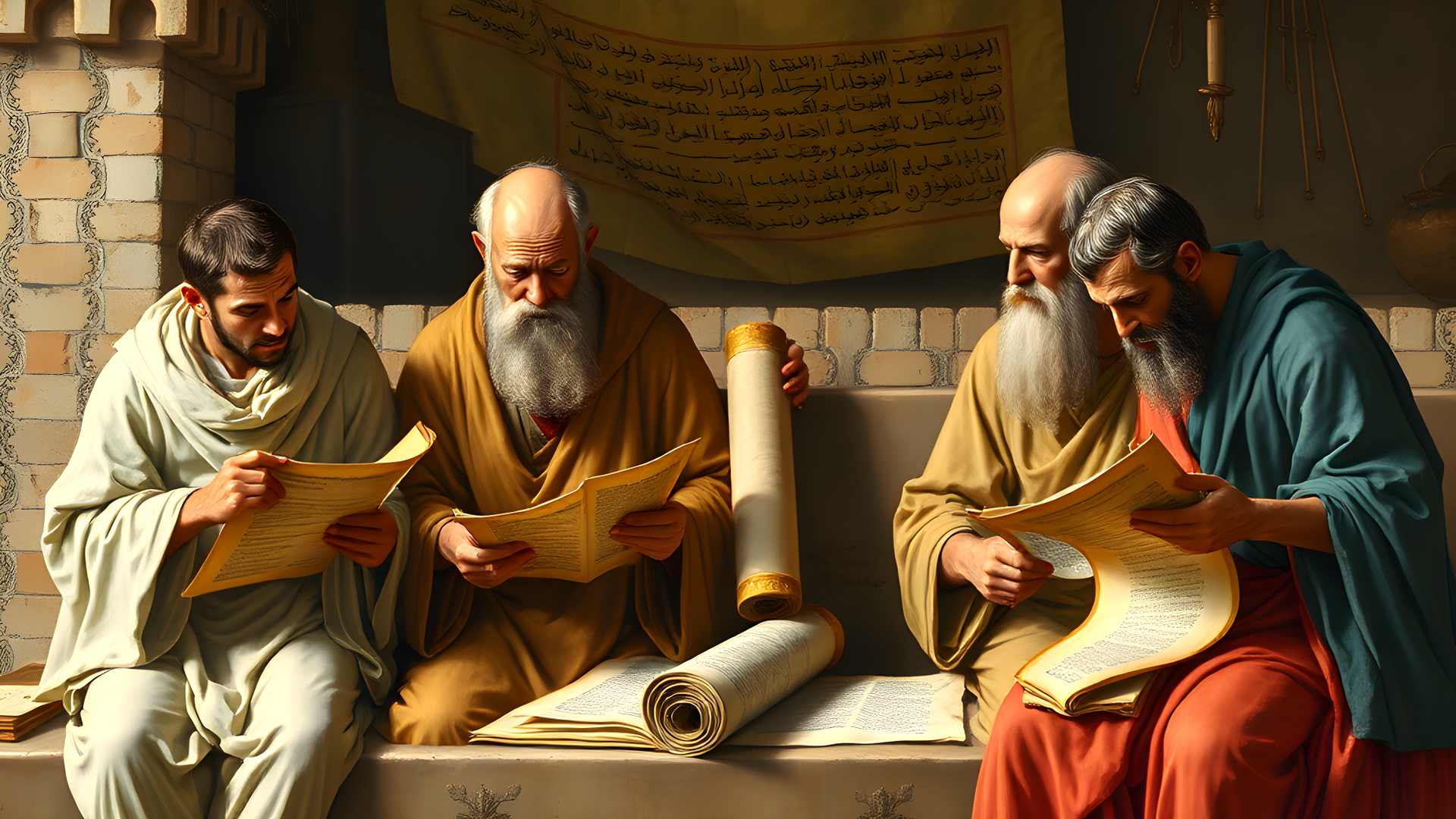
Introduction and Paradigm
Most laypeople hold the traditionalist view that the Pentateuch – the Torah – was written by Moses sometime after Israel’s Mt. Sinai event. Further, they accept implicitly that Isaiah wrote Isaiah, Jeremiah, Jeremiah, and so forth. Key to these assumptions is that the authors were recording real-time events in Israel’s history, with no ulterior motives.
This is not the general assumption subscribed to by biblical scholars, and has not been for hundreds of years. Their stock-in-trade is the study of biblical and extra-biblical texts to try to understand what material influenced the writing, where it might have been written, and when. Some even try to propose who wrote what material. It’s an inexact art, not a science. This piece tracks the work and conclusions of one such scholar.
Background
In antiquity, Jews never read Hebrew “scriptures”. In fact, they never read anything, except for a tiny group of scribes, some priests, and other literate officials. By the time its scrolls became treated as authoritative for the Jews (a gradual process starting in the 3rd century BC) and began being read in Synagogues (1st century BC), it was the Greek LXX they were hearing, if anything. The LXX would dominate Jewish studies until about the 10th century AD (the Aleppo Codex). Tracking what was considered Israel’s (and Christianity’s) “scriptures” throughout their formation and adoption can help us not only understand them better but also understand how different segments of the population thought of them.
Michael Satlow has provided a fascinating interpretation[i] of the facts that we know about the Bible’s formation and adoption, filling in the gaps in our factual knowledge (which are many) with his plausible and scholarly speculations. It makes for a thought-provoking historical tour through the development of the texts that both would ultimately end up in our canonical Bibles, and those that would be left out.
Its important contribution is in revealing the influence of Israel’s (and Christianity’s) history on the texts, and vice versa. Readers may be surprised (as I was) to learn just how fraught the process of the adoption of a set of evolving texts as authoritative and, therefore, used for guidance and recognized as normative law was. The process of giving birth to those scrolls took something like 800 years (substantially 600 BC to 200 AD)[ii], during which they were created and nearly continuously revised and expanded. The process of deciding which of them to adopt and subsequently venerate as “scripture” took an overlapping 1200 or so years (200 BC to 1000 AD).
Book Organization
Satlow breaks down the history of Israel’s scriptures into several periods in attempting to describe the politics, the nature of the surrounding cultures, and the influence of their writing in the period. From this, he offers some speculations as to the likely scribal practices of the day and the scriptures initially developed in each period, if any. More importantly, he describes how the then-current Israelite culture received either specific scriptures or the idea of the role of scripture in general. In assessing the latter, the author distinguishes between the texts’ literary, oracular, and normative authority:
- Literary Authority he describes as being considered valued and preserved as important literature, but not yet treated as sacred, binding or possessing legal authority (e.g., The “Song of Deborah”, the Psalms, possibly Deuteronomy’s law code prior to Josiah invoking it in the 7th century.)
- Oracular Authority refers to those scrolls thought to contain the words or revelations of God, suitable for use as guidance (but not yet law). The canonical prophetic scrolls, before being adopted as “scripture”, were thought to expose God’s will.
- Normative Authority was conferred on those writings that the culture largely acknowledged as prescriptive of proper legal, civil, or religious doctrine, possibly understood to be based on God’s revealed will, that were therefore mandated by the culture’s authorities.
But as we’ll see, writing of any kind was extremely rare even among the literate elite. Kings ruled and judges judged unencumbered by written rules until late into the 2nd temple period. And even then, only a tiny cadre of scribes and officials had any familiarity with any texts that dealt with Israel’s history or law. This despite the widespread, apparently oral, acknowledgement that God had spoken to their ancestor Moses at some point in their past, giving him what would be identified as the “Law of Moses”. But since nobody could read, that “law” became whatever those writing the scrolls said it was until someone (only Josiah and Ezra that we’re told of) actually read it to them.
In dealing with each period, we’ll touch briefly on its political setting and (possible) writing projects[iii].
Historical Context
To appreciate the story of the development of the Bible, we must first rid ourselves of our modern concepts of textual writing/development, and replace them with those of the Ancients:
- We typically think of writing a book, or a short story, or a poem as a process of conceiving the framework of the work, and then building our text onto that skeletal framework to reach an endpoint. That work will usually then undergo professional editing to improve its quality before it is ready to be distributed to the literate public. The goal of this writing is to be published, and so read..
This is not how ancient scribes thought about writing. In constructing a scroll, as often as not, they had no specific endpoint in mind. For example, the Epic of Gilgamesh is known to have undergone literary changes for 1500 years![iv] This is particularly true of what would become Israel’s “sacred” scrolls, or “scripture”. These were works that were extensively revised over time as political or cultural conditions changed, or as new scribes picked them up to copy them, and inevitably, revise them. Importantly, for the first few generations of their existence, these scrolls had no audience outside of their scribal authors (and perhaps a few officials) who sought to have them reflect what was to them either an ideal or simply an entertaining variant of a well-known story.
Erich Gruen, in his “Scriptural Tales Retold”[v], presents a well-documented case that Second Temple scribes’ proclivity to produce sometimes minor, but often major, variants of existing scrolls in their copying was due to their inventiveness and idealism in a cultural setting that prized novel variants of known, as well as uplifting new tales. He documents 19 examples of variations that shine a light on scribal creativity, and the author’s worldview, as the motivations behind such changes and adaptations, not apologetic refinements or exegesis/interpretation of the material (à la rabbinism).
It was common for scribes to write a text based on familiar characters or stories from the nation’s past and extend them in completely new directions. For example, Josephus completely invents a tale of Moses traveling to Ethiopia and takes great liberties with his retelling of Israel’s history, adding to it and leaving out inconvenient narratives (like the molten calf at Sinai story). Similarly, the DSS Genesis Apocryphon presents a completely mythical interpretation of the Genesis narrative, as does the Book of Jubilees (whose author claims divine authorship of his story that was originally given to Moses by God at Sinai). As Gruen points out, these are haggadic-, not halakhic-type interpretations. But they reflect scribal proclivities in Second Temple Judaism.
- When we think of writing history, we think of a documentary process involving extensive research of the political, economic or religious forces at play in a period or region about which we’re writing, which provides the context for a comprehensive set of facts.
The ancients didn’t think of their history as a set of historical facts to be expressed. Rather, they thought of their history as a narrative tying together the oral stories of that history that they had heard passed down to them. They then suitably modified the narrative to bring out symbolic points important to them and their time, to extol the role of a particular figure featured in that oral history tradition, or to simply add a new interpretation the scribe thought interesting and engaging.
All ancient scrolls were written by scribes who comprised a tiny number of people who were both literate and capable of representing their (usually creative) thoughts in writing. Because of these skills, they were, by definition, members of the ruling elite in their societies. Nearly all the population was illiterate and so communicated exclusively orally concerning their culture and history.
Ancient historical narrative (legendary narrative) was storytelling. It was designed to emphasize the elite class’s evolving view of the actions of its heroes and its God important to them, not to record literal history. Their literate audience until the 1st century was tiny and insular – just the elite.
Surprisingly, the scribes’ views we see represented in the biblical text turn out to be quite balanced in its judgments of that history: as often condemnatory (especially the prophets) as supportive[vi]. One would expect that those recording interpretations of their nation’s and hero’s stories would tend to emphasize its positives. Remarkably, this is often not the case in the Hebrew Bible’s canon. What we find instead is a refreshingly frank and blunt critique comprising much of Israel’s historical narrative.
Beyond the timeframe of the book we’re summarizing here, we’ll see that by the second century AD, essentially the authority of all the texts that would end up in the Tanakh was supplanted by the Rabbinic system. At that point the texts weren’t rendered unimportant to the Jews, just less important than rabbinic interpretations, pronouncements and counsel for guiding people’s lives.
Historical Commentary
The following discussion is broken down into the historical time periods used by Satlow in his analysis. Each period’s descriptive text can be displayed by “clicking” on its “Click Here” text. Texts that are bolded are thought to have been written/revised within the period in which they appear.
Pre-Exilic/Monarchic Israel (Northern Tribes) – 922-722 BC
Click Here
The important story of this period was the separation of the northern 10 tribes from the southern two tribes, ending the United Monarchy in 922 BC (others claim 931 BC). We can speculate that, like in any other royal court, the significant events for the monarchs of Judah and Israel were recorded in scrolls like “the Book of the Acts of Solomon”, “the Book of the Chronicles of the Kings of Judah”, and “the Book of the Chronicles of the Kings of Israel” (the northern Kings) which we see referenced in the Bible.
But whether written down or oral, clearly the nation of the twelve tribes had developed stories recounting their formation, their ancestors/heroes, and how they now found themselves in the hill country of Canaan. Satlow speculates that the story of Jacob and his family is likely an allegory of the Israelite strategy of forming a unififed, national identity out of a heterogeneous population. Its “wrestling” scene serves to explain the name of the people descended from him. Similarly, the development of the Joseph story and Ephraim/Manasseh stories was likely meant to explain the prominence of Ephraim among the peoples of the hill country (the favorite son of Joseph, who was the favorite son of Jacob/Israel) over against the relatively weak Judah and Benjamin (Gen 44), something not unexpected from northern tribes’ authors.
The versions of these stories we have today in Genesis are simply the last versions resulting from a long history of continuous revision and refinement. It’s unclear how widely these stories were known through their telling. They may have been known almost only to the elite.
In this period, Israelites (at least in the north) saw no contradiction between the worship of YHVH as their national god, and private worship of other deities[vii]. Over against this idolatrous behavior, and possibly as an eventual antidote to it, Satlow speculates that there was a small scribal group of Yahwists in the north that produced the beginnings of the “Covenant Code”, a version of which would eventually appear as Ex 21-22, as a “scribal exercise”.
Other scribal exercises included the copying of famous documents, possibly the Code of Hammurabi. So, the subject matter of such documents would have been familiar to them. The author speculates that this group of northern scribes escaped to Jerusalem before the Assyrian destruction in 722 BC, and as a result, significantly increased the scribal skill base in the south. They would have brought with them their practice and court scrolls, thus seeding the scribal tradition and library of Jerusalem[viii].
Also in this period, scribes recorded the statements of the early prophets, like Amos and Hosea, preserving those as oracular documents. And, while not a northern prophet, this period is thought to have been the period of the writing of “First Isaiah” (Chapters 1-39), prophesying Israel’s demise.

Pre-Exile/Monarchic Judah – Prophetic Eschatology – 722-586
Click Here
The Assyrian destruction of the House of Israel caused a significant influx of Israelites into Judah. Some believe there were as many as 15,000, many settling on what is now the “Western Hill” of Jerusalem, based on its archaeological record. At that time, that district would have been outside the city walls. Apparently, King Hezekiah thought highly of this group, as he ended up naming one of his sons after the northern patriarch Manasseh.
Little written material existed in the south until the influx of the northern scribes. Their presence would have encouraged the literate elite of Judah to join the scribal practice.
Satlow notes:
“Scribes were scholarly and creative…When they did sit down to copy older texts – whether because the text was in poor condition or because they wanted a copy for their own use – they ‘corrected’ and revised them according to their tastes. This is the process that apparently grew into the creation of the core of the book of Deuteronomy.” (By which he’s referring to its Law Code of chapters 12-26.)
It’s during this period (625 BC) that the scribes tell us the story of the priest Hilkiah “finding” the “Book of the Law” in the Temple, during the reign of King Josiah (2 Kings 22:8-11). This finding is framed as leading to the implementation of extensive reforms by the King in keeping with the laws found in the discovered scroll (that, the narrative goes, had been unknown for several centuries).

What is strange about this story is that having implemented the resultant sweeping reforms, destroying the people’s “high places”, idols, and their priests, insisting that all sacrifices be to worship YHVH at the Temple in Jerusalem, etc., we don’t find any follow-on narrative about the effects of these reforms. The scribes writing Kings (2 Kings 22), after noting that Josiah implemented Passover observance, simply move on to Josiah’s death in the next chapter, and then drop the whole thing after noting the return to idol worship under Josiah’s son, Jehoiakim! The whole story is very curious.
It is for this reason that scholars have speculated that the scroll of Moses wasn’t found but rather was written and revealed under Josiah. But the lack of follow-through seems to call that conclusion into question. Satlow has speculated that, in fact, the Josiah/Hilkiah story is an allegory for the production of the scroll of Moses in the Hasmonean period, a time of intense idol worship, despite the 2nd Temple having been in operation for 400 years.
Satlow theorizes that this northern scribal cadre was responsible for the generation of the Law Code that would eventually appear as chapters 12-26 of Deuteronomy. It’s not clear why these scribes were focused on law scrolls at this time, but one possible connection is the reported reform efforts of King Hezekiah in this period (8th century BC). These laws, plus Deuteronomy’s emphasis on a unique, central place of the worship of YHVH, could either have been the cause or the effect of Hezekiah’s reforms.
The author also speculates that in this period, Deuteronomy was a “scribal fantasy, a learned vision of how the world should be if they” — the elite scribes from, or influenced by, those from the north — “were to be in charge.” It was at this time and by these people, says Satlow, that the historical narrative of Israel at Sinai and in the wilderness before entering the land (Exodus) was prepended to its adapted Covenant Code section.
He goes on to theorize that the same author/group then likely authored the Deuteronomic history (Deuteronomy, Joshua, Judges, Samuel, Kings) in which the apostate (to them) Kings of both Israel and Judah are castigated. To them, a bad King (i.e., one who violates their idealized world) results in curses by God on his nation, while a good King results in blessings from God on the people. The purpose of this narrative, apart from being a scribal exercise, was to form within the court – the elite – a vision of not only what Israel’s history was, but how it should act in the future, explaining why they’ve experienced cataclysm (for not acting as their deity prescribed), and how Israel would ultimately be redeemed by God.
And, as for nearly all texts authored by the scribes, there would have been multiple versions of each, each version with its own idiosyncrasies.
Babylonia, Persia & Yehud – 586-520 BC
Click Here
Babylon’s control of Israel following their exile was quite short-lived. It was defeated by Cyrus and Persia in 539 BC.
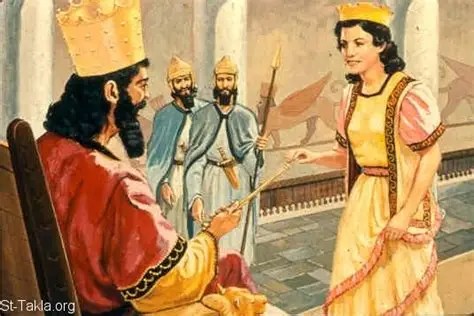
The book of Esther is chronologically a member of this period. Notably, it has no mention of God or Torah. It presents an idealization of life under Persian rule for the Jews. And it is during this period that the distinction between “Judean” (resident of the geographic region) and “Jew” (one who practices Jewish “laws” and customs) begins to blur, ultimately settling on just Jew.
Yehud was the name of the Judaic region given to Judah by Persia. It was administered during their control by an appointed Governor (of whom Nehemiah was likely the most well-known). The destruction of the Temple by the Babylonians forced the elite and the people to develop other ways of worshipping their God.

We should assume that, in the absence of the Temple rituals, the importance of the texts that the scribes brought with them was elevated. It’s also clear that the experience itself was projected into scribal texts of the time (e.g., “8O daughter Babylon, you devastator!, Happy shall they be who pay you back what you have done to us!; 9 and dash them against the rock!” – Ps 137:8-9)
However, as Satlow points out, we know “absolutely nothing about the state of the Judahite community in Babylon in Cyrus’s time.” We can surmise, however, that the Judahites were apparently quite comfortable in their exile, as evidenced by the relatively small number of their descendants who elected to return to Judah when they were offered many opportunities to do so. In any event, life under Cyrus was apparently far more comfortable than under the predecessor Babylonians, as the elite seemed to fawn over him in their writings (e.g., 2 Ch 36:23[ix], Is 45:1).
Persia was not a “hands-on” ruling authority. It didn’t attempt to impose a single set of laws on all the provinces of its empire. Rather, it picked judges, no doubt because of their stature and reputation, to rule through the application of the provinces’ own laws. For freed Israel, this arrangement would have encouraged the elite and scribes to both finalize their evolving law codes and to present them as authoritative and comprising a legitimate body of law. These “laws” wouldn’t be the basis of any given judgment, but they would be used to inform the judge of his province’s sensibilities.
It is quite simple, then, to see the development of Deuteronomy’s Law Code, the Exodus Covenant Code, and perhaps a good chunk of the Levitical Temple laws as a response to this corporate need for a guiding (though not yet normative) law code. And it would have been important in positioning these law texts as authoritative, for the nation to assign their origin, and so assumed authority, to Moses’s divine revelations (though it is not at all apparent that the phrase “Law of Moses” yet elicited instant acceptance in the 6th century as it later would).
If this push for a basis for self-governance was, in fact, the genesis of much of the law of the Torah, it is quite fascinating that not only did it achieve its immediate purpose of providing a legal framework for the nation’s civil law, but in sourcing it to Moses, and documenting the story of Moses’s delivery of Israel from Egyptian bondage (as seemingly a metaphor of how Cyrus had freed and delivered them), the elite were also simultaneously giving Israel a historical narrative (its veracity being a separate matter.)
A key contribution in this period was Deutero-Isaiah’s (chapters 40-55) adamance on monotheism – that Yehudis (Jews) had one God to whom their exclusive allegiance and obedience were required. Before this time (in the chronology of the narratives in the Torah writings), the situation had been much looser, with YHVH taking the top position among many gods (monolatry), all of whom were worshipped by some. Deutero-Isaiah seems to be an attempt to reform that practice as reflected in Hezekiah’s reforms (2 Kings 18:22).
And though the books of Ezra and Nehemiah came later, they identify a very interesting distinction made by the returning Jews between themselves and the peasant Judeans who had not been exiled, referring to them as ‘am ha’aretz — “people of the land”. These were the same people who, having offered to help rebuild the Temple, were rebuffed and called “adversaries” of Benjamin and Judah (Ezra 4:1–2) and “mixed peoples” (Ezra 9-10, Neh 13), meaning impure due to marriage with non-Israelites, violating the emerging “covenant” that was beginning to gain some social traction during the period of the writing of Ezra/Nehemiah (3rd-2nd centuries BC).
So, to the returning Babylonian Jews, not all Judeans were Jews. This likely marks a dramatic shift in the culture of the exiled Jews, who themselves were predominantly elites. Some prominent leaders among them (likely the out-of-work priestly families and their scribes) were serious about enforcing monotheism, and serious about enforcing what had been developed of their laws, certainly as regards intermarriage and no doubt ideas of purity and set-apartness.
Ezra and the Pentateuch: Persia & Yehud 520-458 BC
Click Here
This period marked the returnees’ concentration on resettling the land and rebuilding the Temple, a project that dominated the Jews’ energies until its completion in 516 BC.
During this period, we find scant references to the “Law of Moses” (e.g., Mal 4:4). However, it was in this period that Ezra (who arrived in Jerusalem in 458) is reported to have read “the book of the law of Moses” to all the people there —Neh 8:8 (“from early morning to midday” – Neh 8:3). During the reading, Ezra’s associates “helped the people to understand the Law” (Neh 8:7), giving “the sense” of it “so the people understood the reading”.

By this time, the “Law of Moses” label had evolved to encompass whatever scrolls the scribes deemed “sacred”. So, this reading may have been a smorgasbord of scriptures, some of which would later find their way into the Pentateuch. But the note describing Ezra’s associates helping the people “understand the reading” seems to imply this may have been the first time that they had ever heard those scrolls read.
Before leaving Babylon, the priestly/scribal elites had retrieved the scrolls held in trust by the disbanded Yehudit court. We have no idea what those scrolls consisted of. Eze 6:19-22 describes the first festival observance back in the land — of Pesach (Passover) and unleavened bread, followed by Sukkot (Neh 8:13-18), likely an observance of Yom Kippur (implied in Neh 8-9) and possibly a Purim observance, related in the fictional Esther (9:20-32). So, it is likely that the returnees at least had scrolls in which these festivals were prescribed (e.g., Passover – Ex 23:15, Lev 23:4-14, and/or Num 28:16-25; Sukkot – Ex 23:16, Lev 23:33-43, and/or Num 29:12-38; possibly Yom Kippur – Lev 16, Num 29:7-11; Purim – Est 9:20-32. Of course, this doesn’t mean they had scrolls of the complete Torah books, only that they had enough definition of these festivals to observe them.
Satlow makes the case here that the scriptures Ezra read from, and the instruction to read them, are largely centered on Deuteronomy. It covers the main festivals that are recorded as later being observed, and could be read in a morning, as is reported. However, he notes that some festivals noted by Ezra seem to be based on “P” material from elsewhere in the Pentateuch.
Ezra’s reading of his scroll is a hugely significant marker in the progression of Israel’s scripture from something little more than idealized fantasies of elite scribes. For Ezra, the priest, the Pentateuch-based scriptures that he read from his scroll amounted to a public declaration of their near-normative role in the life of the rebuilding nation. This event is unique in Judah’s history (if we set aside, for the moment, the Josiah story in 2 Kings 22-23) of using a text to inform the nation’s behavior. Not priests. Not kings. Not foreign “governors” or simply cultural traditions. A text. Whether this was literally true in 458 BC, or a couple of hundred years afterward when the statement is thought to have been written, it was a significant signpost pointing to a fundamentally different Judaism just around the corner.
Nehemiah to Chronicles: Yehud & Elephantine – 445-350 BC
Click Here
However, Satlow notes in following up the Ezra reading episode, “For these priests, though, the old written texts would play little role. While they had been successfully moved from Persia to Jerusalem, they remained almost unknown outside of the rarefied circles of Jerusalem priests and scribes. Even in these circles, they functioned less as normative law or a collection of oracles to be consulted to aid the welfare of the nation than as almost academic texts, ancient histories to be worked over by scribes. These academic exercises, however, were consequential: they generated the Pentateuch. I doubt they could have imagined the authority and power their texts, finally consolidated and redacted, would much later come to have.”
While in this period, the Pentateuch, approximately as we have it, took shape, though it yet lacked authority. One piece of evidence for this statement is contained in the letters we have from the Jewish community at Elephantine in Upper Egypt during the period. They wrote to the priests and governor in Jerusalem asking for help in rebuilding their temple destroyed by Egyptian priests in rebellion against their foreign religion.
In these letters, they make no mention of scrolls, Torah, or the Law of Moses. They seem completely unaware of such texts. Nor did they indicate any awareness of Judaic festivals other than Passover.

During this period, the Temple system matured into the primary economic engine of the province of Judah (through taxes/tithes and the sacrifice industry) that Nehemiah (the Persian-appointed governor) hoped would elevate Yehud to be a prosperous Persian province, rather than an inconsequential, rural backwater. Of course, it would also enrich the priestly cast immeasurably.
Also during this period, the Chronicles were written.
Hellenistic – Judea – 350-175 BC
Click Here
In this period, the Greeks (Ptolemies) introduced Hellenistic institutions, ideas, and cultural patterns into Judea, leading to a sweeping cultural and economic explosion, once the locals fully engaged with them (under the Seleucids). The result created a new, more Hellenized elite class centered in Jerusalem.
These new elite revised old texts and authored a new genre of texts, including Kohelet (Ecclesiastes), Ecclesiasticus (Ben Sira), and 1 Enoch.
Interestingly, Kohelet doesn’t hint at knowing anything about the Torah. It’s more like earlier Wisdom literature (e.g., Proverbs) but stays away from citing any relationship to God as predicated on his nature as revealed in the Pentateuch or his covenant with Israel. Nor is there any mention of Israel’s history. Ben Sira is particularly interesting as he was literate (and may have been a priest) and extols the man who “devotes himself to the study of the law of the Most High”.

Such a statement seemingly implies that such written material exists for study. However, the author says he finds knowledge in the elucidation of the traditions, such as “wisdom”, “prophecies”, and “parables”. Does he mean philosophical discussions about such things, or the study of scrolls (the identity of which we can’t know)? The author does hint at a knowledge of “the law of God” (35:1-2) and a reference to “the law that Moses commanded us…” (24:23) but seems to equate it with “wisdom” (24:25-27).
This points up a recurring problem in any investigation of the historicity of Israel’s scriptures (whether biblical or extra-biblical), and that is that for the masses, these scrolls existed only in the form of what they had been told about them. Did they literally exist as text? It’s likely. But it isn’t assured in as much as one man’s description of the Law of Moses could theoretically bear almost no resemblance to another’s. One thing that seems certain, however, is that in the author’s fixation on philosophical topics, one detects the encroachment of Hellenistic philosophical ideas and the idea of the examined life.
Maccabean Revolt – 175-135 BC
Click Here
The revolt of the Maccabeans was a civil war sparked by a conservative, rural priestly class committed to what comprised the “Torah” (Greek 3551. νόμος nómos) as these phrases indicate:
1 Macc 2:21–22 — Mattathias refuses to abandon “the law of our fathers”
1 Macc 3:48 — they open “the book of the law”
1 Macc 7:14 — “a man who loves the law”
Their opponents were the Jerusalem-based priests and the Seleucid overseers they served, whom the Maccabees deemed corrupt. This period of Maccabean rule saw the inception of what would later become the Sadducees and their theo-political “party”. These were men committed to their “ancestral” texts, not the non-text-based traditions which the old Jerusalem elite supported.
This is the period in which the book of Daniel is completed, in addition to most, if not all, of the Maccabean corpus. It is also the period in which the “Animal Apocalypse” of 1 Enoch (85-90) was written. This allegory is lifted virtually intact into the visions of Daniel 7-12. The latter is an interpretation of the former empires (e.g., Egypt, Babylon, Persia), Greece and the rise of Alexander, his demise, the rise of the kings of the Seleucids (10 horns), and the ultimate evil 11th horn, Antiochus IV.
Holy Books – 135-104 BC
Click Here
In this period, the traditional Jews continued to oppose the Hasmoneans. They felt that the Hasmoneans were illegitimate priests who had not purified the Temple properly following the defilement of Antiochus.
These Hasmonean antagonists organized into what became the Pharisee Party. For a time, they controlled the Temple after having gained the favor of John Hyrcanus. In promoting their heritage of elite traditions, the Pharisees were literally taking the side of their practices over whatever the scriptures, with their implied divine pedigree, might have to say on any subject, demonstrating a total commitment to their established Jewish culture.
The Pharisees came to be opposed by the Sadducees. The Sadducees sought to throw off the traditions and customs of the old aristocracy (represented by the Pharisees).
- The Sadducees originated the idea of texts (vs traditions/customs) possessing normative authority.
- The Pharisees rejected this idea.
The Sadducees eventually won out (temporarily), leading to the text-centered culture of the first century BC. The fundamental issue was committing to writing and following precise temple procedures, allowing no latitude by the priests. The first occurrence of the term “holy books” is found in 1 Maccabees (12: 9). The term implied a connection to the Temple and priesthood.

This was also the time when the operation of not just the temple but the theocracy in total was idealized in written form. The most notable example of this is the “Temple Scroll” from Qumran (likely composed by a “radical Sadducee”) in which the idea of a “Council of 36” is introduced. This council would consist primarily of priests and Levites, but a few others. Notably, the “King” would be just one member of this governing body.
The book of Jubilees from this period takes textual authority one step further. It postulates that (what the author knows of) the Pentateuch is not just authoritative, but is a representation of divine reality, not simply “God’s words”, frequently using the term “heavenly tablets” to refer to those texts.
Septuagint, Alexandria – Birth of Pharisaic and Sadducean “Parties” – 300 BC-99 AD
Click Here
The Letter of Aristeas famously trumpets the generation of the Greek translation of the Jewish scriptures by the fanciful “70” (or 72) translation scholars working for “72 days”. The purpose of the letter was to build esteem in the Greek-speaking world for the Hebrew texts and a particular Greek translation of them.
The Alexandrian goal of translation was to produce the “best” of these versions (the LXX) – a product of so-called “Homeric” editing, so named for the procedures of consolidating the several versions of Homer circulating at the time into a single version. The intention was described as to produce a “perfect, holy text”. The letter states that the Pentateuch constitutes a “single book” that “comes from God.”

The Sadducees and the Dead Sea Scrolls – 104-103 BC
Click Here
Early in this period, the Sadducees were in control in Jerusalem. However, the Pharisees took power from them in roughly 63 BC. This setback caused a faction of the Sadducees to leave Jerusalem and settle in Qumran (according to Satlow), where they set about building the perfect theocracy that they had worked so diligently for in Jerusalem. Whether or not this sect ever called themselves Essenes (as identified by Josephus and others), Satlow contends they were, nonetheless, disaffected Jerusalem Sadducees.
The religious texts of Qumran were also thought to be divinely inspired (like the Greek Pentateuch). They reflect the Sect’s typically Jewish belief that God continued to reveal his will in the world.
Says Satlow:
“The Qumran community assigned various kinds of authority to a large and growing number of texts. Their liturgical texts, for example, often drew on, reworked, spliced together and alluded to passages from their “scriptures” while rarely referring to them as such. The authors of these liturgies were deeply steeped in these earlier texts and used them for inspiration while feeling free to modify them as necessary. Similarly, the authors of texts that scholars often refer to as “reworked Bible” simply retold stories that they knew from earlier texts in their own words and with their own agendas (so-called ‘Pesher’-style interpretation). “They felt no reason to mark the distinction between what was ‘really’ scripture and where they intervened in it.”
Strangely, however, some texts, included within those that would become canonical, were not changed, due to the Sect’s belief that (in the words of Jubilees) they were originally written on “heavenly tablets”. (It is not clear what determined whether or not liberties could be taken in the copying of a given text.)
When these texts were recopied, they were particularly meticulous about their layout on the scroll and the morphology of their letters. These were “deluxe” editions.
Jesus & the Synagogue: Judea and Galilee – 4 BC – 30 AD
Click Here
In Jesus’s day, synagogues in Judea and the Galilee were a fairly recent innovation, though they were quite well-established in the Diaspora. The first synagogue in the country is thought to have been built in Jerusalem in the 1st century BC, prompted by immigrants from Jewish communities in the Diaspora that had Synagogues. By the 1st century AD, they had begun to proliferate in Israel, particularly in the north.
From the standpoint of the developing Jewish scriptures, their key function was the public reading – both of the books of the Torah and of the Prophets and the Writings. It was this single innovation that formed early Judaism, by simply communicating to the people what the elite scribal class had written and endlessly updated and refined for hundreds of years.
It is fascinating to me that these synagogues, and their role in teaching the people their Torah, were avoided by the Rabbis of the period, as a general rule. Rabbis did not control the synagogues and had not been consulted in their development. So, they decided they’d let the people teach themselves (ironic, as the term rabbi means “teacher”)[x]. Synagogue scripture readings would almost certainly have been in Greek, and the rabbis’ lingua franca was their preserved Hebrew. No doubt, community leaders filled the roles of reciter and interpreter.
Once the people knew what the texts said, they could be asked to “keep” (i.e., adhere to) them, as they are implored to do throughout the Deuteronomic material.
The Rabbis – Judea, 100-220 AD
Click Here
Following 70 AD, small groups of Pharisees and Sadducees organized into groups of self-styled intellectual elite to discuss their fate and the way forward. Initially, these groups remained separate from one another. But in the end, it seems they all had a common patron – the Gamaliel family. Apparently, through the Gamaliel influence, the separate groups eventually abandoned their “Pharisee” and “Sadducee” identities and replaced them with a common “rabbinic” identity.
Aside from labels, the status of the scripture-vs-traditions battle between the two groups was still unresolved. In part, the Sadducee vision of authoritative scripture won in the moment. But they also lost, in that the rabbinic approach to the text was to deconstruct its texts letter-by-letter, projecting meanings onto fragments of texts that were claimed to have been embedded there in the original by God himself.
This was actually a shrewd and quite pragmatic approach on their part. If a particular text didn’t say what they wanted it to say, they could “uncover” meanings below the literal level that ended up agreeing with them (or maybe just prove the depth of their insight). These kind of machinations with the text typified early rabbinism and their various interpretations[xi], perhaps even disclaiming the text of the scroll they were commenting on. This approach to the “law” grew into the rabbinic deconstruction genre known as “midrash”.
The Pharisaic/Sadducean dichotomy was never fully resolved and resurfaced in the early 2nd century into two camps: one following a Rabbi Ishmael, and the other following a Rabbi Akiva. Ishmael aligned with the Sadducean position of scriptural authority. Akiva aligned with the Pharisaic emphasis on tradition taking priority, even when it opposed scripture.
It was during this period that the Mishna was commissioned (by the Gamaliels) and written, capturing the (late Second Temple) Oral Torah.
Following the war, some Jews thought their defeat was evidence of God abandoning them. Others, however, like the author of 4 Ezra (2 Esdras 3-14), a scribe, saw the defeat as God’s temporary punishment for their apostasy. He also maintained and promoted the “heavenly tablets” view of their scriptures. This scribe apparently suffered some delusions of grandeur not only in naming his tract after Ezra, the archetypal scribe, but also in associating himself with Ezra as the inheritor of Moses’s claim to authority – a “second Moses”[xii].
Interestingly, this author saw scripture not as merely “the 24 books” (which he viewed as the smaller and inferior portion) but as a vast library of 70 books accessible only to “the wise”. It was this library that contained the true “river of knowledge”. Whatever these books were, they were closely held by scribes of their day.
It is a fundamentally Pharisaic document in organization (by topic), and its citations of scriptures are rare. But the influence of the Gamaliels (Rabbi Judah) was such that even some text-faithful rabbis grudgingly gave it their endorsement.
However, from the third century on, “the center of rabbinic veneration and piety was scripture or, in their parlance, Torah”. But they maintained their separation as elites from the people by their continued development of material from the 2nd century to the Middle Ages in Hebrew, a language foreign to virtually all Diaspora Jews.
Summary
The Hebrew Bible emerged from the work of a remarkably small circle of elite scribes operating first in the North, and later in Jerusalem between the 8th and 2nd centuries BC. These scribes were highly trained specialists whose daily responsibilities centered on writing, copying, and interpreting texts for political, administrative, and religious purposes. Much of their early work consisted of copying existing scrolls to hone their craft, often introducing changes—sometimes intentionally, sometimes whimsically—as part of the normal process of textual transmission.
Over time, these scribes began shaping Israel’s cultural memory into written form. By the 8th century BC, one or more scribes appear to have begun recording a narrative of Israel’s origins and history (in addition to early codes of laws and prophetic oracles), drawing on oral traditions that had circulated in multiple versions. These early narrative scrolls were repeatedly edited, expanded, and reworked over several centuries.
Temple scribes contributed further by composing texts that articulated their views on how religious and national life should function. Like all other scrolls, these writings underwent continuous revision. Initially, such texts possessed only literary authority: they were respected works reflecting Israel’s past, its relationship with God, and its political realities, but they were not considered authoritative.
Some scribes also shaped what would become the Writings, composing new Psalms and Proverbs or redacting ancient poems such as the Song of Deborah, the Song of the Sea, and the Song of Hannah. Throughout this long developmental period, none of these scrolls held formal legal status. They may have been consulted for insight, and prophetic or proto-Torah scrolls likely carried oracular authority (e.g., First Isaiah, Amos, Hosea), but they were not yet normative.
In the post-exilic era, governance in the ancient Near East rested not on written law but on kings’, governors’, and their appointed officials’ decisions. The idea of a society governed by a legally binding written code did not take root in Israel until the 4th century BC at the earliest, and more plausibly the 2nd century BC[xiii].
The narrative in Nehemiah reflects this transitional moment. When Ezra publicly read the “Book of the Law of Moses” (Neh 8:3), the people responded with remorse and pledged obedience (Neh 10). Yet by Nehemiah 13, they had violated nearly all the laws they had heard and affirmed, and no disciplinary system existed to enforce compliance. Still, the very mention of an authoritative book of Mosaic law suggests that by the author’s time—likely between the mid-third and mid-second centuries BC—significant portions of the Torah had come to be regarded as carrying authority.
The scribal environment itself was intimate. Jerusalem’s population between the 6th and 2nd centuries BC is estimated to have been between 1,000 and 3,000 people. The number of active scribes at any given time, then, was probably no more than ten to fifteen, all of whom would have known one another and interacted regularly, including in the development and revision of their scrolls.
It is plausible that the historical narrative of the Hebrew Bible was largely a creation of these scribes, weaving together oral traditions and shaping them to support centralized worship and Temple sacrifice as normative for Israel. For most of Israel’s history, however, the population knew virtually nothing of these developing texts. Only in the 2nd century BC did the scrolls begin to be recognized as “scripture,” and only in the 1st century BC—and more commonly in the 1st century AD—did synagogue readings make their contents accessible to ordinary people.
Jason Staples (speaking about NT scrolls) has suggested a perfect metaphor for the process of scripture development. He suggests we think of these early scrolls as Wikipedia pages. Someone initiates a Wiki page on a certain subject and fills in what he knows of it. Another sees it online, knows more, and so adds his information to the same page. Subsequent viewers see it and either identify errors previous author/editors have made and correct them, or add to it based on their particular insights. This is the process that shaped Israel’s scriptures over several hundred years.
Over centuries, scrolls evolved from letters, receipts, and scribal exercises to idealized portrayals of Israel’s past, to sources of inspiration and oracular guidance, and finally to texts whose narratives and laws were treated as normative for the nation. Their sanctity was not inherent but developed gradually, in the Torah’s case in no small part through its label as the “Law of Moses”. The contrast between Chronicles and the earlier narratives in Samuel and Kings illustrates how freely later scribes reshaped earlier scribes’ traditions.
The rise of the Sadducean party in the late Second Temple period accelerated the move toward treating scriptural texts as authoritative and divinely inspired, rather than relying on cultural tradition. After the destruction of the Temple, rabbis inherited this evolving textual paradigm. They recorded what they understood as the Oral Torah in the Mishnah, expanded it through the Gemara into the Talmud, and continued interpreting these texts into the Middle Ages, when the Hebrew Bible finally achieved formal canonical status. The canonical books (if not their precise wordings), however, had been widely accepted as authoritative since roughly the 1st century BC.
Rabbinic creativity did not end with canonization. Jewish scholars continued to develop multiple interpretive traditions and sectarian perspectives, extending the scribal legacy into new intellectual and religious traditions. These remained quite cloistered, however, since the rabbis wrote and discussed in Hebrew, whereas the vast majority of Diaspora Jews, from the 2nd century BC to the Middle Ages and on, understood little, if any, of the rabbis’ Hebrew.
[i] Satlow, Michael L., “How the Bible Became Holy”, Yale University Press, 2018
[ii] Some of the Prophets’ material, possibly Job, and some of the poetry of the Psalms likely came earlier (8th-7th century) in large part due to the influx of skilled, knowledgeable scribes who immigrated from the north in response to the Assyrian exile of the northern tribes in the 8th century.
[iii] For most biblical texts that ended up in the modern canon, it is virtually an oxymoron to ask: “When was it written?” A more appropriate question for many of its scrolls would be: “When wasn’t this scroll being written?”, by which is meant edited, emended, having some of its grammar “modernized” during copying, etc. Many of the Bible’s texts were in this process for hundreds of years.
[iv] Dost, Christopher, “Jesus’ Bible”
[v] Gruen, Erich S, “Scriptural Tales Retold – The Inventiveness of Second Temple Jews”, t&t clark, 2026
[vi] The reason for this is the most puzzling aspect of the Hebrew Bible to my way of thinking. Why include narratives that demean your people or your leaders? What are you trying to achieve by this? What was the thinking of the final redactors of the canon in keeping these derogatory passages within their scripture? I hope to be able to shed some light on this issue in a later piece.
[vii] If Solomon’s behavior was said to include worship of foreign gods (1 Kings 11:1-10), the people’s behavior was seemingly hardly noteworthy for his scribes. But isn’t it nevertheless fascinating that they chose to detail his long list of indiscretions?
[viii] Satlow, (p33), speculates that the knowhow for Hezekiah’s tunnel may have come from the immigrants from Israel, as several of their cities had significant waterworks, while Jerusalem and the south did not.
[ix] Though Chronicles wasn’t actually written until much later (2nd century BC). It “recalls” Cyrus’s kindnesses.
[x] Cohen, Shane J.D., “Judaism to the Mishna: 135-220 CE” in “Christianity and Rabbinic Judaism: A Parallel History of Their Origins and Early Development”
[xi] In Dost, Christopher, “Jesus’ Bible”, the author notes that in the multiple spellings of the Hebrew word(s) for “generations”, they vary in the number and positions of the vowel vav (ך). Vav is also the symbol for the Hebrew number “six”. One of the many spellings has one less vav than the others. So, the rabbis theorized that “the “six” that is absent from all this form of the word corresponds to six things that were lost when Adam sinned” (Gen 3:6).
[xiii] This is confirmed by the archaeological evidence analyzed by Yonatan Adler in his “The Origins of Judaism”. See my summary at The Origins of Judaism – A Pilgrim’s Search.

Leave a Reply