Tag: Christianity/Bible
-
Always Learning, Never Knowing

Most people who embark on a journey expect to arrive at their destination. Airports contain huge boards showing the status, gate number, and destination of all of its departing airplanes. All of the people boarding a flight for a particular destination fully expect to arrive at that destination. But this situation isn’t true of every pursuit. Our premise here is that there are those embarked on the abstract journey of “knowing” that don’t always want to succeed. They don’t want to “arrive”.
-
The Development of Israel’s Idea of Righteousness

“Righteousness” to Israel came to mean being acceptable to God. Most know that the Ten Commandments given by God to Israel at Sinai served as the foundation for Israel’s idea of righteousness. The evolution of Israel’s received understanding of their position vis-à-vis the status of “righteous” to God was dependent on their progressive revelation by God of His will for therm. And, they had to fight through many false declarations intent on obscuring the truth to benefit men. While the Decalogue remained the bedrock of Israel’s moral imperative, their view did not remain static but developed through their history. Our…
-
Was Luke’s Gospel First?
For Bible Nerds: The “Synoptic Problem” is not a “problem” but a question: “How is it that we have three Gospels relating many of the same stories and sayings of Jesus in sometimes near-identical words?” Did they copy from each other? Did they copy from some common source we no longer have? And of these Gospels, which was written first? Luke?
-
The Singular God and the Divine Christ: A Case for Modalism
Only some people believe that Jesus of Nazareth was divine, the same thing as God. Almost none of those believe that God is a singularity. They would say that He is “three in One”. Does the assertion of Jesus’s divinity by itself create a dichotomy between these two ideas, as many claim? The purpose of this piece is to demonstrate that a single Divinity does not represent a dichotomy but rather a transcendent truth that goes by the label “Modalism”. We will look at some of the voluminous textual evidence that supports this case and find that, far from being…
-
Unpacking the New Covenant Gospel

Many Western Christians [i] and secular individuals have misunderstood the core message of the Bible’s Good News for centuries. This analysis aims to clarify the true Gospel, obscured since the Reformation, by examining relevant New Testament and Hebrew Bible passages to determine whether they support or challenge what I’m referring to as the “New Covenant Gospel”, first proposed by Dr. Jason A Staples. This interpretation diverges from the traditional Gospel message fundamentally.
-
How Old is the Hebrew Bible?
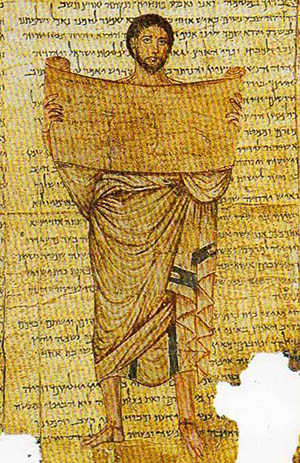
How old are the books of the Hebrew Bible, and why should we care? Since the Bible is likely the most influential book ever written, we deserve to know the truth of its composition and history.
-
The Origins of Judaism

When did “Judaism” begin to be widely practiced (i.e. widespread adherence to what we today recognize as the rules and calendar of the Pentateuch)? Irrespective of when the individual books of the Pentateuch were written, when did the majority of Judeans begin to live them out? The answer is quite shocking.
-
Does Paul’s Potter/Clay Metaphor Say What Christians Think It Says?

In Romans 9:18-23, Paul gives us a very sparse but dense (contextually) metaphor describing God as a potter working on “vessels” that in one case turn out “for blessing” and in others, turn out “for destruction”. Is Paul saying what traditionally has been believed he is saying? Let’s see.
-
Jesus and the Moses Scroll

Our purpose here is to compare and contrast the “Ten Words” (Decalogue) found in the “Moses Scroll” (MS) with both of the other canonical versions found in Exodus and Deuteronomy, but also with the teachings of Jesus. We’ll see if the nuances in the MS Ten Words (and their blessings and curses) can also be detected in Jesus’ teachings. And if they can, can we propose how such a linkage could exist when at the same time it is missing or much harder to find between our published versions of the Decalogue? Let’s see.
-
Moses’ Real Words?
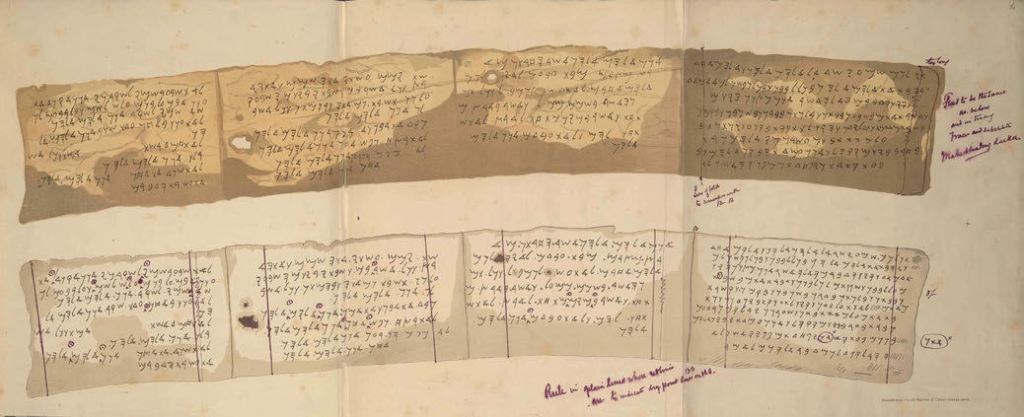
In the 1880’s an antiquities dealer in Jerusalem came into possession of an apparently ancient “scroll” consisting of fifteen strips of leather containing paleo-Hebrew texts. Within a period of five years of their “publication”, the fragments had been declared forgeries by “experts” in Europe, and shortly thereafter, the antiquities dealer, Moses Shapira, committed suicide in a Rotterdam hotel room in 1884. But what if they were authentic? That’s the question I want to pose and try to answer.
-
What, Or Who, Are the Bible’s Heavenly Beings?
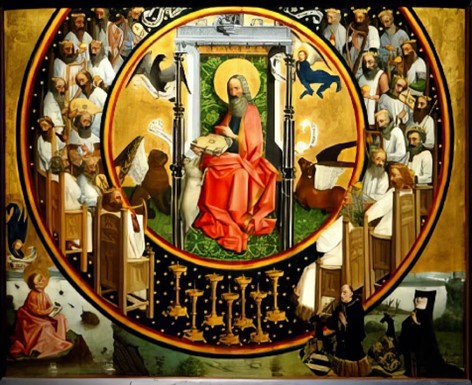
One of the more obscure concepts in the Bible for me has been the idea of Heavenly beings. I say it is obscure because when they are mentioned in texts they remain quite enigmatic, and opinions among biblical scholars and theologians concerning the nature of these beings vary all over the map. In diving into this subject we have to keep in mind that the question is: “What was in the mind of the biblical authors when they referred to a ‘divine council’, or ‘sons of God’, or ‘hosts of heaven’”, NOT what the reality is (something I contend we…
-
Groaning With the Spirit

Rom 8:26 “Likewise the Spirit helps us in our weakness. For we do not know what to pray for as we ought, but the Spirit himself intercedes for us with groanings too deep for words.” A recent post on social media mentioned an interview with NT Wright (A Deep-Dive into the Book of Romans: Dr. N.T. Wright – Theology in the Raw) in which he makes a point regarding the above (and other Romans’) passages of Paul that for me was both startling and eye-opening. Let’s look at Wright’s narrative of the Romans story, and unpack his startling point.
-
The “Fulfillment” of Scripture
Luke 4:[17] And the scroll of the prophet Isaiah was given to him. He unrolled the scroll and found the place where it was written, [18] “The Spirit of the Lord is upon me, because he has anointed me to proclaim good news to the poor. He has sent me to proclaim liberty to the captives and recovering of sight to the blind, to set at liberty those who are oppressed, [19] to proclaim the year of the Lord’s favor.” [20] And he rolled up the scroll and gave it back to the attendant and sat down. And the eyes…
-
Uncleanness, Sin, and Holiness in the Hebrew Bible
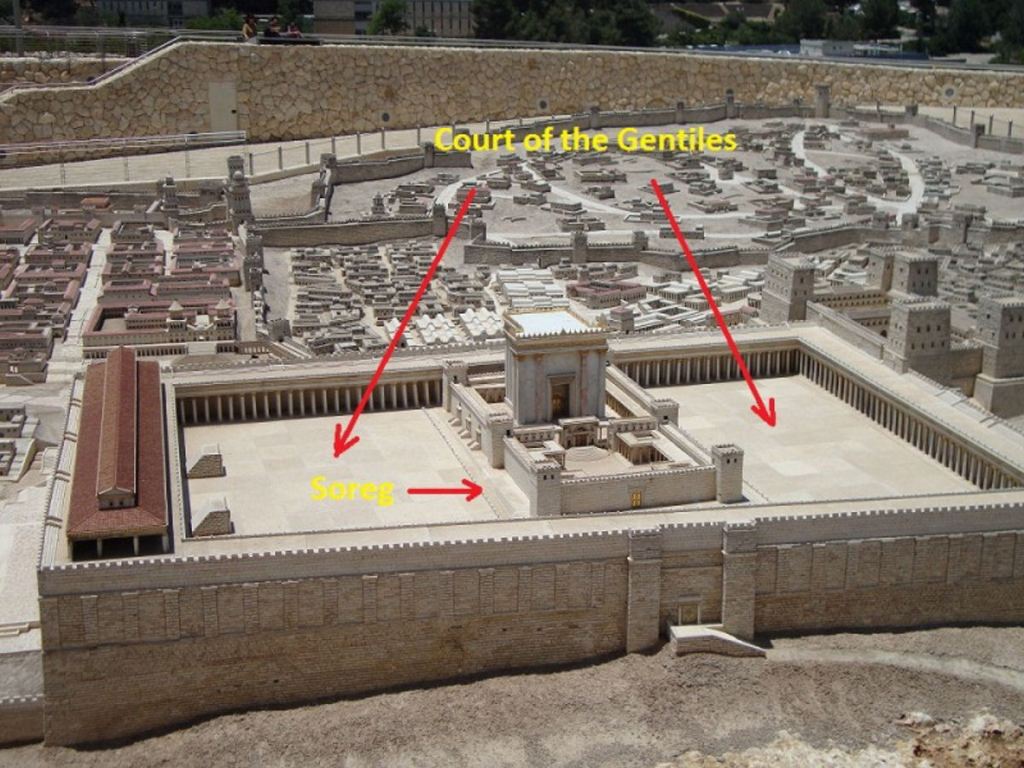
Most modern Christians (and essentially all unbelievers) misunderstand the key patterns used by the Hebrew Bible to convey the concepts related to Holiness. They tend to see a binary pattern that can be summarized as: “Holiness is the absence of Sin”. But that’s not the pattern that the ancient authors of the Torah were guided by. Certainly, there is a relationship between sin and holiness. But it’s just not the one we moderns think of. Let’s see what it is.
-
The Lesson of Ecclesiastes

Those somewhat familiar with the book of Ecclesiastes know that its headline message is encapsulated in its second verse, Ec 1:2: [2] Vanity of vanities, says the Preacher, vanity of vanities! All is vanity. The book’s Hebrew title is Qoheleth whose meaning roughly is “an expounder of wisdom”, the narrator of the book.
-
Developing Spiritual Fitness

Most of us think about our spiritual lives (when we think of them at all) as cerebral, passive things: things that just are, likely supported by some “quiet time”, perhaps some Bible reading, and prayer. However, our spiritual strength is only truly developed when, like a muscle in our body, it is stressed, and stressed repeatedly.
-
Interpreting the New Covenant
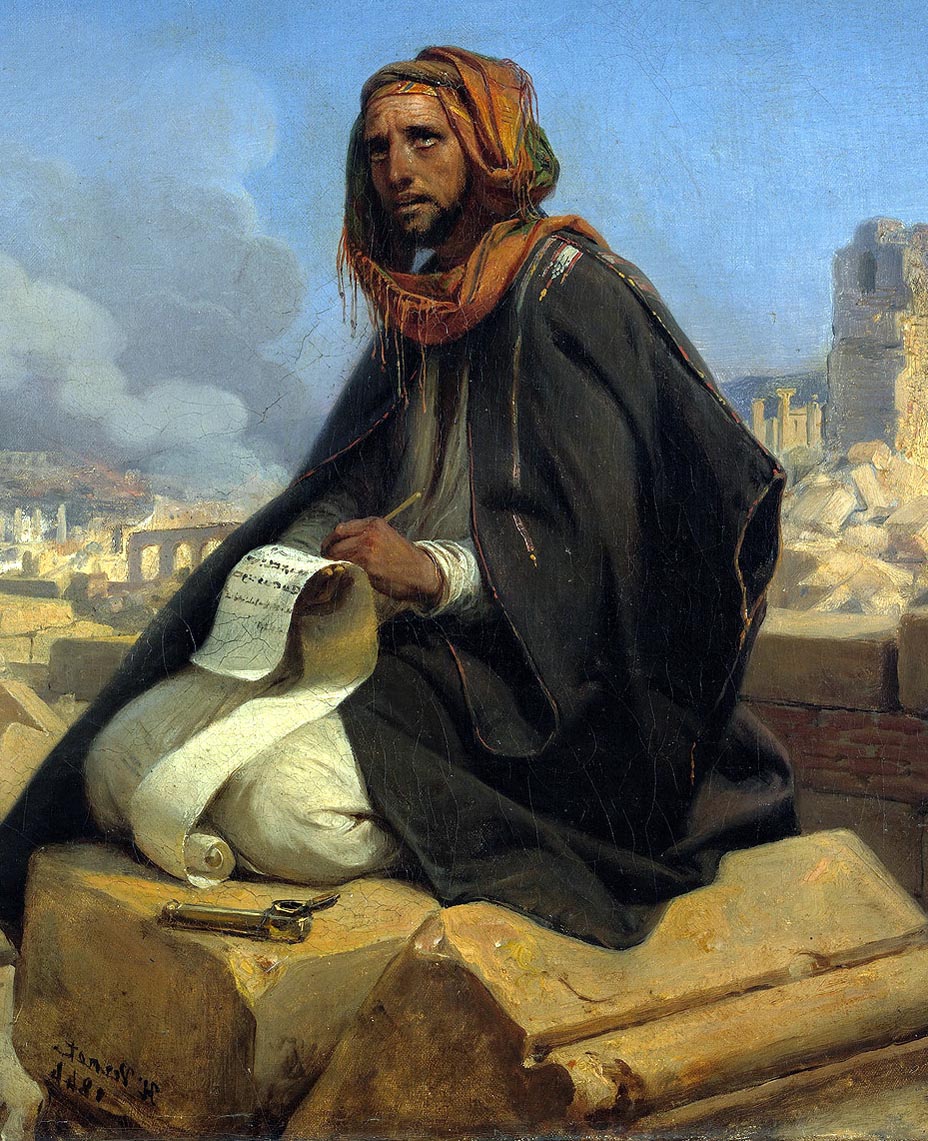
There is substantial controversy surrounding the proper interpretation of the announcement of a New Covenant between God and Israel and Judah (Je 31:31-34, Ezk 36:24-28). Both the Jewish and Christian interpreters spin its interpretation to suit their theological views, leaving no consensus. Let’s see if by working through the texts we can discover the truth.
-
John’s Identification of Jesus

The book of John is the fourth of four Gospels of Jesus Christ and is unique among those in its portrayal of the story. John doesn’t so much focus on narrating a history of what Jesus did, as is common in Matthew, Mark, and Luke, but on proclaiming who Jesus was, and what His life, death, and resurrection meant. In this note, we’ll briefly look at how John saw Jesus in relation to God, typically identified as “God the Father” in our English translations.
-
Freedom, in Paul

Countless words have been spilled analyzing and debating Paul’s intended meaning of the phrase “works of the Law”, and his theological treatment of the Law itself. In contrast, far fewer words have been spilled analyzing and exploring Paul’s concept of the “freedom” he ascribes to those “in Christ”. Our intention here is to show the relationship between these two concepts and, in so doing, dispel some pervasive misunderstandings, at least among evangelicals.
-
The Parable of the Shrewd Manager
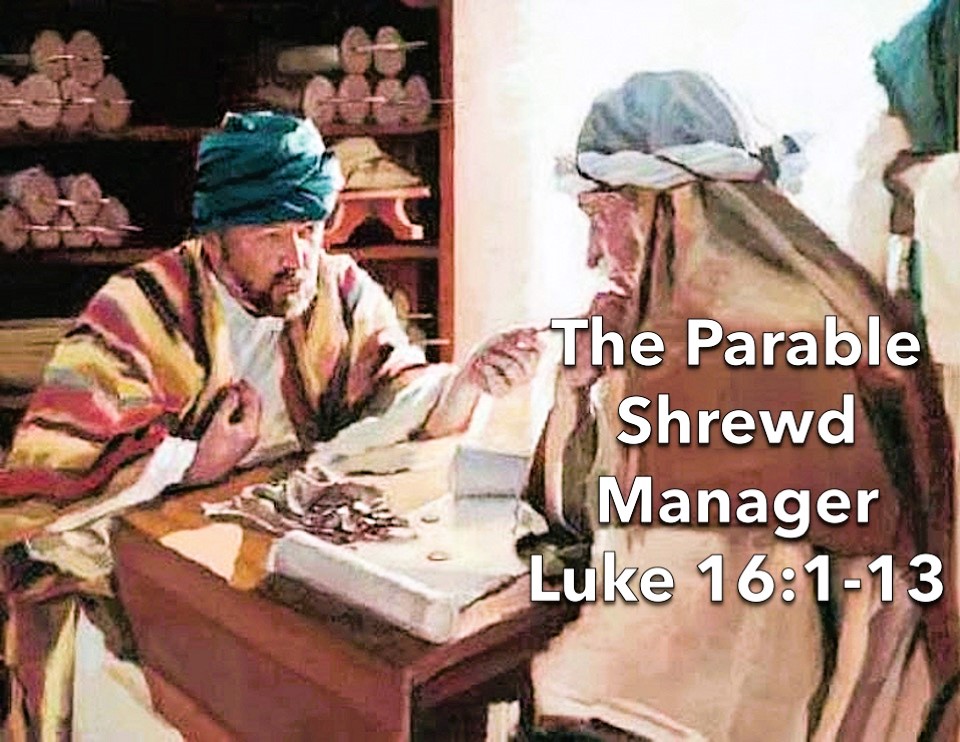
One of the most obscure parables Jesus related to His Disciples is found in Luke 16:1-13. The average Bible reader is left scratching his head as to what on earth Jesus is doing in this parable in which He lauds what seems to be deceitful behavior by the discredited manager of his rich master’s accounts. But once the reader sees the intended lesson, he is convicted by its message. Let’s see if we can’t unpack that message here.
-
A Critical Analysis of Eastern Orthodox Beliefs

In way of introduction, I have been forming my Christian beliefs, in some cases based on other’s views, in others personal study, for now some 20+ years. Recently, I have explored some of the beliefs and doctrines of the Eastern Orthodox Church, and, surprisingly perhaps, have found substantial overlap with my own. I say surprisingly, because I have never experienced any teaching of the Orthodox Church, a Church who claims its beliefs to be the authentic beliefs of the very earliest Christians. I would characterize my own beliefs as still shackled in some ways to traditional Western Christian doctrines (e.g.,…
-
Searching for a Consistent Biblical God

I wonder how many people have been thrown off of their inevitable search for God by what they perceive as not just the inconsistency of the characterization of God in the Bible’s Old Testament compared to His portrayal in the New, but by His seemingly severe, some would say immoral, characterization in the Old Testament. Wouldn’t it be wonderful if we could find and describe one, integrated, consistent whole of the Divine Nature across the entire Bible? Imagine being able to perceive God’s essential God-ness through a new lens, and so enable others to see beyond their personal prejudices. Looking…
-
Biblical Narrative As a Mosaic
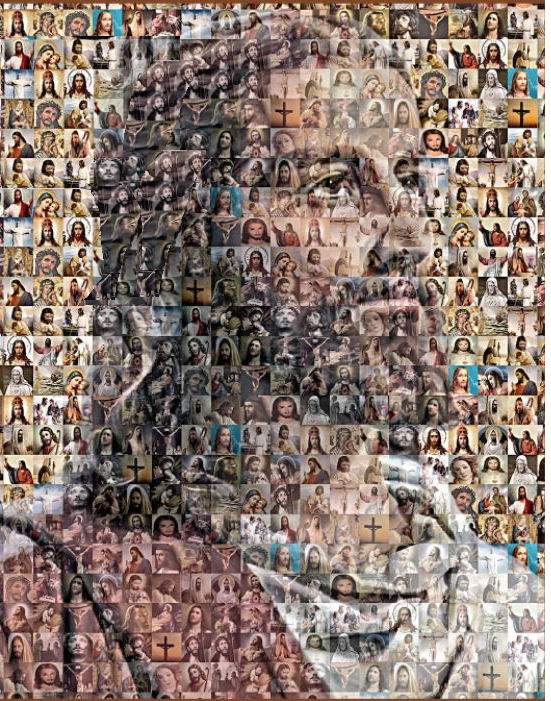
Most of us read the Bible as at most a narrative of the history of God’s people, culminated by some revolutionary stuff in the New Testament. And, it certainly, on one level, is that. But few of us read the Bible carefully enough or deeply enough to see its deeper construction as an intricate weaving of individual, but connected, narratives that all create a larger meta-narrative.
-
The “X-Files” of the Tanakh
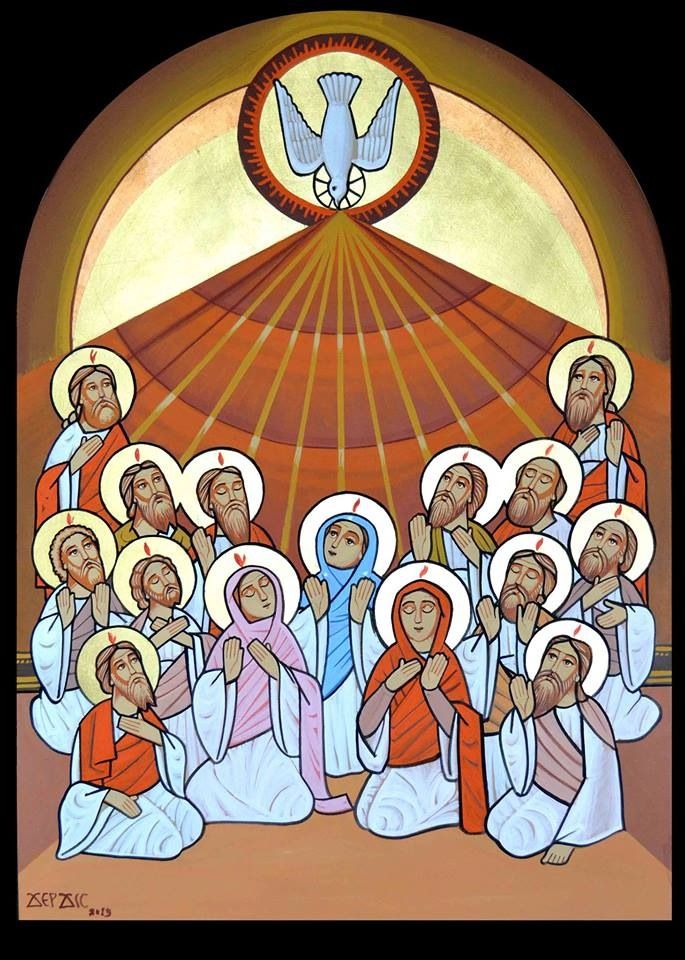
There is some very strange stuff going on, semantically, in the Tanakh – the Old Testament. Our English translations hide much of it, allowing us to blithely assume that unclear verses are either just poorly translated or, perhaps, intended to be purposefully obscure. But, what if their obscurity/ambiguity reveals some much deeper meaning than simply the literal texts in which they appear? And, if there is a deeper meaning, what could it be, and what is it likely to be?
-
Being a Disciple
Not many self-proclaimed Christians these days would claim the mantle of “Disciple”. They think those were the twelve guys who followed Jesus around (or were they Apostles?). Most have no idea what the term means and what is, therefore, involved in actually becoming one.
-
Not One Stone Left Upon Another

Do you know why God had to see to the destruction of the Jerusalem Temple? I didn’t.
-
Israel as Metaphor
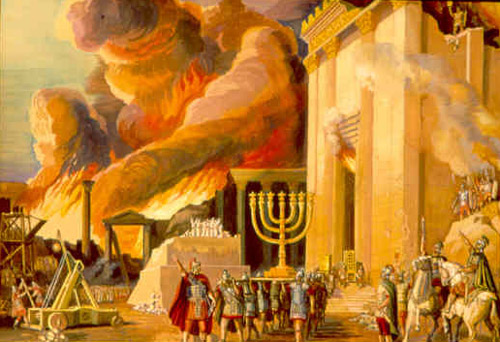
Those familiar with the Jewish Bible — the Tanakh — or what Christians call the Old Testament, have puzzled for centuries over the meaning of the failed history of the Israelites, culminating in the destruction of their Temple and Jerusalem in 70AD, and their destruction or banishment from their homeland in 136 AD following the Bar Kokhba revolt. What exactly does it mean that God chose the Israelites from all the peoples of the world, led them, gave them a homeland and, for a time at least, heaped blessings on them only to have them nearly universally turn their backs…
-
Christianity in the Age of ‘Whatever?’

Lots of people write blogs. Very few people actually read them. So why this one? Recently I’ve been absolutely stunned by the power of the delusion our society is suffering regarding truth, good and evil. In this perverse worldview, people who elect to strap on explosives and detonate them, or fire automatic weapons at unsuspecting innocents aren’t really “wrong”. In this worldview they are just reacting to our evil. What is also remarkable is the popularity of this view. We’re all familiar with the phenomena of ‘political correctness’, in which what most people once agreed was simple, honest, common sense…