Category: New Covenant
-
The Development of Israel’s Idea of Righteousness
“Righteousness” to Israel came to mean being acceptable to God. Most know that the Ten Commandments given by God to Israel at Sinai served as the foundation for Israel’s idea of righteousness. The evolution of Israel’s received understanding of their position vis-à-vis the status of “righteous” to God was dependent on their progressive revelation by God of His will for therm. And, they had to fight through many false declarations intent on obscuring the truth to benefit men. While the Decalogue remained the bedrock of Israel’s moral imperative, their view did not remain static but developed through their history. Our…
-
Forgiven, or Transformed to Righteousness?

For centuries, the traditional, Christian interpretation of Jesus’ death has been that it was an atonement for the sins of those who would choose to “believe” and follow Him. This scenario portrayed a kind of cosmic cleansing for those who believed, though no one told us what that meant. A common assumption is that having one’s sins atoned for/forgiven is having them excused. For the record, not everyone completely bought the cosmic cleansing story, citing texts (e.g. Luke) that didn’t completely embrace the sacrificial atonement theme.
-
Learning the Real Paul (and Unlearning What You’ve Been Taught)

Scholars and expositors have been mangling Paul’s message in his epistles (particularly Romans) for centuries. If we are to see Paul’s true message, we’re going to have to dig much more deeply into the text, and then unlearn nearly everything we thought we knew. No small undertaking. But in so doing, we will also see revealed the true Gospel message of not only the entire New Testament, but the Hebrew Bible as well, as one grand story. And once you’ve seen this story accurately, it is doctrine- and theology-upending to the point that you will never again read your Bible…
-
Unpacking the New Covenant Gospel

Many Western Christians [i] and secular individuals have misunderstood the core message of the Bible’s Good News for centuries. This analysis aims to clarify the true Gospel, obscured since the Reformation, by examining relevant New Testament and Hebrew Bible passages to determine whether they support or challenge what I’m referring to as the “New Covenant Gospel”, first proposed by Dr. Jason A Staples. This interpretation diverges from the traditional Gospel message fundamentally.
-
The Letters of James and Paul — Different?

There is an undercurrent of opinion amongst scholars of the early Church and Bible students that James, the brother of Jesus, and Paul the Apostle proclaimed two different gospels – that the book of James contains an authentic look into 1st century Jewish Christianity and what his brother, Jesus, taught, while Paul’s epistles lay out a completely different “religion”. Some of these also believe that, since Paul wrote first, that aspects of his letters were borrowed by the Gospel writers, thus propagating the Paul version of Christianity throughout nearly the entire New Testament. Is this viewpoint correct?
-
Paul’s Real Gospel

When you hear a respected biblical scholar reinforcing with conviction what you’ve been learning – and teaching – for the last ten or twenty years, it’s a big deal, not to mention quite the affirmation. Such was my case in coming across a lecture by Dr. Jason Staples (one of my favorite New Testament scholars) in 2024 entitled “Salvation by Moral Transformation: What Paul Really Meant by Grace”. Not to be too dramatic but Staples’ insights into Paul’s real message will be at least as explosive within the traditionalist community as was “The New Perspective on Paul”[i] of Messrs. NT…
-
New Heavens and New Earth

What is the proper interpretation of the Bible’s passages describing the Eschaton — the end and resolution of the world? Most, for the last 1200 years or so, have believed that when they die, they will go to “heaven”, despite the paucity of biblical evidence for this view. But what happens at the end of all things? Surely it is a point in time beyond which all of God’s plans for His Creation are realized.
-
Groaning With the Spirit

Rom 8:26 “Likewise the Spirit helps us in our weakness. For we do not know what to pray for as we ought, but the Spirit himself intercedes for us with groanings too deep for words.” A recent post on social media mentioned an interview with NT Wright (A Deep-Dive into the Book of Romans: Dr. N.T. Wright – Theology in the Raw) in which he makes a point regarding the above (and other Romans’) passages of Paul that for me was both startling and eye-opening. Let’s look at Wright’s narrative of the Romans story, and unpack his startling point.
-
The “Fulfillment” of Scripture
Luke 4:[17] And the scroll of the prophet Isaiah was given to him. He unrolled the scroll and found the place where it was written, [18] “The Spirit of the Lord is upon me, because he has anointed me to proclaim good news to the poor. He has sent me to proclaim liberty to the captives and recovering of sight to the blind, to set at liberty those who are oppressed, [19] to proclaim the year of the Lord’s favor.” [20] And he rolled up the scroll and gave it back to the attendant and sat down. And the eyes…
-
Jesus and Paul
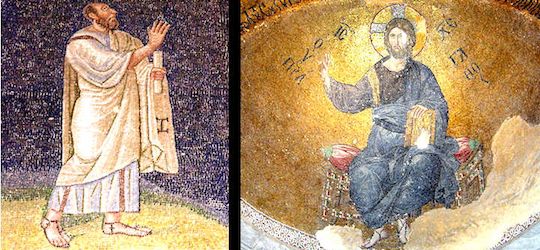
Dozens of books and hundreds of scholarly papers have been written on the subject of the differences in the ministry messages of Paul and Jesus. Some gloss over the differences in their attempt to maintain a united Christian front. But others use the differences to claim that Paul, not Jesus, is the real founder of Christianity and its “through grace by faith” message and that this Christianity is unfaithful to Jesus’ authentic version. The purpose of this note is not to reconcile these differences but rather to pay attention to the historical context into which they were each proclaimed. In…
-
Interpreting the New Covenant
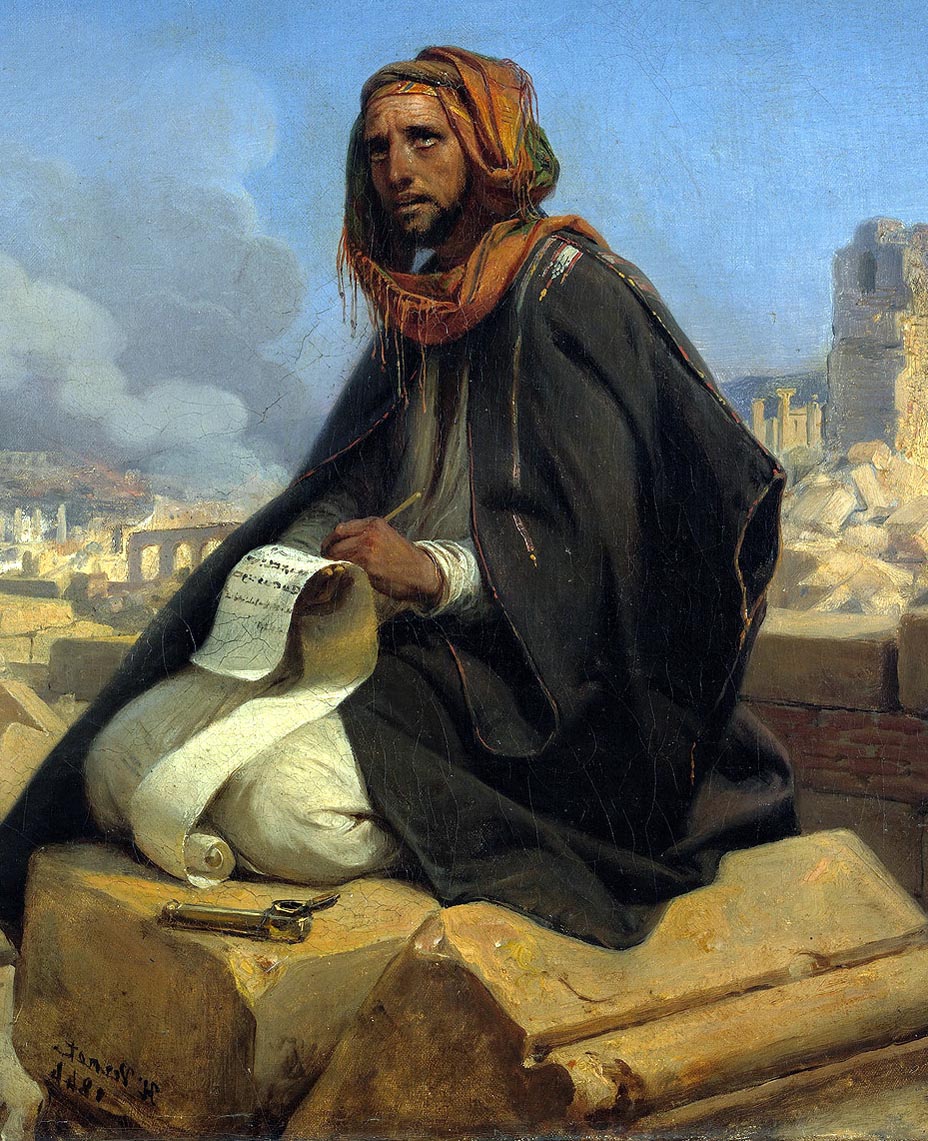
There is substantial controversy surrounding the proper interpretation of the announcement of a New Covenant between God and Israel and Judah (Je 31:31-34, Ezk 36:24-28). Both the Jewish and Christian interpreters spin its interpretation to suit their theological views, leaving no consensus. Let’s see if by working through the texts we can discover the truth.
-
Implementing God’s Kingdom on Earth

The Kingdom of God is the precinct in which its citizens interact with each other and outsiders per God’s will. So, as Christians, how does God want us to act both to model and to implement His Kingdom “on earth as it is in Heaven”? Implementing the Kingdom of God “on earth, as it is in Heaven” is more than an enterprise of personal transformation. It is also an enterprise of transforming the society in which we live to reflect its values. Here we intend to analyze how Christians caring for others and desiring to transmit God’s blessing to as…
-
Freedom, in Paul

Countless words have been spilled analyzing and debating Paul’s intended meaning of the phrase “works of the Law”, and his theological treatment of the Law itself. In contrast, far fewer words have been spilled analyzing and exploring Paul’s concept of the “freedom” he ascribes to those “in Christ”. Our intention here is to show the relationship between these two concepts and, in so doing, dispel some pervasive misunderstandings, at least among evangelicals.
-
New Life in the Kingdom of God
In the second three chapters of Ephesians, Paul casts his revolutionized view of human life and interrelationships that, as much as any portion of his epistles, brings into sharp focus the life transformation that followers of Christ should both expect and strive for.
-
The New Covenant…of Moses?
It may come as a surprise (as it did to me) that Moses, virtually before Israel was identifiably a nation, predicted the replacement of the Covenant he was given for them by a succeeding, New covenant in which God took things into His own hands.
-
Don’t Waste God’s Time

Few understand what being called into the life of Christ means to them or requires of them. Fewer still understand, having answered this call, how such a life is even possible, let alone what that life looks like as it is lived out. And very, very few know that answering that call and living that life is what God expects of all of us.
-
The Law of Faith

Paul in Romans 3:27 says: Then what becomes of our boasting? It is excluded. By what kind of law? By a law of works? No, but by the law of faith. Unfortunately, Paul never explicitly tells us what this law is that he is referring to (this is the only occurrence of the phrase not only in Romans, but in the entire Bible.) In order to understand his meaning, we’re going to have to do a bit of exegetical work on the argument he is waging in Romans 3 and preceding.
-
The Obedience of Faith

In this note we’ll look at this imperative of obedience to Christ as portrayed in the Bible, and uncover some insight into what the Bible means by “obedience” and “believe”.
-
Recovering the Gospel – II

Here I want to look at, to the degree we can, how Jesus Himself thought about the Gospel He was bringing. What did He think the Gospel was that He was bringing, and, more importantly for our present situation, how did He see it being enacted?
-
Recovering the Gospel – I
When you hear the term “Gospel”, what story or message comes to mind? When you hear the statement “Believe and be saved”, what does “believe” mean to you? And when you read: “For by grace you have been saved through faith”, what is your understanding of what “faith” looks like?
-
Biblical Love
In the Bible the people of God are commanded to love Him (Deut 6:5, 11:13, 30:6, Mt 22:37) and love their neighbors (Lev 19:34, Mt 22:39-40), whether those neighbors are love-able or not. But what is Biblical love? And how do we get it, and give it away[i]?
-
Living Christ

This note focuses on the sincere Christian desiring to live the life he has been called to live in Christ — to live your life as Christ would live it if He was you.
-
Hearing the Good News
Most modern western Christians miss what the Bible has to say about its good news – the Gospel of Christ. It’s right there in black and white. But somehow they miss it – read right past it. How does this happen?
-
Being a Disciple
Not many self-proclaimed Christians these days would claim the mantle of “Disciple”. They think those were the twelve guys who followed Jesus around (or were they Apostles?). Most have no idea what the term means and what is, therefore, involved in actually becoming one.
-
God’s Calling to Himself

When you read something in the Bible, perhaps for the umpteenth time, but suddenly it communicates something new to you, you pay attention. Such was the case when I ran across (on my way to researching a completely different topic) these verses in Hebrews 3:7-8:
-
Seek First the Kingdom of God

Not all Christians experience the same quality of spiritual life. For some, their lives are joyful, full of confidence, full of assurance of their acceptance and eventual reward, and full to overflowing with the Spirit of God, to the point that they feel compelled to give it away to those around them. For others, life is more measured, perhaps a bit more stressful, containing more concern, at least to a degree, for some of the things in their lives, resulting in worry. They are somewhat discouraged by the lack of spiritual “fruit” in their lives. They want to love, and…
-
Belief, and the Indwelling of the Holy Spirit

There appears to be in the Christian church today a profound misunderstanding of the working of Salvation in the Christian’s life. On the one hand, we have the tried and true fundamental statement of salvation found in Paul’s epistle to the Ephesians (2:8): For by grace you have been saved through faith. And this is not your own doing; it is the gift of God, not a result of works, so that no one may boast. When one hears and receives this glorious proclamation, he breathes a groaning sigh of relief. “I no longer have to strive to please God…