
Tag: Christian Message
-
Jesus in Light of Paul in Light of Jesus

There has been a long-running tradition in scholarship of complaining that Paul tried to establish his own religion apart from the teachings of Jesus. I claim this is a position of ignorance, and perhaps academic agenda, not because Jesus’ and Paul’s words aren’t different – they are. But, rather, because they simply haven’t understood how the two messages interoperate within the context of the larger plan of God. In this larger context, of God’s redemption of Israel and the world to Himself, their messages were a duality, with one integrally supporting the other.
-
Refuting Paul’s Attackers
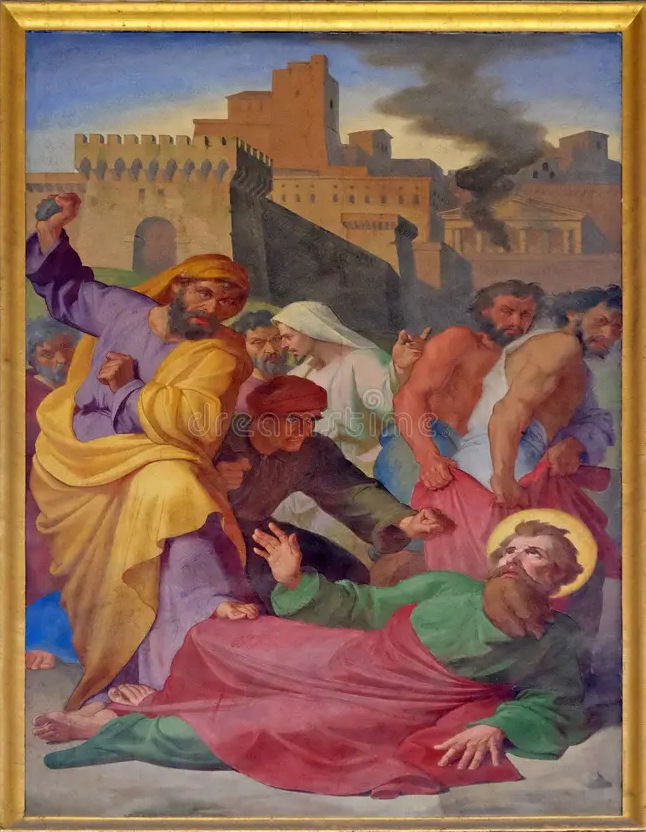
The Apostle Paul has gotten a bad rap for centuries, mostly based on his antagonists’ misunderstanding/ignorance. Our purpose here is to review the attacker’s charges in some detail and demonstrate why they’re mistaken. In so doing, we’ll look at his criticisms in antiquity from both Jewish-Christian and Gentile-only factions of the early church, as well as from contemporary critics who contend Paul’s messages are counter to Jesus’.
-
Thinking About Jesus and the Crucifixion

For nearly as long as there have been people, they have been sacrificing animals to their gods. It has been a doctrine of Christianity from its formative days that Jesus was crucified as a sacrifice on behalf of all people. Is this doctrine correct? Or does it simply represent an adaptation of Jesus’ story to fit this ancient and powerful socio-cultural model? And, can we know?
-
Jesus’ Fulfillments

In this piece, we’ll drill down into the claims of believers that Jesus, as the Christ – the Messiah, was the fulfillment not only of the Hebrew Bible’s Messianic prophecies, but further that He was the fulfillment of its “Law” and “the Prophets”, and, perhaps most controversially, of Israel itself, as well as inaugurating the New Covenant prophecies it proclaims.
-
Why Priests and Sacrifices?

I have written several pieces explaining the fact that God, as He is recorded in the Hebrew Bible, did not want His people to perform sacrifices to Him. Yet the vast majority of the Pentateuch is all about sacrifices and offerings. Why?
-
Why Jesus?

God promised Israel a savior, a Messiah of the line of David. Having rejected God and suffered for centuries they expectantly looked forward to their ultimate vindication and redemption that he would bring.
Doug Martin
-
Searching For (and Finding) the “Needle in the Biblical Haystack”: Following the Bible’s “Blue Thread”

Our premise in what follows is that there is a unified message permeating throughout the entire Bible: both the Hebrew Bible and New Testament. That message represents God’s “signal” concerning how we are to treat Him (love and reverence), and each other (love, as we love ourselves). But His signal must penetrate through lots of modern distractions and Biblical texts that have little, if anything, to do with living in accordance with God’s will and with one another in love. Thus, they are “noise” obscuring His signal.
-
Ruminate on God’s Word

Recently Steve Gregg visited my area and presented a message to a Christian fellowship here. His subject was the change that we are expected to undergo having committed ourselves to Christ. But it was a metaphor he used in his message that I thought was stunning in its clarity, and worth sharing with those both familiar, and not yet familiar, with Steve’s teachings.
-
Fishers of Men

There is an intriguing connection, as pointed out by my friend and Hebrew Bible teacher, Ross K. Nichols, between some of the Hebrew Bible’s prophecies, describing a regathering set off by phrases placing that regathering in the “latter”/”last”/”days to come”, and Jesus’ statement that He would make His Disciples (the fishermen Simon (Peter) and his brother Andrew while they were in the process of fishing) “fishers of men” (Mt. 4:19). Question: Was Jesus simply using the obvious metaphor that those Disciples were vocationally already fishermen to connect the mission He was inviting them to take up? Or is there some…
-
What Is God Waiting For?
About 2000 years ago, Christ rode into Jerusalem on a donkey, prophesied by Zechariah (9:9) of Israel’s long-awaited Messiah, and hailed by His followers with “Hosanna[i]”. In keeping with God’s plan for His Creation, Jesus was murdered, buried, and then arose from death only to reappear to the Disciples and many who knew Him. During His ministry, He repeatedly taught about the immanence of God’s Kingdom on Earth (i.e. “at hand”, “in your midst”, etc.) The Bible says that for His act of sacrificial obedience, Christ was given all authority in Heaven and on Earth. Yet, here we sit, 2000…
-
Listen, Learn, Keep, Do

What were God’s instructions to His children? Moses thought they were crystal clear. They were the basis of God’s covenant with Israel. Where do we find these covenant teachings today? In significant part, they have been abandoned. Let’s take a look at what, according to Moses, the basic precepts of being “God’s people” involved[i], and why it was that Israel, as surrogates for all humanity, failed miserably at it.
-
The Bible Explained

Do you know how the stories of the Bible fit neatly together into an integrated whole — the story of God’s interactions with His created humanity? If not, this may help.
-
What is the Christian’s Calling?

There are three polar opposite popular opinions these days as to what it is the Christian is called to do. The first is that the Christian calling is to do essentially nothing. This is the view held, in whole or in part, by the vast majority of those who identify with the Reformed Church tradition, convicted as they are by the doctrine of God’s Grace. These folks’ understanding is that God is in complete control of the outcome of society, and so they are at best incidental to His Sovereign decision. Some who hold this opinion share it only up…
-
Christ’s Cultural Revolution

Most people including self-professed Christians have no inkling of the enormity of the transformation of their everyday existence Christ prescribed. His prescriptions so thoroughly upended the culture of first-century Jews that they concluded He had to be eliminated.
-
Paul’s Apocalypse of Christ

In his letter to the Ephesian church, the Apostle Paul reveals that for millennia God had knowledge kept secret that suddenly, through Christ, had been revealed, first to Christ’s Apostles, and then to those to whom they preached. The revelation of this secret, this μυστήριον mustḗrion, was for Paul the life- and reality-shattering apocalypse of Christ.
-
Escaping Christian Indolence

Multitudes of Christians today think that they have no obligation to serve their Lord. They seem to be content having, in their mind, obtained their “salvation”, to simply sit by, go through some motions, and wait to go to heaven. Why is this behavior so common today? There are a few reasons that can be fairly easily identified.
-
“in Christ”?

What does it mean to be “in Christ”? How do I know if I am? The Apostle John tells us this: 1 John 5:20 (ESV) [20] And we know that the Son of God has come and has given us understanding, so that we may know him who is true; and we are in him who is true, in his Son Jesus Christ. He is the true God and eternal life. To John, the condition of placing our faith in God and His Son, the Christ, was synonymous with being “in him”.
-
Redeem the Time

I recently watched this message from Dallas Willard delivered to an audience at Westmont College in 2011. Most of what Willard has to say in all of his books and talks rivets my attention. But this one particularly grabbed me. It is definitely worth submitting it to careful review, particularly as we commemorate this Easter week.
-
Should I Believe This, and If So, How?

God has endowed us with minds and logic. We look at the assembled evidence concerning a question, and we draw conclusions using them based on the criteria, deep down, of “What’s best for me?”