Introduction
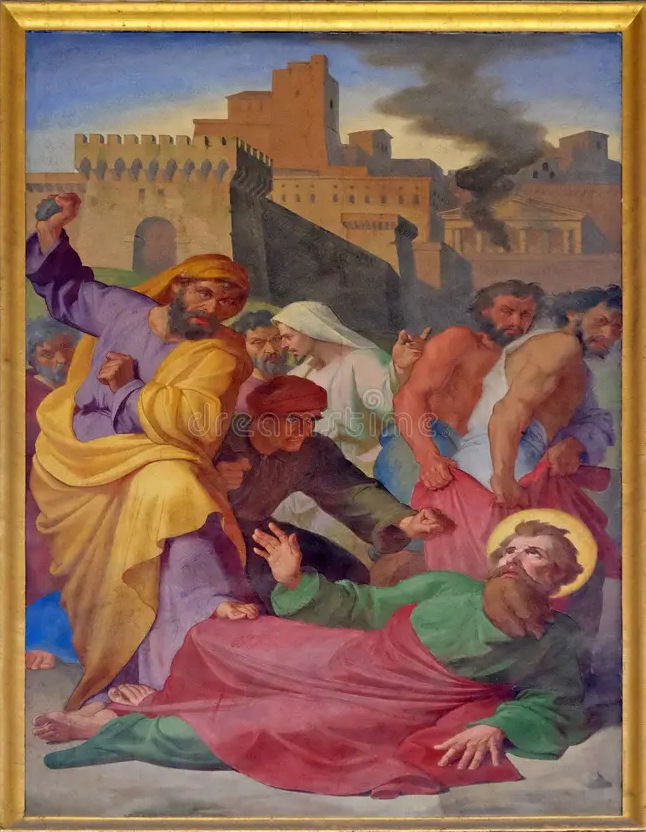
The Apostle Paul has gotten a bad rap for centuries, mostly based on his antagonists’ misunderstanding/ignorance. Our purpose here is to review the attacker’s charges in some detail and demonstrate why they’re mistaken. In so doing, we’ll look at his criticisms in antiquity from both Jewish-Christian and Gentile-only factions of the early church, as well as from contemporary critics who contend Paul’s messages are counter to Jesus’.
Because there is so much ground to cover, I have broken this piece down into three semi-independent sections. The first will cover the objections raised by the third/fourth-century Jewish-Christian Pseudo-Clementine writings, and the sympathetic attitudes of the early Jewish-Christian Ebionites. The second section will cover the second-to-fourth-century heretical Marcion and the early gospel and Pauline writings associated with him that critics of the day associated with their interpretation of Paul’s thinking.
Lastly, we’ll take up the arguments against Paul’s gospel lodged today by contemporary scholars, Deists, and various Christian commentators alleging its distinction from the messages of Jesus of Nazareth.
The text of the detailed material of each section will initially be hidden, leaving only short introductions and summaries visible. However, this detail (for each section) can be displayed by clicking on its text statement that instructs you to do so. (Once displayed, the detailed text can be rehidden by again clicking on its instruction text.)
Overview of the Charges Against Paul’s Message
The overarching context of the complaints against Paul, whether in antiquity or today, is that he introduced a message that, unlike Jesus’ ethical messages describing the type of life that God the Father was looking for from His people (i.e. love of God and neighbor, kindness and charity to the poor and outcast, acting in honesty and not hypocritically, not judging others, etc.), his critics claim (mistakenly, or at least incompletely) that Paul abandoned that ethical message. Instead, they say, he began preaching a message based on the spiritual nature of the resurrected Christ as God’s exalted Son, the need for his people to trust that Christ was their redeemer and Lord, and so commit themselves to “following” Him (i.e., acting as He acted, and living as He taught we were to live). In other words, they complain that “Luther’s Paul” preached a distinctly non-Christlike message. Many critics could summarize their objection to Paul as “He wasn’t Jewish enough.”
There are crucial aspects of Paul’s gospel that his critics have either failed to understand or have chosen (and today choose) to ignore. We’ll look at these briefly (I have previously written on Paul’s gospel in detail here[i]) after covering the detailed complaints.
Similarly, virtually none of Paul’s critics (that I have reviewed) bother to assess the differences in the context of the two ministries – Jesus’ and Paul’s. This turns out to be hugely important in assessing their distinctions, about which I have written in some detail here. So, we will only summarize those differences at the conclusion.
The Pseudo-Clementine Material and the Ebionites
In the first and second centuries AD, the texts that would become our New Testament, and various pseudepigraphal texts, were in a high state of flux. Many of these extra-biblical texts we know about and have copies of today (e.g., the Gospel of Thomas), but some of which we have no surviving manuscript or even fragments (e.g., the Gospel of Barnabas).
Because of this, we can’t know precisely what 2nd-4th century Christian groups and church fathers (e.g., Iraneus, Tertullian, Eusebius) were looking at, either to conclude they were authoritative texts or to criticize them as heretical.
The Pseudo-Clementine Material consists of two main pieces of literature – the Homilies and the Recognitions, plus several smaller letters written over many years, concluding sometime between the 3rd and 4th centuries. It was written in part as a defense of Judaism as the mandatory cultural foundation of Christianity, and in part as a defense of Apostolic authority, and, it is alleged, against Paul’s gospel (e.g., his “salvation by faith”).
“Clement”, a literary surrogate for Clement I, the 4th Bishop of Rome, is its hero, “Peter”, its protagonist, a fictional representation of the Apostle Peter. Simon Magus (a.k.a. “Simon the Magician”, likely a cipher for Paul the Apostle) is its antagonist (and a heretic). Paul’s Damascus Road experience was the subject of scorn by the authors of the work. They held that the Apostles’ first-hand experience with the Lord was necessary to claim apostleship, and the authority of Paul’s spiritual revelation was unknown, possibly even from evil spirits.
These writings are thought to have been based on earlier writings, some of which, judging from criticisms of early church fathers, are identified as the Kerygmata Petrou (“Preaching of Peter” – late 2nd century AD, which has been partially reconstructed[ii]), and the Grundschrift (“Circuits of Peter”), now lost.
In addition to their focus on the Judaic prerequisite to Christian faith, the authority of those (Apostles) who had lived with Jesus during his ministry, and their disparagement of Paul’s message, also contain an odd thread of admonitions extolling purity and holiness not, incidentally, unlike the Qumran community as attested in the Dead Sea Scrolls (DSS). This enhanced purity served as the basis for emphasizing their distinctiveness from (impure) Gentiles. This latter attitude did not, however, preclude their acceptance of Gentiles into the faith, provided they agreed to adopt all Jewish laws and customs.
The Ebionites were a Jewish-Christian group that appeared in the early 2nd century and survived until the 4th century, during which Constantine enfranchised the majority Roman church, but there are speculative reports of Ebionite-like groups as late as 1000 AD. Because of the similarities of their Jewish-Christian views with the essence of the Clementine Material, they are sometimes speculated as its source.
Click here to see the detailed material concerning the Clementine writings and the Ebionites.
The Clementine Recognitions[iii]
The Recognitions is a kind of philosophical novel portraying a young Clement’s travels, philosophical questions, and the influence of his mentor Peter the Apostle. Clement lived from approximately 60-100 AD[iv], likely martyred by Emperor Trajan while as the 4th Bishop of Rome (88-99 AD)[v]. He was most known for his Corinthian Epistles.
The story relates the young Clement’s search for truth and answers to existential questions, such as why the Cosmos exists: Did it always exist, or was it created? Would it always exist, or would it end? Each of these impacted his own explanation of the meaning of his life.
Importantly, and crucial for our topic here, Clement’s journeys after encountering the Apostle Peter (the first Bishop of Rome) at Caesarea upon his return from Alexandria, affords many opportunities for Peter’s arguments against the fictive Simon Magus (Simon the Samaritan Magician) who famously in Acts 8:9-25 offers the Apostles money for the power of God he has seen them practicing among the people. Of course, Peter rebukes him and charges him to repent of his great sin.
But it is the “magician” title that seems to have been the link that the author(s) of the Recognitions (and the Homilies) used to project Paul onto the person of Magus.
The Jewish-Christian group that authored this material demeaned Paul’s testimony that he received his gospel “by revelation” (Eph 3:3) – on the road to Damascus. Their Peter character intently attacks the testimony of anyone who didn’t live with Jesus during His ministry – i.e., himself, and the original Apostles (thus, the related arguments for Apostolic authority). The opinion they express is that someone claiming to have been given knowledge of God by revelation should not be trusted because his hearers couldn’t possibly know the origin of the spirit that had informed him, whether true or evil. In Rec III.11-13, Peter says:
“If anyone claims to have seen a vision or received a revelation, and yet teaches things contrary to the prophets, we must not believe him. For God, who is just, would not give a revelation to one person that contradicts what He has made known to many.”
Notice, the authors don’t bother to tell us what it was of Simon’s (Paul’s) message that they found objectionable. Only that it disclaimed their prophets, was purveyed to him by revelation, and so, whatever he said, it was not believable. It’s quite ironic to me that in crucial respects, Paul was the only one who actually did preach what the prophets preached, specifically as regards the New Covenant.
In noting Simon’s dismissal of their Hebrew prophets, they said Simon claimed he had divine power and so himself had coopted any prophetic authority as a source of revelation. (It’s interesting to me that the Recognitions portray Simon as claiming that the scriptures had been corrupted by the scribes (as did Jesus – Mt 23:4), and using this as one of his arguments against both the law and the prophets. This tells us that the issue of scribal corruption must have still been an issue in at least the 3rd-4th centuries AD – long, long after Jeremiah penned Jer 8:8. Continuous modification of the Hebrew scriptures[vi], even after the advent of the Rabbinic age, was a well-known secret.)
The last theme of the Recognitions is one of reconciliation and reunion in the form of Clement’s encounters on his journey with various members of his family – father (thought dead), mother (found in distress), and twin brothers (living together unaware of their parents or brother). This reunion motif seems intended to emphasize familial reunification and mutual love as a metaphor for the church’s unification and love. Remember, the doctrinal landscape in the 4th century was a battlefield of competing factions. As such, the work presents a more ecclesial message for the fractious early church when it temporarily backs off from its Pauline disclaimers.
The Clementine Homilies
The Homilies are an early 4th century composition parallel in structure to the Recognitions but significantly more “hard-edged” in their insistence on keeping the Mosaic Law (seen as essential, along with moral purity, for salvation!), their view of prophets as a succession of divinely provided messengers, of which Christ is the last (not divine Himself, i.e. not an incarnation of God, and not pre-existent), and in their excoriation of Pauline doctrine in the guise of Simon Magus.
The Homilies start with two “epistles”: a letter from Peter to James (who they see as the true head of the church) in which Peter transmits his sermons to James and asks him to ensure that they are only shared with those who have demonstrated their worthiness for propagating the teachings of the Apostles, and no one else. The fact that it portrays Peter, the head of the greater church, sending his sermons for safe-keeping to James is seen as elevating James’ position over Peter’s, and so the early Jewish-Christian movement, and its assumed leader, James, as superior to the greater, gentile-infused church.
The second epistle is from Clement to James notifying him of Peter’s martyrdom and Peter’s desire that Clement be his successor as Bishop of Rome – an instance of Apostolic succession.
Our interest here is primarily on the anti-Pauline character of the Homilies, which is more brazen than in the Recognitions, which we can glimpse in the following examples – Peter speaking:
Hom II.17 “There is one who is my enemy… who teaches men to believe in a man who has appeared suddenly, and to accept his testimony alone.”
Hom III.15 “If anyone wishes to be deceived, let him believe that there is no need of works, but only of faith.”
Hom XVII.4 “He who says that there is no need of the prophets is a liar, and the truth is not in him.”
Simon is accused of denying the prophetic tradition, which aligns with critiques of Paul’s perceived minimization of the Law and Prophets in favor of Christocentric revelation.
Hom II.4 (Epistle of Peter to James) “Some from among the Gentiles have rejected my lawful preaching and have preferred a lawless and absurd doctrine of the man who is my enemy.”
Clearly, the author portrays Peter’s teachings as normative for the early church – “lawful” – and any other teachings (i.e., Paul’s) as “lawless”.
These and other examples led F.C. Baur, Hermann Detering, and others to argue that Simon Magus was a political stand-in for Paul, particularly when Simon is portrayed claiming:
- Visions of Christ
- (Perceived) rejection of the Law (This, I claim, is a failure to understand Paul’s text.)
- Salvation by faith, absent any “works” (This too is an utter misunderstanding.)
- Rejection of “apostolic tradition” (This is based on the fact that Paul’s epistles were different in kind from the Gospels, and that he saw himself as uniquely given his divine revelation, including its “mystery” — μυστήριον mustḗrion, Ro 11:25.)
The following table summarizes the key differences between the theology presented in the Homilies and conventional Christian Redemption Theology:
|
Concept |
Homilies |
Mainstream Christianity |
|
Jesus’ Role |
Restorer of truth and law |
Redeemer from sin |
|
Salvation |
Through moral reform and knowledge |
Through faith in Jesus’ death and resurrection |
|
Death of Jesus |
Not emphasized or salvific |
Central to atonement |
|
Prophetic Identity |
Prophet like Moses |
Divine Son of God |
Comparing the Recognitions and Homilies
The following table contains a summary of the principal points of similarity and distinction between the Clementine Recognitions and the Homilies.
|
Theme |
Clementine Recognitions |
Clementine Homilies |
|
Source Tradition |
Latin translation by Rufinus; smoother narrative flow |
Greek original; more philosophical and polemical |
|
Christology |
Jesus as the True Prophet, but with less emphasis on pre-existence |
Strong emphasis on Jesus as the True Prophet, human, rejecting pre-existence and incarnation; crucifixion not an atonement. |
|
View of Paul (via Simon Magus) |
Ambiguous; Simon Magus is a villain, but not clearly a cipher for Paul |
Strong anti-Pauline polemic; Simon Magus is often interpreted as a thinly veiled image of Paul |
|
Law and Torah Observance |
Mosaic Law upheld for Jews; Gentiles follow apostolically-decreed essential law (Noachide moral/ethical; don’t eat blood, etc.) |
Mosaic Law was upheld universally; Torah observance was seen as essential for salvation. |
|
Salvation |
Jews saved by obeying the Law; Gentiles saved by obeying that portion of the Law applicable to them |
Salvation through moral purity and adherence to divine law; Jesus as “true prophet”, revealing the true God, calling all to faithfulness to Him. |
|
Philosophy and Reason |
Uses philosophical dialogue, but less confrontational |
Heavy use of philosophical disputation; critiques Greek philosophy and dualism |
|
Role of Peter |
Peter as teacher and apostolic authority |
Peter as the True Prophet’s successor (Note: not James) and guardian of secret teachings |
|
Cosmology |
Less developed; some dualistic elements rejected |
Strong rejection of dualism; emphasis on monotheism and cosmic order |
|
Esotericism |
Moderate; teachings are public but framed as authoritative |
High, secret teachings passed from Jesus to Peter to Clement via James |
The key difference in tone between the two (perhaps both emanating from a predecessor document) is the softening of the tone and rhetoric of the Homilies within the Recognitions. There may be a significant historical reason for this.
The late third and early fourth centuries were a tumultuous time among the leaders of the early church, as has been mentioned. Virtually every doctrine that would later emerge as Christian orthodoxy was in play.
Once the 1st Council of Nicaea was held in 325 AD, the issue of the church’s position on Jesus’ divinity was essentially settled. The Homilies appear to be pre-Nicaean, emphasizing as they do Jesus’ humanity and non-incarnation.
The Recognitions, on the other hand, seem to back off from this insistence, and rather preserve only the basic (but also toned down) anti-Pauline gospel focus (in addition, of course, to its various other philosophical essays and travel narratives.) So, it is fair to conclude that the Recognitions succeeded the Homilies by some years. (The only physical evidence we have of it is an early fifth-century Latin edition attributed to Rufinus.)
The Ebionites
The Ebionites were a late 1st to 4th century Jewish-Christian sect who, like the Jewish-Christian authors of the Clementine material, believed Jesus to be just a human prophet. Their name derives from the Hebrew ʾebyōnīm (אביונים), meaning “the poor ones,” which likely reflected both their socio-economic ethos and spiritual self-understanding. They lived communally, as portrayed in Acts 2:44, and what we know of the Qumran community as attested in the Qumran Community Rule (1QS).
And also like the Clementine authors, the Ebionites held that Paul abandoned allegiance to Torah as a requirement for membership in God’s family, and so was apostate to the true faith. In fact, it is because of their reported polemics (Epiphanius[vii]) against Paul that some think that later members of this sect may well have authored the Clementine material, especially the Homilies.
To the Ebionites, there was no valid Christian practice apart from complete obedience to the Torah for both Jews and Gentiles.
Their “Christology” was particularly interesting as it held that:
- Jesus was not divine and had not experienced incarnation; He was a man who had been “adopted” by God as His Son
- Jesus was different than “Christ”
- As with the authors of the Clementine material, Jesus was the “prophet like Moses”
- Christ did not die in crucifixion, Jesus did
- Jesus’ birth was not of a virgin
- Trinitarianism was a heresy against the One True God; strict Monotheists
Other key distinctives:
- Practiced circumcision, Sabbath observances, and dietary laws (Kashrut)
- Used a modified version of the book of Matthew (likely in Hebrew) that omitted the birth narratives
- Believed (generally) in the coming kingdom of God on Earth, not a Heavenly afterlife
- Were vegetarians and disclaimed animal sacrifice (possibly like the Qumran community)
We’ve already noted similarities between this sect and the Qumran community of the 1st century (60% or so of the scrolls found there date to between 44 and 69 AD, squarely within the early Christian era).
Robert Eisenman, in his book James: Brother of Jesus, makes the case[viii] that “the poor” translation of the name of the Ebionite sect was, in fact, the title of the original Jerusalem church headed, reputedly, by Jesus’ brother James. According to Eisenman, Paul’s claim to collecting and delivering aid to “the poor” in Jerusalem (Gal 2:10) was in fact his pledge to deliver aid to “The Poor”, representatives of the Ebionite sect of their day (1QpHab, CD-4Q266-273). Our (pseudo-scholarly) reference says this[ix]:
” Professor Eisenman finds significant proof the Dead Sea Ebyonim is a Christian group. For example, in the DSS, the temporal ruler of the Ebion who succeeds the killed Messiah (who will return) is called the Zaddik. Numerous ancient sources outside the DSS identify James the Just (the brother of Jesus) as The Zaddik. Translated, this means Just One. Jerome by the 400s, will call him James the Just. In Christian writings of that era, the name of James was rarely used. He was merely called the Zaddik or Just One. 6 As we saw previously, James–the Zaddik–was the first bishop of Jerusalem after Jesus’ resurrection. 7”
Were the Ebionites descendants of the Jerusalem Church, either genealogically or theologically? That seems to be a distinct possibility. If so, what on earth are documents describing them (“the Ebion”) and their antagonist (the “Spouter of Lies”) doing at Qumran that is, based on controversial scholarship by Norman Golb[x], comprised of substantially Temple documents (i.e. were not authored at Qumran, as previously theorized, only stored there from the Temple for safe-keeping in the face of the Roman conflagration)?
We have to believe that church members in Jerusalem would have, especially given Christ’s earlier warning, fled to Pella or other nearby locations such as Cochabe (in Bashan – southern Syria), before the Jerusalem destruction in 70 AD (or certainly before the 135-6 AD apocalypse). And these locations are specifically those Epiphanius cites as enclaves of early Ebionites vii while also associating them with James (Zaddik).
This potential link between James and the Ebionite sect could go a long way toward explaining how it is that modern critics of Paul seem confident in James’ anti-Pauline position, despite a paucity of biblical evidence to that effect. We’ll dig into this issue a bit more in the third section. In the meantime, the Ebionites=Jerusalem church=a later Qumran community, is a great circumstantial hypothesis. But there are obviously huge gaps in data that need to be shored up before it can be granted credibility.
Summary of Early Jewish-Christian Critics
We’ve seen that the early Jewish-Christian communities generally shared some views/beliefs that, based on their understanding, they judged to be at odds with the views/beliefs espoused by Paul in his letters. The more significant of these I have summarized in the following table:
| Subject | Jewish-Christian Position | Perceived Pauline Position (Misunderstanding?) | Actual Pauline Position |
|---|---|---|---|
| Christ (Jesus) as Divine | Jesus is not divine, nor an incarnation, nor pre-existent. He was the “prophet like Moses”. | Jesus was coequal with God; pre-existent with God. | Christ was the incarnate Son of God (Ro 1:3-4, 1 Cor 8:6) as attested by His resurrection. |
| Adherence to Mosaic Law | Necessary for all (Homilies, Ebionites)/just Jews (Recognitions) for salvation | After Christ, adherence to the Torah was no longer necessary for believers | After Christ, His provision of God’s Spirit would enable believers to live in obedience to the Law (Ro 8:4) |
| Soteriology | Believers were ‘saved’ by following the Law and moral purity to one day be restored to life with God in a redeemed earth (as a broad generalization. There were Jews who believed in life-after-death, resurrection, etc., apart from the Eschaton.) | Salvation is granted to those who “believe”. They are “at home with the Lord” upon their death. | Everyone will be judged on the last day: those found to have lived “in Christ” (i.e., as Christ via God’s Spirit) will be saved. (Ro 2:5-6, 2 Cor 5:10) |
| Paul’s Apostleship | Paul as magician and deceiver; “revelation” from Who? Paul did not live with Jesus as did the “true” Apostles. | Paul’s revelation of Christ converted him from a church persecutor to one who abandoned his faithfulness to the Law. | Paul’s revelation of Christ so overwhelmed his understanding that he could only respond in obedience. (Gal 1:11-12) |
| Gentiles’ Acceptance into God’s Family | Only those willing to submit to the necessary (all, or some) tenets of the Law are accepted. Most favored mandatory circumcision. | Gentiles who believe are “in Christ” and so heirs of God’s promises, apart from the Law. (Note: Paul was referring to the Jewish ceremonial Laws.) | “16 For I am not ashamed of the gospel, for it is the power of God for salvation to everyone who believes, to the Jew first and also to the Greek.” |
| The Law | The Law was/is God’s non-negotiable requirement for obedience for all. | Obedience to most or all of the Law was optional for those who believed. | Paul remained committed to obedience to the Law (1 Cor 7:19). It was how that was now to be achieved that set his gospel apart. This is why he describes his message as bringing about the “obedience of faith” (Ro 1:5). Obedience was to God’s moral Law. |
There may be more going on here than the surviving texts allow us to see. But at this point, all we actually have is innuendo and veiled, pejorative references to Paul (such as calling him “Magus”). Those determined to repudiate the Christ‑event, and to dismiss Paul’s witness to it, appear to have seized on such labels as a convenient banner under which to preserve Jewish life unchanged. In doing so, they effectively insulated themselves from the covenantal summons issued to them—at the very least—through the figure identified as the “prophet like Moses.”
Jewish-Christian critics seem to have been conspicuously unaffected by Pentecost, at least that we have been told of. Could it have been that in their zeal to be seen as pious in leading their followers in pursuit of the exemplary moral ethics that Jesus taught and lived, they neglected to hear the part about repenting and abandoning their lives to serving God? Could be.
Given the problems documented in Paul’s epistles (particularly Galatians) and Acts that Paul’s Christian “Judaizers” presented against his message of unqualified acceptance of faithful gentile followers of Christ into God’s family, it is certainly not beyond reason that groups of like-minded Jews would have persisted in this view of the faith even into the late fourth century and beyond. It’s important to keep in mind the 1200-1400 year cultural inertia they bore. They simply were unprepared for a revolution in God’s relationship with his humanity, and so persisted in their believing unbelief.
The Marcion Heresy
Now we turn our attention to a corner of early Christianity that positioned itself as approximately opposite the Jewish-Christian groups. Rather than arguing for partial or complete preservation of Jewish Torah observance, those in this camp (Marcionites), predominantly in the 2nd century, argued for Christianity cutting loose of all things Jewish, starting with their ritual Law. We’ll look at their quite convoluted theology that drove them in this direction and their own enforced blindness to and excising of the literary ties between the Gospels and the Hebrew Bible.
Like the Jewish-Christians, we know of the Marcionites and their doctrines and biblical material through written criticisms by church fathers as heretical, particularly by Irenaeus, Tertullian, Origen, Hippolytus, and Epiphanius.
Why are we interested in this cult vis-à-vis Paul’s detractors? Because some say he not only was one of them theologically, but may have been indistinguishable from Marcion himself – in the mid-second century! (For a growing number of scholars, Paul did not exist. Marcion made him up. Really. There is so much Bible-hostile detritus out there on the web these days that you could literally spend every day reading/listening to nothing else. So many people hate God or anything to do with God.)
There are two written works attributed to Marcion (whether he actually authored them, adopted and redacted them, or they had already been redacted when they came to his attention is completely speculative) – The Marcion “Gospel”, which by content appears to be an edited version of the canonical book of Luke in which virtually all Jewish and Hebrew Bible references have been deleted, and the Apostolikon, a non-canonical version of several (ten[xi]) of Paul’s purported epistles.
Before getting into the weeds on Marcion, we should first acknowledge what was apparently his overriding worldview vis-à-vis Christianity:
- The God of the Hebrew Bible (YHWH), the creator God, was not, in fact, the Father of Christ. That was the Transcendent God. He was, rather, a lower-level divinity responsible for judging mankind.
- The Creator God was the judge of the world. Christ and the Transcendent God don’t judge. According to Marcion Paul, people do, and shouldn’t.
- Marcion believed Jesus was quantitatively distinct from His humanity. The birth narratives of Luke are eliminated from the Evangelikon, as are Jesus’s genealogies.
Marcion wrote the Antitheses to show the differences he saw between the God of the Old Testament and his universal, transcendent, and true God.
Let’s dive into the Marcion heresy, and see how those disparaging Paul have tried to use it to impeach him, by clicking on this statement.
The Marcion “Gospel” – the “Evangelikon”
We have two different reconstructions of this work, built by different scholars using completely different methodologies, identified on this page as “The Gospel of the Lord” and “The Gospel of Marcion” (a six-part piece).
Its most significant feature is its systematic elimination of nearly all Hebrew Bible references from what looks like a text that began as the Book of Luke. For example, the Evangelikon removes the following references from our canonical Luke:
- Luke 4:17–21 — Jesus reads from Isaiah in the synagogue.
- Luke 7:27 — Reference to Malachi 3:1 about John the Baptist.
- Luke 20:17 — Quotation of Psalm 118:22 (“the stone the builders rejected…”).
The point of this adaptation appears to have been the elimination of any vestige of Jesus’s fulfillment of Hebrew Bible prophecy. It seems that to the editor of the Evangelikon, Jesus himself was essentially not a Jew.
In addition, it eliminates the following parables:
- Good Samaritan (Luke 10:25–37)
- Prodigal Son (Luke 15:11–32)
It seems here the author (whoever he was) wanted to downplay the themes in these parables of Jewish Law, repentance, and covenantal mercy. The author seems to have had, in particular, an aversion to repentance, resulting in God’s mercy. (These characteristics may link the author(s) with Gnostics or early Manichaeans, themselves heretics.)
Further, the editor reduced or eliminated references to the Jewish Temple, as in:
- Jesus’ presentation at the temple (Luke 2:22–38)
- Lament over Jerusalem (Luke 13:34–35)
- Cleansing of the temple (Luke 19:45–46)
It seems the editor’s motivation here was to eliminate any significance to that which was enfranchised by the Creator God. This was also a kind of ham-fisted approach to removing Jesus from any interaction with Jewish religious institutions.
The Apostolikon
This work comprises the epistles of Paul according to the Marcionites. These works, like the Evangelikon, were edited to remove all Hebrew Bible references and Jewish theological themes. While the traditional dating of Paul’s epistles is 40-60 AD, we have no record of the Apostolikon until its mention by Epiphanius of Salamis in his Panarion, ch 42, written in approximately 374-377 AD. However, Tertullian (Adversus Marcionem) and Epiphanius (Panarion) claim Marcion was already in possession of it when he arrived in Rome sometime between 140 and 144 AD, just prior to his excommunication.
The main question scholars continue to wrestle with revolves around the timing of the creation of the Apostolikon vs the canonical epistles of Paul.
The traditional theory, of course, is that the canonical epistles were written by Paul in the 1st century during his evangelical travels and prison stays. Having written and subsequently had his churches circulate his letters, they would have been widely known throughout Asia Minor/Anatolia, including Marcion’s home territory of Pontus in the north.
Given the epistles’ availability in the early 2nd century and Marcion’s obsession with cleansing the early Christian faith of any vestiges of its Jewish origins or connections, it would have been a simple matter for him or those in his following to redact those epistles to enshrine their theology, resulting in the Apostolikon. This remains the simplest and most common view.
However, there are scholars (and more than a few charlatans – “Mythicists”, etc.) who claim the Apostolikon came first, predates the canonical versions, that were later created by “Hebrasizing” the Apostolikon. Scholars expressing this theory include Jason BeDuhn[xii] and Matthias Klinghardt. In hypothesizing that the Apostolikon was pre-canonical, both raise the possibility that the Apostolikon was actually the first edition of what would become the canonical epistles.
That presumption raises all kinds of questions, such as whether there was even a real “Paul”? If there was, what could his role have been in forming the canonical epistles attributed to him if he was a first-century evangelist and the first presumed appearance of those epistles occurs 75 or so years after his traditional death in Rome, which was not later than 67 AD.
But such a scenario also raises the related question as to why the Marcion texts would have been later redacted to include the Hebrew Bible and Jewish cultural references we now find in the canonical epistles? Who would have made such edits, and what would his motivation have been?
Against this scenario, we have the evidence of Clement I making allusions to passages in both Romans and Corinthians in his First Letter to the Corinthians. Representative references include:
- 1 Clem 5: “By reason of jealousy and strife, Paul, by his example, pointed out the
prize of patient endurance.” This is likely a reference to 2 Cor 6:4-10 in which Paul cites his patience in enduring all manner of hardships (see also 2 Cor 11:23-30, Phil 3:8-14, 1 Thes 2:2). - 1 Clem 47:3-5 “Take up the epistle of the blessed Paul the Apostle. What wrote he first unto you in the beginning of the Gospel? Of a truth he charged you in the Spirit concerning himself and Cephas and Apollos, because that even then ye had made parties.” This appears to be a direct allusion to 1 Cor 1:12-13.
- 1 Clem 35:2 refers to concepts found in Romans (5, 8) of “life in immortality” and “faith in confidence”
- 1 Clem 35:4 “Let us therefore contend, that we may be found in the number of those that patiently await Him, to the end that we may be partakers of His promised gifts.” This seems to be an echo of Rom 5:3-5 and Rom 12:12.
So here we have some plausible references to the epistles (as well as to Paul himself and Peter, and their respective deaths) in 96 AD, 11 years after the estimated birth of Marcion. It is quite unlikely that an 11-year-old wrote Romans or the Corinthian epistles.
Similarly, Ignatius, in his seven (authentic) epistles[xiii] (110 AD), written to several churches, explicitly mentions Paul by name and praises him in his Ephesians letter. Similar to 1 Clement, Ignatius’ epistles allude to many of the concepts represented in Paul’s canonical epistles.
So, Paul’s historicity seems quite secure, contrary to several sensationalists currently active on the web who would like you to click on their videos explaining why Paul is fictitious[xiv].
We conclude that Paul was, indeed, a first-century man of high standing within the circle of those associated with the early church (Jewish-Christian groups notwithstanding) and that at least some of the epistles attributed to his authorship existed in the late first and early second centuries.
Might there have been a political/theological faction in the early church that found the need to invent the story of Paul and his epistles out of whole cloth to counter rival factions of the church, like the Jewish-Christian Ebionites, Nazarenes, or Elkesaites? It’s not beyond the realm of possibility. But I personally find the proposition of the creation of epistles of the theological depth of those we associate with Paul virtually impossible by one who had not had some form of divine enlightenment. Who, in the 2nd century, is going to invent the narrative of the fulfillment of the regathering of Israel via the proselytization of Gentiles in an attempt to invent a Paul who rejected all things Jewish? It just makes no sense.
For example, Jewish-Christians denied Jesus’ incarnation, and most denied His resurrection to God. If there were those in the first-century church who had reliable evidence of these (e.g., post-death appearances), either first-hand or as reported by trusted witnesses, then perhaps inventing something like Paul’s epistles to substantiate these events (e.g., Rom 1:4, 6:4-5) might have been warranted.
However, in the absence of much more substantial evidence of late authorship of the epistles (i.e. 2nd century), the most rational conclusion we can draw given the evidence we have from early church writings is that Marcion, or those of his “school”, simply excised from what were Paul’s circulating pre-canonical epistles (and, essentially Luke’s gospel) any features tying Jesus or the faith to anything Jewish, their Law, or their God of the Hebrew Bible. In this way, he became the first widely known Supersessionist. The pattern of the Marcion recensions is so plain that it constitutes a blunt instrument in exposing his underlying philosophy and motivation.
Modern Attacks on Paul
Modern attacks on Paul come from several camps, but the most vocal come from those who claim that Paul presents a completely different gospel in his epistles than that which Jesus taught, and that, therefore, is not Christ’s but Paul’s. We’ll present some responses to these attacks that are simply founded in the respective contexts of Jesus and Paul. Those complaints not addressed by properly taking into account the context, we’ll endeavor to refute based on scriptural documentation.
Click here to see the details of Paul’s contemporary attacks and their response.
Baptism
Modern critics complain that Paul transforms John’s baptism into a spiritualized participation in Christ’s death and resurrection (Rom 6:3–4). Critics say this “institutionalizes” what Jesus intended as a symbolic and communal rite.
First, Christ never commanded that His followers be baptized until after He was resurrected. During His ministry, there was no point to an initiation into His death and resurrection since those things had not yet happened. Context.
Second, Paul clearly saw baptism as symbolic death (Ro 6:3-4, Col 2:12), emulating Christ’s death and resurrection to New Life, symbolizing the New Life conveyed by Christ through God’s Spirit (Titus 3:5).
Eucharist
Similarly, critics complain that Paul prescribed the Eucharist celebration as a kind of cannibalistic ritual (echoed in Luke 22:19). They claim the ceremony symbolizes eating Christ’s body and drinking His blood (as some Catholics believe occurs symbolically), something Paul’s admonition (1 Cor 11:24-26) never claims. It seems the critics are more upset with Catholics than with Paul.
Just read Paul’s words. He calls for the taking of the bread and drinking of the wine, an exercise that occurred at virtually every meal in the 1st century, to prompt the partakers to remember and memorialize Christ’s death, as He is reported to have commanded. Where’s the cannibalism?
Abandoned Ministry of Ethical Living
The charge here is that Paul abandoned Jesus’ ministry of teaching the Godly ethics of living with one another and replaced it with a message that all his readers/hearers had to do was have faith in the life, death, and resurrection of Jesus as the Son of God without concern for dealings with their fellows.
This charge really is a heresy, and one that could only be formulated by those who have virtually no understanding of Paul’s theology. Paul’s message was a theological treatise on exactly how it was that Jesus, through His death and resurrection, had facilitated the Pentecost-initiated phenomenon of God pouring out His Spirit on those who sought Him so that they could live out the ethical prescriptions Jesus had laid out as, for example, in His Sermon on the Mount, He had descriptively referred to as the Kingdom of God.
Christ, Himself, tried to explain this phenomenon to Nicodemus, that to “see”/enter the Kingdom of God – the place where humans interacted with one another in concert with God’s will – he had to be “born again” (Jn 3:3). Jesus was teaching Nicodemus that unless one is born into the New Life, through the indwelt animation of the Spirit of God, he will not become a child of God – a member of His family, and so not be equipped by the Spirit to live in God’s will. This misunderstanding is as prevalent today as it was in the 1st and 2nd centuries.
This is identically what Paul is teaching in his “justification by πίστις” statements (e.g. Rom 3:28), just in shorthand (NOTE: the phrase “faith alone” is never found in Paul’s epistles). Justification to Paul was the result of repenting of one’s life apart from God and handing it to God (Rom 2:4) for one’s future. Being “justified” meant being declared “in the right” by God – “righteous”, and so a member of His family. Everyone in His family is indwelt and empowered by God’s Spirit, to enable him to live a life in conformance with Jesus’ ethical prescriptions. This is the Christian (not just Paul’s) Gospel and the purpose of Jesus’ life, death, and resurrection.
So, I protest again: The people who make such uninformed charges against Paul don’t know what they’re talking about, which, given the level of accurate, factual exposition of Paul’s message that is available today, is quite inexcusable. Not knowing is one thing. Publishing papers, books, and videos contending for one’s position out of that ignorance is an entirely different thing.
Modern Culture Complaints
Many modern critics of Paul, scholarly and otherwise, object to his guidance restricting the behavior of women in church and the position of women in the family. Additionally, many also complain that he takes in stride the existence of slavery in his culture without protesting it (as did Jesus). Things that are cultural anathema today were the cultural norm in the 1st century. It’s a bit disingenuous to criticize Paul, who lived in that culture, for acknowledging it.
The following table summarizes these and other criticisms of Paul vis-à-vis Christ’s messages.
|
Topic |
Jesus’ Teaching |
Paul’s Teaching |
Critics’ Claim |
|
Salvation |
Repentance, obedience, and forgiveness are essential (e.g. Matt 6:14–15, Luke 10:25–28) |
Justification by faith alone, apart from works (Rom 3:28, Gal 2:16) |
Paul redefined salvation as belief in Christ’s death/resurrection, sidelining Jesus’ ethical demands |
|
Law/Torah |
Jesus upheld the Law, saying not one jot would pass (Matt 5:17–19) |
Paul said believers are “not under the Law” (Rom 6:14, Gal 5:18) by which he meant ceremonial law. |
Paul allegedly nullified Jesus’ affirmation of Torah, especially regarding Gentiles (Complete misunderstanding. Paul preached being able to keep the Torah through the work of the Spirit.) |
|
Audience Focus |
Jesus focused on Israel (Matt 10:5–6, Matt 15:24) |
Critics argue that Paul universalized a message originally intended for Jews. (You may want to review this paper to see why the two positions are equivalent.) |
|
|
Kingdom Message |
Jesus preached the “kingdom of God” as imminent and earthly (Matt 4:17, Luke 17:21) |
Paul emphasized a spiritualized “body of Christ” and heavenly citizenship (Phil 3:20) |
Paul shifted the focus from a Jewish messianic kingdom to a mystical church body. (The critics don’t understand the Kingdom of God.) |
|
Means of Forgiveness |
Forgive others to be forgiven (Matt 6:14–15) |
Forgiveness comes through Christ’s blood (Eph 1:7, Rom 4:25) |
Critics say Paul replaced interpersonal ethics with sacrificial atonement theology (Not at all. He taught Christ enabled our transformation to live in God’s will) |
|
Commandments |
Love God and neighbor as the foundation (Matt 22:37–40) |
Love your neighbor as a summary of the law (Rom 13:9) |
Paul omits the command to love God in his summary, which some see as a theological shift. (A stretch. Absence of evidence is not evidence of absence. Speaking to his church in Rome, the practical concern was obviously their treatment of each other.) |
A New Religion?
Critics who argue Paul invented what we now know as Christianity point to these distinctive innovations:
- Christ as Cosmic Savior: Paul presents Jesus not just as Messiah but as pre-existent, cosmic Lord (Col 1:15–20, Phil 2:6–11), which goes beyond the messianic expectations in the Gospels.
- The Hebrew Bible’s portrayal of the Davidic Messiah is frankly so obtuse that it is difficult to articulate in which specific ways Paul’s Jesus doesn’t conform to it. The real question is: Why is this even an issue? No, Jesus was not a King over Rome and the rest of the world. That’s a fact, not something Paul did. I believe they protest too much.
- Mystical Union with Christ: Paul introduces the idea of being “in Christ” (Gal 2:20, Rom 6:3–5), a mystical identity not found in Jesus’ own teachings.
- Well, when Jesus taught, He a) was still alive, and b) prayed for unity with God and all believers in Jn 17:20-21. What is widely misunderstood today is that the state of being “in Christ” is identical to the state of being indwelt by God’s Spirit.
- Church as Body of Christ: Paul’s ecclesiology (1 Cor 12:12–27) is structurally and theologically distinct from Jesus’ informal gatherings and teachings.
- Being “in Christ” (and so His “body”) is precisely what Jesus prays for in John (Jn 17:20-21).
- Sacramental Theology: Paul formalizes Eucharist and baptism as symbolic participation in Christ’s death/resurrection (1 Cor 11:23–26, Rom 6:3–4), which critics say institutionalizes what Jesus intended as symbolic or communal.
- I think we’ve already adequately covered this above.
- Gentile Inclusion Without Torah: Paul’s rejection of circumcision and Mosaic Law (Gal 5:2–6) is seen as a radical departure from the Jerusalem church’s position (Acts 15).
- This criticism, more than perhaps all the others, belies the intellectual poverty of the critic. This line of thinking seems to wonder why anything should have changed after Christ came. “What’s the big deal? Of course, Gentiles need to be circumcised and follow Torah, just like any proselyte. Why wouldn’t they? It’s God’s Law”, or words to that effect. Aside from the fact that it actually wasn’t “God’s Law” but the priests’ law (a completely separate subject I explore here), what would make anyone think that the Law, that had not been followed for centuries and for whose disobedience God had judged Israel and Judah for failing to keep its moral prescriptions, should not be propagated wholesale onto a completely different people responding to a completely different set of revelations personified by Jesus and His Gospel? If you, the “Jewish-Christian”, don’t think Jesus was the Son of God, why follow Him? Why place your trust in Him? And, of course, why change anything in the religion you have been failing to live by for 1400 years? (I’m sorry. This is just so preposterous.)
Closing Arguments
- The early church was a cacophony of voices and views, split on the highest level between those who said Christianity (remember, after Christ’s resurrection) was a derivative sect of traditional Judaism, and those who said Christ’s resurrection changed everything. In essence, Christ demolished religion and its cultural trappings and replaced it with New Life in communion with God.
- It’s easy to see how Jews, subject their entire lives to Temple obeisance (at least until 70 AD), the rhythm of the Jewish calendar observances, the habitual observance of Kashrut, and the hegemony of their Pharisees’ (and later rabbis’) rules, could have found it essentially impossible to see their life in a new light; a light that shouted “Wake up!! Things have changed!”. To them, Jesus was just another prophet/holy man to follow and emulate (not unlike the DSS “Teacher of Righteousness”, and various Messianic pretenders, including Bar Kokhba).
- Much of the confusion came in the Jewish-Christians’ misunderstanding of Paul’s meaning. He said nothing that demeaned or diminished his brethren’s heritage. On the contrary, he defended it. (Rom 3:1-2a, 1 Cor 7:19). What he did was explain what had changed with Christ, and that information was simply too much for traditionalists to accept. So, they looked for and found ways to cast dispersions on what he taught, including gross errors like that he was advocating abandonment of “the Law”. Far from this, he showed how the Law, by which he meant the law given to Moses at Moab, was good and immutable (Rom 7:12,16), and its preservation and achievement by Christ-followers was in fact the whole purpose of Christ’s death and resurrection.
- To this end, it is important to put a fine point on what different uses of the term “Law” (Torah) meant in their context. When Paul’s critics complain that he “abandoned” the law for his gentile believers, they’re referring to the ceremonial law – circumcision, food laws, festival observances, etc.
When Paul claims that keeping the law is of preeminent importance (1Cor 7: 19 For neither circumcision counts for anything nor uncircumcision, but keeping the commandments of God“), there are two things to note: 1) He’s addressing Christians (in Corinth). He’s explicitly not excusing them from keeping the law. 2) The Law he’s talking about is God’s original moral law, as represented most familiarly in the Decalogue. This is the law that the Israelites never kept (because by and large, they couldn’t) and for which they were judged ‘unfaithful’.
Paul’s entire ministry was proclaiming that, as a result of Christ’s death and resurrection, God was now going to pour out His Spirit into those who chose life with and for Him over life for themselves, which He had inaugurated at Pentecost. This was the implementation of the prophets’ New Covenant. And it is this indwelt Spirit that enables the Christ-follower to live in obedience to God’s law/will.
It is this meaning of Paul’s gospel that lazy or uninformed critics of Paul have completely missed for centuries, and continue to miss today.
- Were the Ebionites the authors of the Pseudo-Clementine material? Quite possibly.
- No doubt the biggest problem 1st-century Jews (Jewish-Christians) had with Paul’s gospel was its inclusion of Gentiles based only on their ‘faith’ (fidelity/allegiance/commitment to) in Jesus as the risen Christ. Imagine the cultural inertia of being a member of the 50th generation since Abraham, the 48th since Jacob and the 38th since Moses, having lived under the assumption that YHWH was exclusively Israel’s God, and suddenly learning that all one needed to do to come to their God – even those from the pagan nations — is invest their trust in the life of His Son.
Of course they would reject that message, no matter what else it had to say! Paul’s message represented a kind of cultural euthanasia for religio-cultural Judaism. 1st-century Judaism was predicated on its members all sharing their culture of carrying out the same, repetitive actions day after day, month after month, season after season, with the expectation that those actions (assumed by them to be God-specified imperatives) would assure that they remained in good standing with their God YHWH.
Their thinking seems to have been: “If I maintain my standing as an Israelite/Jew by living out these commanded rituals” (the vast majority of which were rules created and written by mid-millennium priests, and later added to through the Pharisee’s Oral Torah – not God’s moral commands), “then I will remain a member-in-good-standing of God’s chosen people.” In other words, if they simply remained Jewish, they would ultimately be rewarded by God’s eschatological favor. (This was the bedrock of Ed Sander’s “covenantal nomism” theory in the 1970s.)
But suddenly, their standing as Jews, according to Paul, just didn’t make much difference – they had lost their special, chosen, “set apartness” nature. Ga 3:
“28 There is neither Jew nor Greek, there is neither slave nor free, there is no male and female, for you are all one in Christ Jesus.”
It would be understandable if Jews, or Torah-observant Jewish-Christians, rebelled against that message. And they did.
- Many people simply reject Paul’s message of salvation as anti-Judaic. Spiritual life after death was certainly a minority opinion in 1st-century Israel (though it was perhaps the least of inferences from Paul’s message). Of greater importance was their freedom and security in this life: that was salvation. Critics complain that Paul’s salvation gospel presents a Hellenized dualism (of spirit in contrast with flesh) that completely upends the Jewish idea of simply behaving ethically, perhaps in honor of God, perhaps to just conform to cultural norms and thus to avoid shame.
This is a misunderstanding of late 2nd Temple Judaism’s expectation for eschatological restoration, based on the realization of His New Covenant transformation (about which I have written here).
- It is also crucial to note the differences in Jesus’ and Paul’s ministry contexts. Just to start with the obvious, Jesus was alive during his ministry; he had not been crucified; he had not led his Disciples in their last meal together, the consuming of whose elements in the future was to cause them to reflect on His life with them, and His death. Paul preached and wrote approximately 10 years after Christ’s death and resurrection, the impact of which theologically had been completely game-changing. If you ignore the resurrection, you have literally no chance of understanding Paul.
Christ, while Jesus, had not yet sent God’s Spirit to indwell His followers. This alone accounts for the vast majority of the differences in the two messages. Jesus, in his ethical sermons, was defining how people who love God are to treat each other, a state He called the Kingdom of God; Paul, in his spirit-focused messages, was proclaiming how it was that Christ had made entry into that Kingdom possible by the free gift of God’s Spirit, beginning at Pentecost.
Jesus’s mission while on earth was to call Israel back to devotion to their God. Post-resurrection, of course, He told His Apostles to make disciples of all nations. Paul’s calling (according to him) was to those nations. And he was adamant that they didn’t have to first become ceremonially Jewish to live in devotion to Israel’s God. Love of and faithfulness to God had never been about religion. What they did have to do, as we saw earlier (1 Cor 7:19), was “keeping the commandments of God”, something they would be enabled to do by the power of the Spirit in them.
- In the view of Daniel Boyarin, Paula Fredriksen, and other notable NT scholars cited by them, Paul did not replace Torah or Halakha with Christ for Jewish believers, but simply taught Gentiles that observing the Noachide covenant as righteous among the nations was sufficient (with faith in Christ) to merit a share in the world to come.
The acceptance of Paul’s gospel as isomorphic with Jesus’ teachings requires more insight than the average Bible critic has at his disposal. S/he typically simply parses words and tries to interpret the meanings the author is conveying, hopefully in their original language.
In the case of Paul, his gospel is one of transformation by God’s Spirit that had been provided by Christ (Jn 16:7). If one hasn’t experienced the presence of this Spirit in guiding their thoughts and actions, s/he simply cannot relate to, let alone understand, the very words describing this condition that they are struggling to make sense of and, failing to do so, concluding to criticize in Paul.
This is the state of the vast majority of Paul critics today and the core, underlying cause of those with no experience in the Spirit passing judgment on words stripped of the meaning Paul assumed his audience was well acquainted with in the various churches he had planted.
This is the state of Biblical criticism of the Apostle Paul’s messages today, just as it has been from the second century onward. You’re welcome to disagree.
[iii] Pseudo-Clemens Recognitions
[iv] The context of the timing of these stories really doesn’t work. Clement of Rome, the hero of the stories, lived from roughly 60 – 100AD. Peter the Apostle is thought to have been martyred between 64 and 68 AD. So, unless Clement was a seven- or eight-year-old boy, he would never have met, let alone travelled with, Peter.
[vi] See the section titled “Making Changes to the Word of God” in What Did the “Law of Moses” Mean to – the Israelites?
[vii] The Panarion of Epiphanius of Salamis, chapter 30
[viii] Chapter.12.JWO, an eye-opening, though not uncontroversial, review of the salient connections between Ebionism and James, the brother of Jesus. Highly recommended.
[ix] This quotation makes reference to Eisenman’s 1998 “James: the Brother of Jesus: The Key to Unlocking the Secrets of Early Christianity and the Dead Sea Scrolls”.
[x] Who Wrote the Dead Sea Scrolls? (The Search for the Secret of Qumran): Golb, Norman: 9780025443952: Amazon.com: Books
[xi] Galatians, 1 & 2 Corinthians, Romans, 1 & 2 Thessalonians, Ephesians (possibly under the name Laodiceans), Colossians, Philippians, Philemon
[xii] BeDuhn, Jason, “The First New Testament”, Polebridge Press, November 5, 2013
[xiii] Ignatius of Antioch – Epistles
[xiv] Just to be clear, the same sites that feature videos explaining why Paul is fictitious also have videos explaining why Moses and Jesus are also fictive. So, you can instantly see what they’re “selling”.
