
Introduction
In this piece, we’ll drill down into the claims of believers that Jesus, as the Christ – the Messiah, was the fulfillment not only of the Hebrew Bible’s Messianic prophecies, but further that He was the fulfillment of its “Law” and “the Prophets”, and, perhaps most controversially, of Israel itself, as well as inaugurating the New Covenant prophecies it proclaims. How, exactly, is He thought to have done these things?
Fulfillment of the One Foretold
Lk 24:44-49
44Then he said to them, “These are my words that I spoke to you while I was still with you, that everything written about me in the Law of Moses and the Prophets and the Psalms must be fulfilled.” 45Then he opened their minds to understand the Scriptures, 46and said to them, “Thus it is written, that the Christ should suffer and on the third day rise from the dead, 47and that repentance for the forgiveness of sins should be proclaimed in his name to all nations, beginning from Jerusalem. 48 You are witnesses of these things. 49And behold, I am sending the promise of my Father upon you. But stay in the city until you are clothed with power from on high.” [i]
Here we have Jesus (following His resurrection) implicitly stating that He had fulfilled His foretelling in the Law of Moses, the Prophets, and the Psalms.
Christians (and indeed the New Testament authors) find dozens of images in prophesies in the Hebrew Bible that, while having a fairly clearly defined immediate context, are also thought to portend a future redeemer of Israel – their Messiah – and also the nations’ (Is 42:6, Is 49:6, Ps 22:27-28, Zec 9:10, Ge 12:3). In dealing with Messianic prophecy, it is important to keep in mind that these passages were not all prophecies in the sense of inspired predictions, but rather in the sense of hopes; prayers. Some of the most popular prophetic passages that seem to foretell a future Messiah include Is 11, Gen 3:15, Gen 49:10, Dt 18:15, Ps 2:6-12, Ps 22, Ps 110:1, Is 9:6-7, Mi 1:3, Mi 5:2, Zec 8:3, Zec 9:9.
However, many who disclaim Jesus as Israel’s Messiah, dismiss the future-looking interpretations of these prophecies and instead contend that their only context is the time of the prophecy itself (or shortly thereafter). They dispute that any of them claims a future Messiah, especially Jesus of Nazareth. Others (in particular Orthodox Jews) look for a yet-future Messiah based on these same verses.
That’s fine. If you don’t believe that any of the images portraying God returning to Zion (where He hadn’t been for the last several centuries, if ever) to redeem his people have a Messianic context, then just set them aside. We don’t need them.
Instead, concentrate only on Isaiah’s Fourth Servant Song (Is 52:13-53:12).
Isa 52:13-53:12
13Behold, my servant shall act wisely;
he shall be high and lifted up,
and shall be exalted.
14As many were astonished at you—
his appearance was so marred, beyond human semblance,
and his form beyond that of the children of mankind—
15so shall he sprinkle many nations.
Kings shall shut their mouths because of him,
for that which has not been told them they see,
and that which they have not heard they understand.
53:1 Who has believed what he has heard from us?
And to whom has the arm of the LORD been revealed?
2For he grew up before him like a young plant,
and like a root out of dry ground;
he had no form or majesty that we should look at him,
and no beauty that we should desire him.
3 He was despised and rejected by men,
a man of sorrows, and acquainted with grief;
and as one from whom men hide their faces
he was despised, and we esteemed him not.
4 Surely he has borne our griefs
and carried our sorrows;
yet we esteemed him stricken,
smitten by God, and afflicted.
5 But he was pierced for our transgressions;
he was crushed for our iniquities;
upon him was the chastisement that brought us peace,
and with his wounds we are healed.
6 All we like sheep have gone astray;
we have turned—every one—to his own way;
and the LORD has laid on him
the iniquity of us all.
7He was oppressed, and he was afflicted,
yet he opened not his mouth;
like a lamb that is led to the slaughter,
and like a sheep that before its shearers is silent,
so he opened not his mouth.
8By oppression and judgment he was taken away;
and as for his generation, who considered
that he was cut off out of the land of the living,
stricken for the transgression of my people?
9And they made his grave with the wicked
and with a rich man in his death,
although he had done no violence,
and there was no deceit in his mouth.
10Yet it was the will of the LORD to crush him;
he has put him to grief;
when his soul makes an offering for guilt,
he shall see his offspring; he shall prolong his days;
the will of the LORD shall prosper in his hand.
11Out of the anguish of his soul he shall see and be satisfied;
by his knowledge shall the righteous one, my servant,
make many to be accounted righteous,
and he shall bear their iniquities.
12 Therefore I will divide him a portion with the many,
and he shall divide the spoil with the strong,
because he poured out his soul to death
and was numbered with the transgressors;
yet he bore the sin of many,
and makes intercession for the transgressors.

Who do you know from biblical history that matches Isaiah’s characterization (setting aside the more desperate proposals that the servant described is Israel itself, or some prophet (often Jeremiah), or some group of profits, none of which grammatically nor historically fit this text)?[ii]
And, it’s not as though this servant might still be off in the future somewhere.
Daniel declared (9:26) that an “anointed one” (a Messiah) was to come before the city was (once again) destroyed. That occurred, as we all know, in 70AD.
Now, there were lots of “Messiahs” in the late second temple period[iii]. The Maccabean revolt (and its martyrs) had sparked great expectations for a liberator, particularly once Rome took power in 63 BC, any one of which could have been the one prophesied by Daniel. But were they? Which of them, based on your research, fits the Isaianic description of chapters 52 and 53 and lived before the apocalypse of 70 AD?
I contend that none of them do, except Jesus.
So, if you somewhat agree that the Hebrew Bible narrates prophecies of a coming “savior”/”redeemer”/”Lord” who has a role in Israel’s eschatological future, and you don’t believe those prophecies were talking about Jesus of Nazareth, then who do you believe they were talking about that, according to Daniel, had to arrive, live and die (be “cut off”) by 70 AD? There just aren’t that many choices[iv],[v] that history knows about.
Why A “Redeemer”?
Some wonder what the big deal is with “redemption”? A good answer is: “Redemption is return from separateness from God”. Why does anyone need to be “redeemed” or a “savior” to do the redeeming? Because we’re helpless to permanently reform, and so redeem ourselves. This fact of life is quite clearly portrayed throughout the story of Israel in the Hebrew Bible, not to mention human history in general (while being rejected by humanists who, by and large, view humanity as adequately righteous as-is, and, of course, perfectible).
The fact is that after each of Israel’s (or their ancestors’) judgments by God of ungodliness throughout their history, God elected nevertheless to “redeem” them out of their physical exile and suffering, and restore them with the apparent expectation that they would be thankful and return to Him spiritually in gratitude, which we find no record of ever happening.
This judge-exile-suffer-redeem/restore cycle is the heartbeat of the Hebrew Bible and the archetype of God’s interactions with His humanity.
God announced (more on this later) that He was going to give us knowledge of Him, a new heart, and a new spirit – His – that He would “pour out on all flesh”. Changing us in this fashion would, presumably, break the archetypal pattern of failure. But before doing that (so as to transform us), He has to call us to spiritually repent – turn away from our obsession with the world and ourselves — and to Him. Those that do He “redeems” to a state of being His adopted children. This is precisely what Jesus accomplished – calling us back to our God in repentance, this time through Him.
It seems that the simplest and most direct conclusion is that Jesus was that foretold redemptive agent of God. And since we know both historically and biblically that Jesus lived, ministered, suffered horribly, and died at the beginning of the first century, then it seems He has fulfilled these (two essential) prophecies and, of course, perhaps others.
Did Jesus Display the Authority of God?
It’s one thing to assert that Jesus fulfilled the foretelling of these two essential prophecies. But that fact by itself doesn’t demonstrate that He was the one foretold. For Jesus to be the one foretold, He had also to demonstrate that He was God’s agent on earth, operating with God’s authority. Did He do that?
Of course, some will claim He did not; that the tales of His miracles, resurrection, and post-resurrection appearances were later “interpolations” woven into otherwise historical narratives about a Galilean prophet to support the early Christian claims that He was ordained by God – even God Himself incarnate. (Keep in mind the NT authors wrote some 20-40 years after Christ, so their memories of events surrounding Him were still clear and fresh. Talk to any Viet Nam US veteran today, some 55 years after the fact. They will tell you in meticulous detail of their time in country these many decades ago.)
There’s not much that can be done for those who are anti-Christ. If they don’t want to believe the texts we have because they say they’re products of later, non- eyewitness editors, there’s not much we can do to dissuade them of that opinion.
Some study of extra-biblical and Church Father material might help them. But their problem is not typically ignorance of evidence, but rather rejection of the premise, for whatever, personal reasons.
One possibly helpful way to think about the Jesus issue, however, is to examine the list of supernatural events Jesus is reported to have effected. Just off the top, there was:
The Cana water-into-wine event (Jn 2:1-11)
The feeding of the thousands event (Mt 14:13- 21, Mt 15:32-39)
The event of Jesus walking on the Sea of Galilee to reach the Apostle’s boat (Mt 14:22-33)
Jesus commands the storm to dissipate (Mk 4:35-41)
Jesus gives sight to the man born blind, heals a leper, heals a lame man (Jn 9:1-7, Lk 17:11-19, Mk 2:1-12)
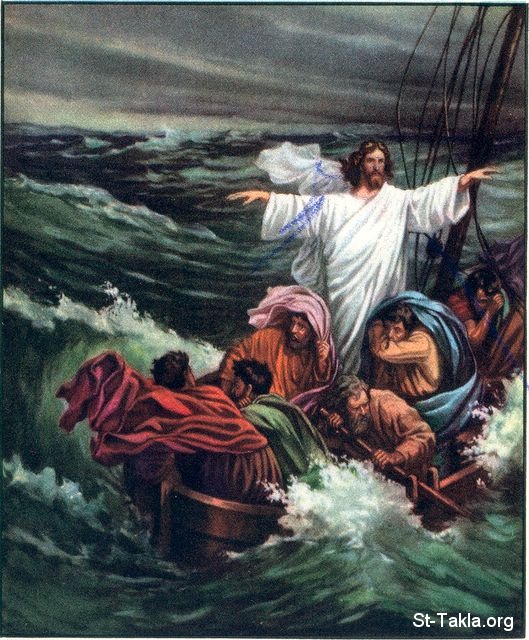
Jesus drives out “evil spirits” from the Gerasene demoniac. (Mk 5:1-20)
Jesus raises Lazarus (Jn 11:1-44) from the dead; and brings Jairus’ daughter back to life (Mk 5:21-43)
Jesus, in a human form, meets, eats, and talks with His disciples following His crucifixion and death (Mt 28:16-17), being seen by “hundreds” of others (1 Cor 15:6).
If you conclude that Jesus was just some guy – some prophet – calling Israel to return to their God, then none of the above stories can be true. They all have to be inventions. Are they?
Did the authors have some political agenda in mind? When these texts were recorded Jesus had been dead for 20-40 years. As such, His memory wasn’t about to resurrect a political movement to throw off Roman oppression because of the reputation these acts had conveyed to Him. Murdered Messiahs did not continue to lead political causes.
What could have been the motivation of a group of common, first-century Jews to conspire to produce these false reports asserting that Jesus had operated with the authority of God? And notice: it had to have been a conspiracy because all of the Gospels played a part in the purported ruse. What would these simple fishermen, tradesmen, and a tentmaker stand to gain from such a conspiracy? I admit I can’t come up with a plausible answer. Can you?
However, if even one of the above stories is true, then in that instance Jesus operated with the authority of God and so met the test of Messiahship.
Keep in mind. The Apostles (except John) were all said to have been killed defending the truth of the story of Jesus’ Messiahship[vi], even including James, the brother of Christ[vii]. It’s quite unlikely that they all would have chosen to die for something they, based on their first-hand experience and knowledge, knew was a lie.
Jesus as the Fulfillment of the “Law” and “the Prophets”
In keeping with God’s goal of the redemption of Israel to Himself, Jesus came not to throw off their physical oppression by Rome but to redeem them from their spiritual separation from YHWH by calling them back to their LORD through their sincere repentance.
In this context, according to His own words, He came to fulfill “the Law” and “the Prophets”:
“Do not think that I have come to abolish the Law or the Prophets; I have not come to abolish them but to fulfill them.” (Mt 5:17)
44 Then he said to them, “These are my words that I spoke to you while I was still with you, that everything written about me in the Law of Moses and the Prophets and the Psalms must be fulfilled.” (Lk 24:44)
What does it mean to fulfill the “Law” and “the Prophets?” Jesus Himself claimed fulfillment of the Prophet Isaiah’s (ch. 61) prophecy in the synagogue in Nazareth: Lk 4:18-21):

18 “The Spirit of the Lord is upon me,
because he has anointed me to proclaim good news to
the poor.
He has sent me to proclaim liberty to the captives
and recovering of sight to the blind,
to set at liberty those who are oppressed,
19 to proclaim the year of the Lord’s favor.”20 And he rolled up the scroll and gave it back to the attendant and sat down. And the eyes of all in the synagogue were fixed on him. 21 And he began to say to them, “Today this Scripture has been fulfilled in your hearing.”
So, Jesus Himself proclaimed that He fulfilled Isaiah’s role of one proclaiming good news and liberty to those trapped in unrighteousness, giving sight to the blind, and, perhaps most significantly, that as He read this passage, that time was “the year of the Lord’s favor” (typically associated with the idea of a jubilee year when slaves are freed, debts cancelled, etc.)
At the most basic level, Jesus’ perfect keeping of the Law, of course, fulfilled the Law (as no one else had ever done so), along with His continuously displayed love of God, and His definitional love of His “neighbors” through His sacrifice for them. (“Greater love has no one than one who lays down his life for his friends.” Jn 15:13)
As mentioned earlier, His life and its suffering fulfilled the prophets’ predictions of Him (a man “acquainted with sorrows”.) (Is 53:3)
His teaching of the principles of the Prophet Moses’ Law[viii] (e.g. His Sermon on the Mount – Mt 5-7)), and His teachings admonishing His hearers to live by it, also fulfilled the Law[ix]. A major focus of Jesus’ ministry was His teaching about, and proclamation of the availability of, the Kingdom of God to those who sought it. (Mt 6:33 33But seek first the kingdom of God and his righteousness, and all these things will be added to you.)
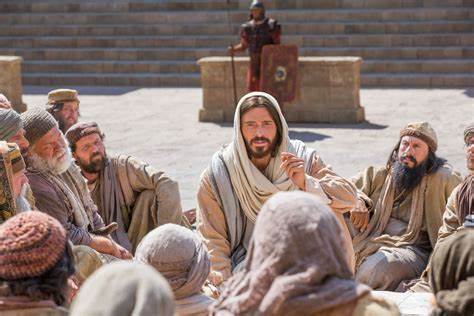
Of course, God’s Kingdom had always existed (as described in the Prophets and Psalms (e.g. Ex 15:18, Zec 14:9, Is 9:7, 1 Chr 29:11, Ps 103:19, Ps 145:13, etc.), and some people, historically, had always lived within it, including some of the great Biblical heroes like Abraham, Joseph, Moses, David, Joshua, Hezekiah, Josiah, and the Prophets. These and its other “residents” were differentiated in that they lived as if God (YHWH) was, in fact, their King.
Jesus’ message was that His first-century hearers could also enjoy the blessings of the Kingdom of God if, in their hearts, they gave their affections, loyalty, and obedience to YHWH.
The problem that Jesus was here to address was that virtually none of His countrymen (and essentially no one in the nations) had ever lived as if YHWH was their King. Their issue was that even if they desired to live for their God (and few did), they couldn’t. They were (as we all are) unable to do so, naturally.
Jesus had come to enable Israel to fulfill God’s intentions for them as a nation. As Jesus indicates in John 14, He got few takers:
6Jesus said to him, “I am the way, and the truth, and the life. No one comes to the Father except through me. 7 If you had known me, you would have known my Father also. From now on you do know him and have seen him.”
There was lots of rocky soil in Israel in Jesus’ day, and there still is.
Jesus was offering a new path into God’s Kingdom (“back to God”, if you will – to His presence) that none could have taken before He arrived – belief in and following Him to the Father as newly-adopted children of God. This will be important when we discuss fulfilling Israel.
Was Jesus the fulfillment of Israel Itself?
What requirements did God place on Israel that needed to be fulfilled? To answer this question, it matters less what Jesus or His followers said He was than what the Tanakh said Israel was to be.
What did God want Israel to Do/Be?
God told His Egyptian refugees that if they would obey His voice and keep His covenant He would make them a “kingdom of priests” (Ex 19:5-6 – to mediate between the nations and YHWH[[x]]) and a “holy nation”. Jesus did minister to (at least one) Gentiles (e.g. Jn 4:13-15) and, without scholarly dispute, maintained Himself as set apart to His Father (i.e. the definition of “holy”).
Israel was to be faithful to YHWH. Obedient to YHWH’s instructions (e.g. see Ex 19:5, above). There are no doubt hundreds of occurrences of texts that either command or implore Israel to be faithful to God and obedient to His instructions. And there are just as many complaining that they were not. Jesus was completely obedient to the Father, even to His death (Jn 6:38, Jn 5:19, Jn 14:31, Mt 26:39, Phil 2:8).

God implored Israel to conduct themselves with humility. (“What does the LORD require of you but to live humbly…” Dt 10:12, Ps 18:27, Ps 149:4, Is 66:2, Mi 6:8). The
character of Jesus was nothing if not humble (except in his dealings with religious leaders). (Phil 2:5-8, Mt 11:29, Jn 13:12-15, Lk 22:27. See also Is 53:7.)
God saw Israel as serving Him. In the Exodus plague narratives, YHWH tells Pharaoh to let His people go so that “they may serve Me” (Ex 7:16). The very same verses that describe Jesus’ humility also describe his service to His Father and His followers, again, even to His death (Luke 22:42).
However, the service God sought did not include the sacrifice of animals of the Temple Cult, the “P” source notwithstanding (1 Samuel 15:22, Psalms 40:6, Isaiah 1:11-17, Jer 7:22, Hos 6:6, Micah 6:6-8). It’s funny. Every Gospel author has Jesus complaining about the Temple and its hypocritical leaders, plus there’s Paul complaining about their legalism. In one of the most mis-translated verses in the NT (Mark 11:17, Lk 19:46), Jesus berates the Temple leaders for turning it into a house not of “robbers”, but of “violence” instead of the house of prayer God desired. Perhaps God had had enough of being ignored and had lost patience with these leaders?
The advent of Jesus didn’t merely announce His fulfillment of (the purpose of) Israel, but provided Israelites with the ability throw off their centuries-old unrighteousness and turn to their God, if only they would follow Him.
He wasn’t here simply to save Israel, as Moses had. He was here to be/fulfill Israel[xi] – and – in that role, to offer its people God’s redemption by taking on Himself the penalty of their ages-old rejection of YHWH.
Fulfillment of the New Covenant Prophecies
I’ve written elsewhere about Christ’s role in purveying the outpouring of God’s Spirit on believers starting at the Pentecost[xii], so I’ll just summarize the point here.
The prophets prophesied that God would “give you a new heart”, put “a new spirit within you”, “cause you to walk in my statutes”, and not hide His face from His people any longer “when I pour out my Spirit upon the house of Israel”, and “on all flesh”.
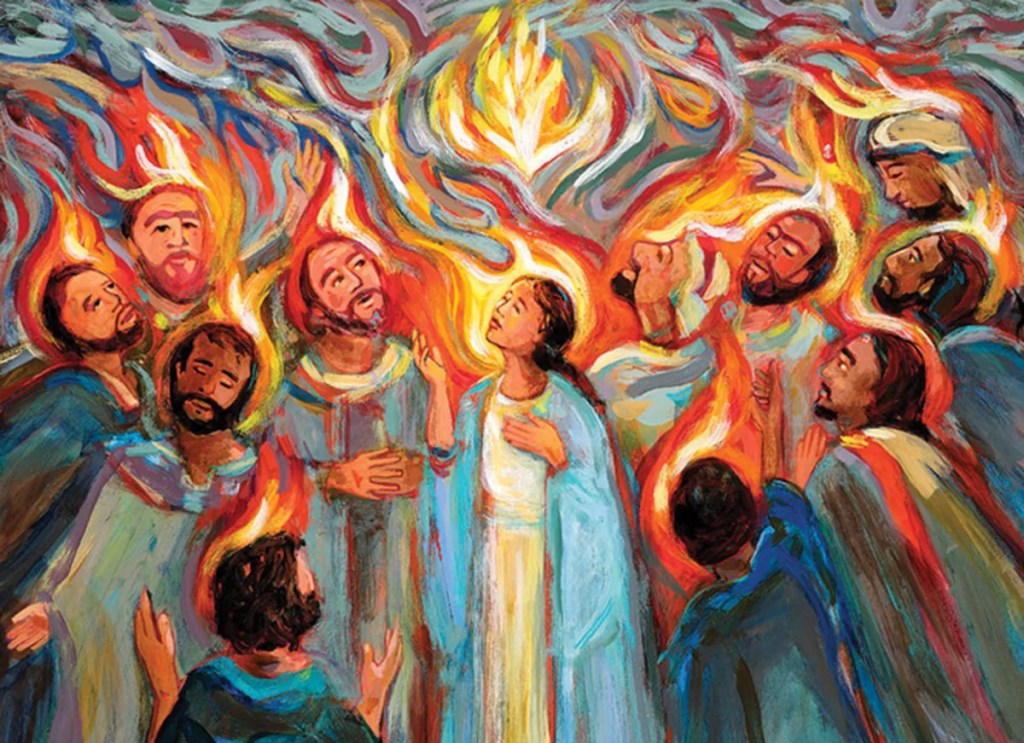
The key point to understand is that this pouring out has already happened, at least for those millions who are disciples of Christ, followers of His way. (It may well have happened to others who have repented of their former lives and committed themselves to their God. We just don’t have stories or confessions about such things.)
These Christ-followers (as distinct from simply church-goers) become transformed from their former manner of living and thinking to living and thinking in a completely God-focused way, and can document for anyone interested exactly how they lived and thought before and after their repentance, commitment to Christ, and subsequent transformation. It’s an empirically observable, provable statement of fact, not just an ambiguous textual promise.
So, what happened to convince God that 33 AD was the right time to “pour out My Spirit on all flesh”? I think the answer is crystal clear.
Jn 8:54-55 Jesus answered, “If I glorify myself, my glory is nothing. It is my Father who glorifies me, of whom you say, ‘He is our God.’ 55But you have not known him. I know him. If I were to say that I do not know him, I would be a liar like you, but I do know him and I keep his word.“
Conclusions
Many reject the story of Jesus out of hand. Many of these believe in God (Deists, Jews, Muslims), just not Jesus. For those who believe in the God of the Bible, their reasons for disclaiming Jesus as God’s agent range from reasoned arguments from Biblical texts to inventions of speculative interpretations of New Testament texts, to simple personal opinion.
In my experience, most of these simply don’t understand why Jesus would have been necessary to God’s purpose. They don’t believe that their current condition is in any way not what God wants for them. They have their lives, their families, hopefully their health, their entertainments, and their Bibles. “What’s the problem?”
Some of these latter folks study their scriptures in some detail, and, assumedly, understand that what they find there is a meta-narrative of a repeating cycle of apostasy, judgment, exile and suffering, culminating in another redemption by God. It should occur to those who see this archetypal pattern occurring throughout the narratives to ask: “How is this story going to end? How is God ultimately going to achieve that which He intended for His chosen people?”
He might even tell these questioners: “Through implementing my New Covenant”, to which they might reply: “When?”, not realizing that it began (at least) 2,000 years ago.
All God asked His people was to love Him as their God – their King, and their neighbors as themselves. The problem the Bible reveals is that people never lived that way, not in some cases because they didn’t want to love God and their neighbors. But they just couldn’t as a continuous pattern of living.
People are just not naturally equipped to live that way. To do so, they have to be changed. People can’t change themselves. So, God was going to have to change them. If we could change ourselves, why would God announce that He was going to transform us? The New Covenant is God’s punchline. And Christ is its purveyor.
Of course, the Bible uses the example of Israel as a metaphor for all of humanity.
In many passages in the Tanakh, God (through his prophets) prophesies that He will send help — a servant, an anointed one, to redeem His people (e.g. Is 59:20). And, He prophesies that He will finally break/end Israel’s cycle of disobedience-to-redemption. In doing so He will impart within them new “hearts”, writing His law on those hearts, imparting knowledge of Him, and implanting in them His Spirit (Je 31:31-34, Je 32:39-41, Ez 11:19, Ez 36:26-27, Joel 2:28, Hab 2:14, Zec 2:10). What He didn’t tell us is how or when He would implement this “New Covenant”.
However, fortunately we have empirical evidence that He accomplished the inauguration of His New Covenant on Pentecost, following Jesus of Nazareth’s death and resurrection, during which He poured out His Spirit on thousands in Jerusalem as the first fruits of a future multitude.
There are those living in your neighborhood today that have experienced this transformation of having God’s Spirt imparted to them. You can talk to them. You can hear their stories of their transformation. There’s no mystery here. And there is no reason, therefore, that you have to rely on your own understanding of the Jesus narratives in the New Testament or the New Covenant pronouncements. Just talk to His followers. Their stories are the clear evidence of Jesus’ veracity as God’s Redeemer, the one to transform people to devotion to their God. God, in His power and mercy, intervened through Jesus to break the cycle of disobedience.
There was then a Temple-cult-inspired apostasy away from the heart of God and toward separation from Him through the palliative of animal sacrifice and ritual. So, in condemning this spiritual condition that He said He was here to heal (Mt 9:12-13) (and its “violent” religious practices administered by “hypocrites”), Jesus:
- Called His countrymen’s attention to their separation from their God and His will
- Called out the purveyors of the Temple-cult apostasy and their hypocrisy
- Suffered and died for His testimony, thereby providing the equivalent of something like Abraham’s surrogate ram at the Aqedah on behalf of His beloved Israel (Mt 23:37)
- Opened the way to life in the Kingdom of God through repentance and belief in, and dedication to, He and His Father.
- Inaugurated God’s New Covenant with the people, one in which He was the one to change their hearts and minds to seek after and follow Him, no longer requiring that they change their nature themselves.
Here I’ve presented a case for Jesus of Nazareth as not only Israel’s Messiah – the one foretold, but also the fulfillment of their “Law” and “Prophets”, and finally, fulfillment of the expectations for Israel as a people. You, of course, are welcome to disagree.
But, if you disagree, please make sure you have your textual, historical, and empirical data that support your disagreement. Otherwise, it’s just an opinion.
Mt 16:16-17
16Simon Peter replied, “You are the Christ, the Son of the living God.” 17And Jesus answered him, “Blessed are you, Simon Bar-Jonah! For flesh and blood has not revealed this to you, but my Father who is in heaven.“
Before Christ, most people simply ignored their God and His will for them. After Christ, thousands, then millions of people were transformed to seek nothing other than their God’s approval, wisdom, and will. This can hardly be a coincidence.
The Paradox of Christ is that no one can truly know and accept His truth until s/he has committed themselves to that truth. Only then can they understand God’s immeasurable gift through Him.
[i] Many who dismiss the NT in part or in its entirety love to pick apart verses like this. After perhaps agreeing that Isaiah 53, Psalm 22, and Zechariah 12 do in fact describe a servant of God suffering, they protest that a prophecy of rising to life after 3 days is nowhere to be found in the scriptures. However, there are several where God waits 3 days before conveying a blessing (e.g. Gen 22:4, Ex 19:11, Es 5:1). And there is Hosea 6:2 and, of course, the story of Jonah’s “resurrection” from the fish. It’s likely that even they wouldn’t dispute that Christ preached repentance for the forgiveness of sins, as the passage claims.
[ii] In The “Fulfillment” of Scripture – A Pilgrim’s Search, I flesh this subject out in more detail.
[iii] Culver, Robert D, The Old Testament as Messianic Prophecy, Trinity Evangelical Divinity School, Deerfield, IL.
[iv] Judas of Galilee (died c. 6 AD); Theudas (executed c. 44 AD); Simon of Perea (died c. 4 BC); Athronges the Shepherd (c. 4 BC); The Egyptian (c. 50s AD – “Antiquities of the Jews”, Book 20, Chapter.8.6; Menahem ben Judah (died 66 AD); Simon bar Giora (died 70 AD). See also List of Messiah Claimants.
[v] Tabor, James D, Messiahs in the Time of Jesus, April 12, 2019
[vi] Nelson, Ryan, How Did the Apostles Die? What We Actually Know, overviewbible.com, Dec 17, 2019
[vii] Josephus, Antiquities of the Jews, Book 20, Chapter 9.1.
[viii] By “Moses’ Law” I mean the Ten Words/Commandments
[ix] Terzek, Taylor E, Fulfillment in Matthew and the Jewishness of Matthew’s Jesus, Northern Seminary, Oct. 2021 AND: Coutsoumpos, Panayotis, Jesus, Matthew’s Community, the Law, and Judaism, Biblical Theology Bulletin, Vol 42, pp 2-12
[x] IVP Bible Background Commentary: Old and New Testament, 2nd ed. – Ex 19:5-6
[xi] Jesus’ life mirrored Israel’s history in a metaphorical way as well. In a sense, He was “exiled” from the presence of the Father in taking on the incarnation. Certainly, in that exile, before redemption, He (like they in Egypt, Babylon, etc.) suffered. This was a hallmark of Israel’s first-century eschatology. Ultimately, He was redeemed back to the Father following His brutal death. In this sense His life was a kind of microcosm of Israel’s 1500 year history. But, as pointed out in this piece, His life was dissimilar from that of the Israelites in every way important to God.
[xii] These three pieces address the subject of the purveying of God’s Spirit to indwell believers, thus enacting the New Covenant: Why Jesus? – A Pilgrim’s Search, Searching For (and Finding) the “Needle in the Biblical Haystack”: Following the Bible’s “Blue Thread” – A Pilgrim’s Search, Interpreting the New Covenant – A Pilgrim’s Search
