Introduction
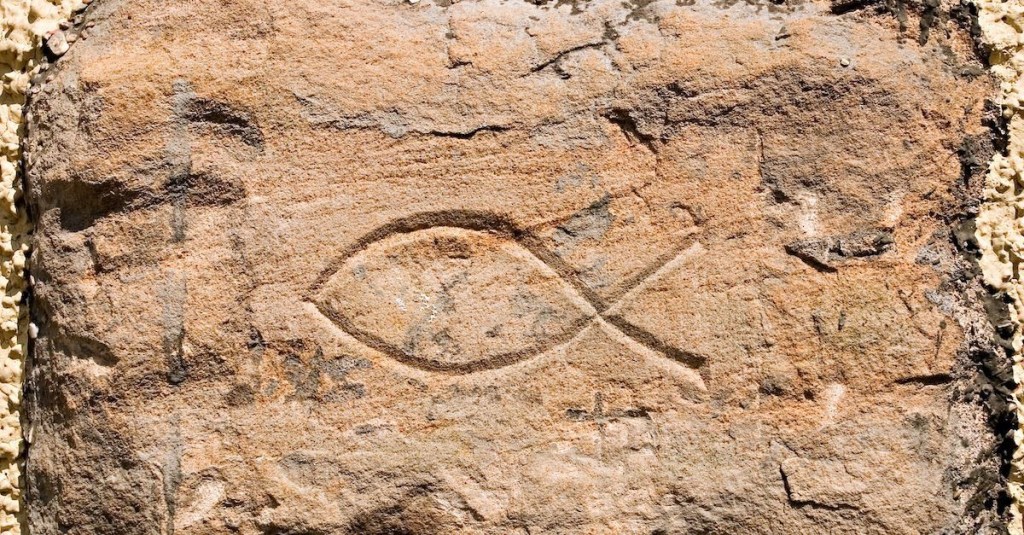
There is an intriguing connection, as pointed out by my friend and Hebrew Bible teacher, Ross K. Nichols, between some of the Hebrew Bible’s prophecies, describing a regathering set off by phrases placing that regathering in the “latter”/”last”/”days to come”, and Jesus’ statement that He would make His Disciples (the fishermen Simon (Peter) and his brother Andrew while they were in the process of fishing) “fishers of men” (Mt. 4:19). Question: Was Jesus simply using the obvious metaphor that those Disciples were vocationally already fishermen to connect to the mission He was inviting them to take up? Or is there some more direct linkage between Jesus’ description of their mission and the regathering/redemptive prophesy narratives of the OT? In other words, are the two images (fishing for men and the OT’s prophesied regathering) one in the same activity? Let’s see.
The Founding of Israel
Before the Israelites can be redeemed to their God, they have to first be created. The Book of Genesis takes us from the Creation story, through Adam, Noah, Abraham, and Isaac to Jacob who, through four different women, fathers the twelve sons who will produce the twelve tribes of Israel.
Jacob has a special son, however – Joseph — who is both the victim of his brothers’ violence and deceit (Ge 37), but will become their, and their father’s, savior from a famine in their homeland (Ge 42-46). The conclusion of this narrative is marked by Jacob (Israel) following his sons to Egypt and residing there in Joseph’s care for the final seventeen years of his life. So Joseph becomes the redeemer not only of his father but of his brothers, the precursors of the nation of Israel.
Prophecy of Joseph’s Sons Manasseh and Ephraim
Joseph marries an Egyptian woman, Asenath, by whom he is given two sons, Manasseh and Ephraim. Interestingly, for reasons we’re not told, Jacob takes a special interest in these two grandchildren to the extent that he claims their adoption (Ge 48:5). Following this scene, Jacob performs a blessing on the boys, provocatively placing his right hand on Ephraim, the younger of the two, and his left on Manasseh despite Joseph’s intervention to correct his father (Ge 48:14, 17-19).
The blessing Jacob pronounces on the sons is quite remarkable. Ge 48:19
[19] But his father refused and said, “I know, my son, I know. He also shall become a people, and he also shall be great. Nevertheless, his younger brother shall be greater than he, and his offspring shall become a multitude of nations.”
This promise/prophecy is quite unequivocal. Jacob says that Ephraim, who will go on to be the dominant northern tribe in the about-to-be-founded nation of Israel, will become a multitude of nations.
The two descriptive words we need to pay attention to are highlighted: multitude (4393. מְלׂא melō’, מְלוֹא melô’, מְלוֹ melô: A masculine noun referring to what fills, makes full, fullness; abundance) and nations (1471. גּוֹי gôy, גּוֹיִם gôyim, הַגּוֹיִם hāggôyim: A masculine noun meaning nation, people, Gentiles, country.)
The provocative nature of this prophecy is its use of the word goyim to describe the people that will come from Ephraim. And he is not going to produce a nation. He is going to produce a multitude of nations. Now, the meaning of “nation” in Iron Age Israel was a people – a group who shared some familial or at least geographic bond. God’s people “Israel”, before the north-south split, were a singular nation. So if Ephraim is going to produce a multitude of nations (goyim), plural, then they aren’t going to be the mother nation of Israel, but something else. And if you aren’t Israel, you’re Gentile, at least as far as Iron Age Jews were concerned.
Creating a Multitude
In telling the story of Israel, God repeatedly exhorts His people to be “fruitful and multiply” (starting with Ge 1:28). This image of multiplying (7235. רָבָה rāḇāh, הַרְבֵּה harbēh) as a people is pervasive throughout the Torah.
In Ge 48:16, Jacob introduces us to the first indirect analogy of the multitude of Israelites being likened to a school, or multitude, of fish.
[16] the angel who has redeemed me from all evil, bless the boys;
and in them let my name be carried on, and the name of my fathers Abraham and Isaac;
and let them grow into a multitude in the midst of the earth.”
The word here translated as “grow” is:
- דָּגָה dāg̱āh: A verb meaning to multiply, to grow. Its primary meaning is to cover. It is used only in Ge 48:16 where Jacob blessed Ephraim and Manasseh, the sons of Joseph. He desired that they multiply or grow into a multitude. Jacob prophesied that Ephraim, the younger brother, would be a multitude of nations, more populous than Manasseh (cf. Ge 48:17-19) but that both would be a model of blessedness (cf. Ge 48:20).
In noun form, the word is:
- דָּגָה dāg̱āh: A feminine noun meaning fish. This word is identical in meaning to dāg̱ (1709), which can be found in the book of Jonah, where the fish was called a dāg̱ (Jon 1:17[2:1]]; 2:10 [11]) but was called a dāg̱āh in Jon 2:1 [2]. In all other instances, this word was used in the collective sense to refer to the fish at creation (Ge 1:26,28); the fish who died in the plague (Ex 7:18,21;Ps 105:29); the fish eaten in Egypt (Nu 11:5); and the fish in the waters (Dt 4:18;Eze 29:4,5;47:9,10).
As you can see, both words contain the same root:
- דָּג dāg̱: A masculine noun meaning fish. The word is derived from dāg̱āh (1711) based on the idea that fish multiply quickly. The word is used of fish in the sea, often occurring alongside birds of the heavens and beasts of the field (Ge 9:2;Ps 8:7 [8], 8 [9]; Eze 38:20)…
The noun form describes a huge number of things. The verb form describes the process – “grow”ing – to become such a huge multitude. The core image is of teaming schools of fish analogous to a multitude of people – multitudinous people.
The Hebrews were apparently faithful in following this command, becoming in Egypt (Ex 12:37) “…about six hundred thousand men on foot, besides women and children.“
Israel’s Disintegration, Destruction, and Exile
Following their Exodus from Egypt, the then-nation of Israel settles in Canaan, in and amongst that land’s pagan inhabitants. The Hebrew Bible relates, mainly through its prophets, that the people of Israel were disobedient to their God. Initially, due to political disputes generated by Solomon’s and Rehoboam’s ill-treatment of their people, the northern ten tribes split off from the Jerusalem-centered tribes and their Temple cult.
Ultimately, God disciplines first the northern tribes for their subsequent apostasy (in 722 BC) by initiating their conquest and exile by the Assyrians. Relatively soon thereafter, He disciplines the southern tribes – the Judahites and Benjaminites – through their conquest and exile by the Babylonians in 586 BC.
The result was that only a very few Israelites actually remained alive in the land of Israel. All the rest, including all of the princely and priestly classes, were dispersed to the north and east to live in and among the peoples and cultures of their conquerors.
But for God, this wasn’t a permanent judgment. His ultimate plan was to regather His people back to their homeland, and to Himself. Moses announces this intention in Dt 30:1-3:
[30:1] “And when all these things come upon you, the blessing and the curse, which I have set before you, and you call them to mind among all the nations where the LORD your God has driven you, [2] and return to the LORD your God, you and your children, and obey his voice in all that I command you today, with all your heart and with all your soul, [3] then the LORD your God will restore your fortunes and have mercy on you, and he will gather you again from all the peoples where the LORD your God has scattered you.
Regathering/Restoration Promises
Moses’ announced regathering plan is repeated by several of the Prophets. Here is a selection of their prophecies:
Isaiah 2:1-3
[1] The word that Isaiah the son of Amoz saw concerning Judah and Jerusalem.
[2] It shall come to pass in the latter days
that the mountain of the house of the LORD
shall be established as the highest of the mountains,
and shall be lifted up above the hills;
and all the nations shall flow to it,
[3] and many peoples shall come, and say:
“Come, let us go up to the mountain of the LORD,
to the house of the God of Jacob,
that he may teach us his ways
and that we may walk in his paths.”
For out of Zion shall go forth the law,
and the word of the LORD from Jerusalem.
The author of Micah appreciated Isaiah’s prophecy, virtually repeating much of it, but provocatively substituting “nations” (goyim) for Isaiah’s “people”: Micah 4:1-2
[1] It shall come to pass in the latter days
that the mountain of the house of the LORD
shall be established as the highest of the mountains,
and it shall be lifted up above the hills;
and peoples shall flow to it,
[2] and many nations shall come, and say:
“Come, let us go up to the mountain of the LORD,
to the house of the God of Jacob,
that he may teach us his ways
and that we may walk in his paths.”
For out of Zion shall go forth the law,
and the word of the LORD from Jerusalem.
Jeremiah 3:12
[12] Go, and proclaim these words toward the north, and say,
“‘Return, faithless Israel,
declares the LORD.
I will not look on you in anger,
for I am merciful,
declares the LORD;
I will not be angry forever.
Jeremiah 30:3
[3] For behold, days are coming, declares the LORD, when I will restore the fortunes of my people, Israel and Judah, says the LORD, and I will bring them back to the land that I gave to their fathers, and they shall take possession of it.”
Jeremiah 31:8
[8] Behold, I will bring them from the north country
and gather them from the farthest parts of the earth,
among them the blind and the lame,
the pregnant woman and she who is in labor, together;
a great company, they shall return here.
[9] With weeping they shall come,
and with pleas for mercy I will lead them back,
I will make them walk by brooks of water,
in a straight path in which they shall not stumble,
for I am a father to Israel,
and Ephraim is my firstborn.
Isaiah 11:11
[11] In that day the Lord will extend his hand yet a second time to recover the remnant that remains of his people, from Assyria, from Egypt, from Pathros, from Cush, from Elam, from Shinar, from Hamath, and from the coastlands of the sea.
This one is interesting both as a repetition of God’s basic promise, but also due to some interesting Hebrew wordplay.
The phrase “yet a second time” is the translation of the Hebrew: 3254. יָסַף yāsap̱ “A verb meaning to increase, to do again, to continue.” The author of (First) Isaiah is writing about the pre-Assyrian exile period of the northern tribes (“Ephraim”, “Joseph”) — 9th century BC — and is mindful of the Genesis 49 storyline of Jacob’s blessing of Joseph.
Genesis 49:22
[22] “Joseph is a fruitful bough,
a fruitful bough by a spring;
his branches run over the wall.
[23] The archers bitterly attacked him,
shot at him, and harassed him severely,
[24] yet his bow remained unmoved;
his arms were made agile
by the hands of the Mighty One of Jacob
(from there is the Shepherd, the Stone of Israel),
[25] by the God of your father who will help you,
by the Almighty who will bless you
with blessings of heaven above,
blessings of the deep that crouches beneath,
blessings of the breasts and of the womb.
[26] The blessings of your father
are mighty beyond the blessings of my parents,
up to the bounties of the everlasting hills.
May they be on the head of Joseph,
and on the brow of him who was set apart from his brothers.
Joseph’s name in Hebrew is 3130. יוֹסֵף yôsēp̱. So here the author of Isaiah is exercising some literary ingenuity to link the “again” offer of redemption to the northern exiles, themselves descendants of “Joseph” (through Ephraim and Manasseh) to their ancestor Yosef. (Sorry for the digression 😉 ).
Finally, and perhaps most profoundly, Jeremiah phrases God’s intent in restoring Israel in
Je 16:16
16“Behold, I am sending for many fishers, declares the LORD, and they shall catch them. And afterward I will send for many hunters, and they shall hunt them from every mountain and every hill, and out of the clefts of the rocks.
It’s hard from this to miss what Jesus’ metaphor was intended to convey — the mechanism of the regathering of Israel.
Back to Jesus’ Invitation to Simon and Andrew
So we ask again, is Jesus’ invitation to the fishermen Simon and Andrew to follow Him and become “fishers of men” just a simple word play on their vocation? Or, is Jesus instead doing not only that, but also tying the vocation He is inviting them to follow back to God’s characterization of His people as a 1710. דָּגָה dāg̱āh – school of fish. Jesus’ metaphor wasn’t merely a clever characterization tied to ancient prophecy. It was a fact that there were, indeed, a multitude of nations of Israel’s children to be fished for and brought back to God.
Yes, they had been invited by God, post-exile, back to the land He promised to Abraham. But His real invitation was to return to Him. And this is the mission Jesus Himself was here to inaugurate, and to conscript His Disciples to implement.
Paul, the Apostle, also had some insight into this mission, which I have written about here.
Conclusion
Jesus’ invitation to Peter and Andrew had much more meaning than meets the eye. He had been sent to redeem His people first, as recorded in Mt 15:24:
[24] He answered, “I was sent only to the lost sheep of the house of Israel.”
But, depending on how you define that set of people (current residents of Israel, or former, dispersed descendants of the people of Israel) that job could be incalculably more challenging than it may have appeared to the Disciples.
It seems Jesus had the larger population in mind, not least because, following His resurrection, His commission to them was: Mt 28:18-20
[18] And Jesus came and said to them, “All authority in heaven and on earth has been given to me. [19] Go therefore and make disciples of all nations, baptizing them in the name of the Father and of the Son and of the Holy Spirit, [20] teaching them to observe all that I have commanded you. And behold, I am with you always, to the end of the age.”
The job Peter, Andrew, the other Disciples, and later Paul were commissioned to perform was nothing less than the ancient decree of regathering ALL people back to their Lord. And that remains the job for all of His followers to this day.

Leave a comment