Category: Jewish Law
-
The Development of Israel’s Idea of Righteousness

“Righteousness” to Israel came to mean being acceptable to God. Most know that the Ten Commandments given by God to Israel at Sinai served as the foundation for Israel’s idea of righteousness. The evolution of Israel’s received understanding of their position vis-à-vis the status of “righteous” to God was dependent on their progressive revelation by God of His will for therm. And, they had to fight through many false declarations intent on obscuring the truth to benefit men. While the Decalogue remained the bedrock of Israel’s moral imperative, their view did not remain static but developed through their history. Our…
-
Forgiven, or Transformed to Righteousness?

For centuries, the traditional, Christian interpretation of Jesus’ death has been that it was an atonement for the sins of those who would choose to “believe” and follow Him. This scenario portrayed a kind of cosmic cleansing for those who believed, though no one told us what that meant. A common assumption is that having one’s sins atoned for/forgiven is having them excused. For the record, not everyone completely bought the cosmic cleansing story, citing texts (e.g. Luke) that didn’t completely embrace the sacrificial atonement theme.
-
Learning the Real Paul (and Unlearning What You’ve Been Taught)

Scholars and expositors have been mangling Paul’s message in his epistles (particularly Romans) for centuries. If we are to see Paul’s true message, we’re going to have to dig much more deeply into the text, and then unlearn nearly everything we thought we knew. No small undertaking. But in so doing, we will also see revealed the true Gospel message of not only the entire New Testament, but the Hebrew Bible as well, as one grand story. And once you’ve seen this story accurately, it is doctrine- and theology-upending to the point that you will never again read your Bible…
-
The Letters of James and Paul — Different?

There is an undercurrent of opinion amongst scholars of the early Church and Bible students that James, the brother of Jesus, and Paul the Apostle proclaimed two different gospels – that the book of James contains an authentic look into 1st century Jewish Christianity and what his brother, Jesus, taught, while Paul’s epistles lay out a completely different “religion”. Some of these also believe that, since Paul wrote first, that aspects of his letters were borrowed by the Gospel writers, thus propagating the Paul version of Christianity throughout nearly the entire New Testament. Is this viewpoint correct?
-
Whatever Happened to Yom Kippur?
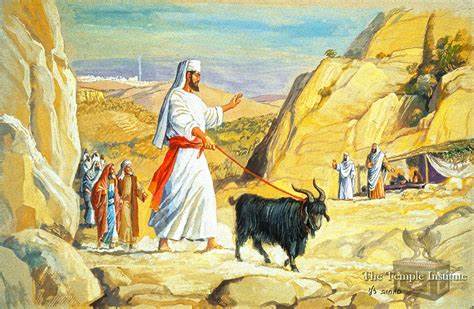
I spend virtually zero time reading the Talmud. However, I recently stumbled onto a video presentation that describes some radically strange stuff there having to do with the Yom Kippur ceremony, especially after 30 AD. Especially for Christians, this is a must-know piece of Jewish legend.
-
Searching for the Bible’s Sources

Many laymen dispute that the Pentateuch was written by several distinct authors. Biblical scholars don’t. But they disagree on who those authors were and what they wrote. If we stipulate that the authors of the Documentary Hypothesis wrote the Pentateuch, what can we discover about their backgrounds and worldviews? Let’s see.
-
The Origins of Judaism

When did “Judaism” begin to be widely practiced (i.e. widespread adherence to what we today recognize as the rules and calendar of the Pentateuch)? Irrespective of when the individual books of the Pentateuch were written, when did the majority of Judeans begin to live them out? The answer is quite shocking.
-
What Did the “Law of Moses” Mean To…?

This post presents a three-part series looking at what the term “Law of Moses” (and similar) meant to different people at different times in the Bible; 1) The Israelites, at various points in their history, 2) Jesus (in His many interactions with others involving His understanding of its meaning), and 3) Paul, who infamously dismissed “works of the law” as valid for justification of his Jewish brethren.
-
Jesus and the Moses Scroll

Our purpose here is to compare and contrast the “Ten Words” (Decalogue) found in the “Moses Scroll” (MS) with both of the other canonical versions found in Exodus and Deuteronomy, but also with the teachings of Jesus. We’ll see if the nuances in the MS Ten Words (and their blessings and curses) can also be detected in Jesus’ teachings. And if they can, can we propose how such a linkage could exist when at the same time it is missing or much harder to find between our published versions of the Decalogue? Let’s see.
-
Moses’ Real Words?
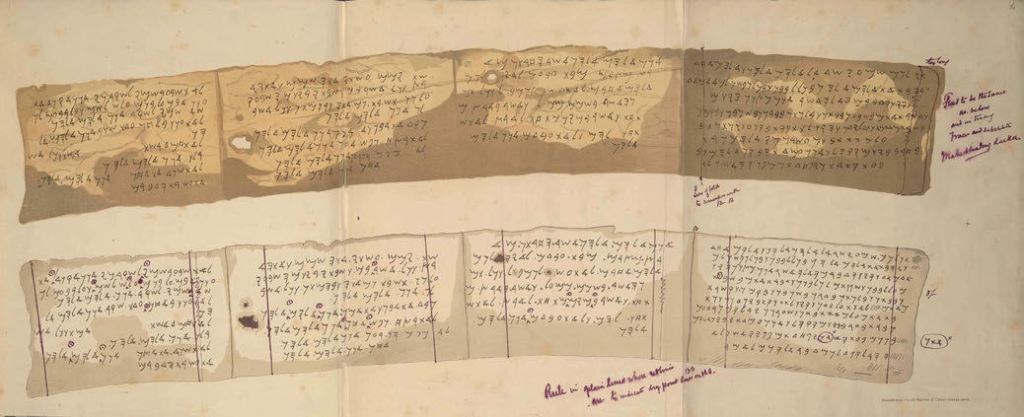
In the 1880’s an antiquities dealer in Jerusalem came into possession of an apparently ancient “scroll” consisting of fifteen strips of leather containing paleo-Hebrew texts. Within a period of five years of their “publication”, the fragments had been declared forgeries by “experts” in Europe, and shortly thereafter, the antiquities dealer, Moses Shapira, committed suicide in a Rotterdam hotel room in 1884. But what if they were authentic? That’s the question I want to pose and try to answer.
-
The “Fulfillment” of Scripture
Luke 4:[17] And the scroll of the prophet Isaiah was given to him. He unrolled the scroll and found the place where it was written, [18] “The Spirit of the Lord is upon me, because he has anointed me to proclaim good news to the poor. He has sent me to proclaim liberty to the captives and recovering of sight to the blind, to set at liberty those who are oppressed, [19] to proclaim the year of the Lord’s favor.” [20] And he rolled up the scroll and gave it back to the attendant and sat down. And the eyes…
-
Did God Deceive Israel?

People who read the Bible somewhat seriously are well aware of the Biblical story leading up to the nation of Israel; their near-total rejection of their redeeming God; His attempts to retrieve them from their apostasy; and their ultimate destruction as a nation and collection of tribes in 70 and 135 AD. What some may fail to notice is that even before they entered the “promised land”, God had foretold their apostasy and that, as a result, they would endure the curses articulated in His covenant made with them at Horeb.