Introduction
Most people who embark on a journey expect to arrive at their destination. Airports contain huge boards showing the status, gate number, and destination of all of its departing airplanes. All of the people boarding a flight for a particular destination fully expect to arrive at that destination.
But this situation isn’t true of every pursuit. Our premise here is that there are those embarked on the abstract journey of “knowing” that don’t always want to succeed. They don’t want to “arrive”. They’re more comfortable just learning.
Context
The condition we’re exploring is found in many activities. It can be argued that those involved in academic research aren’t realistically looking for a culmination of their knowledge. Their purpose is to find and report new knowledge as a vocation. Similarly, doctors understand that they sign up for a lifelong vocation of learning the newest drugs and treatment techniques as they are developed. They don’t expect to ever know all there is for them to know, let alone a profound truth that changes them.
The activity we’re interested in here is the path to “knowing” the cosmic truth revealed within the pages of the Bible. By this we mean the recognition of profound truth that no amount of detailed historical, literary, or archaeological knowledge can dislodge from its preeminent position in the “knower’s” worldview.
Now, this person may well keep learning, even after accepting and committing to the cosmic truth. But that truth has already established his epistemological foundation on which new knowledge is simply built into its architecture.
Perhaps surprisingly, lots of people engaged in this learning don’t actually want to “arrive” at this type of destination – at this kind of profound knowing. Rather, they would prefer to remain unencumbered by any acknowledgement of profound truth that might unsettle them (2 Tim 3:7). For them to remain comfortable, every issue needs to have possible answers, not answers that they acknowledge as “true” in an absolute sense. It seems they simply don’t want to be changed by what they have learned. Why that should be is the subject of our investigation.
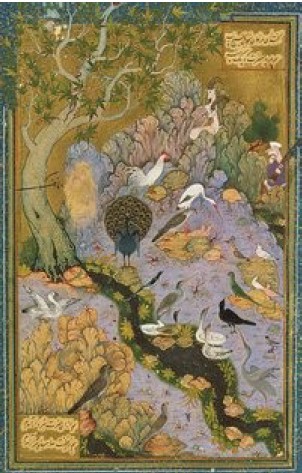
“The Conference of the Birds”[i], [ii] Allegory
This “learn but don’t know” (or “search but don’t find”) metaphor has been popular in literature for centuries and remains so today. The theme of most of these stories represent cautionary tales for those who insincerely seek “truth”. These want to know, but they don’t want to believe it.
In the middle-ages (1177-1180 AD), a Persian Sufi named Farid ud‑Din Attar composed an allegorical poem that relates a variant of this theme called “The Conference of the Birds”. In true Sufi tradition, this poem forces its cast of characters to come to grips with the reality that what they are seeking has been available to them all along. But, now knowing the reality of their goal, they refuse to embrace it, seemingly preferring their status quo ante.
Plot
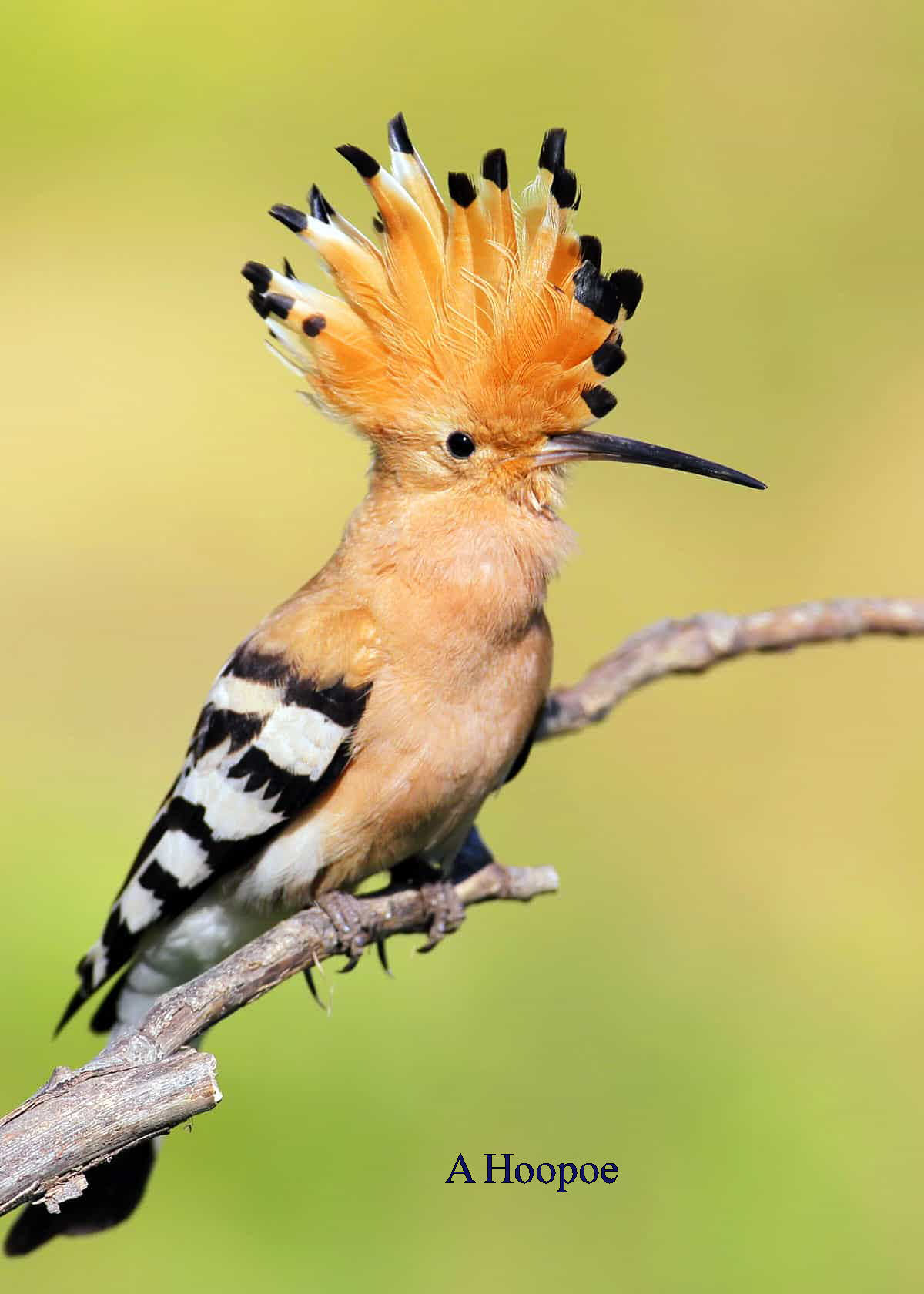
The poem’s characters are all birds. They set out to find their “king”, encouraged and led by a Sufi master bird (murshid), Hoopoe. Having lived in a state of confusion and disorder, at Hoopoe’s encouragement the birds conclude that they need a king to establish order in their lives. Hoopoe displays all the qualities of a leader the birds would benefit from in their search – humble persuasion, and devotion to them and his task.
The sought “king” of their quest is called the Simurgh. Initially Hoopoe describes the Simurgh as simply the birds’ true king, though he lives in a distant, inaccessible land. But he eventually reveals that this entity is the ruler of all creation, so radiant that no one can endure His presence, the one worthy of devotion and the answer to their longings.
The Characters
In addition to their leader, Hoopoe, the birds have the following significant members:
- The Nightingale represents romantic love and attachment to earthly passions. He says he can’t seek the Simurgh because he’s already “in love” with the rose.
- The Parrot has a desire for immortality and is spiritually vain. He is fixated on the “water of life” which he believes will convey safety and eternal youth.
- The Peacock seeks worldly glory. He wants only to return to the Garden of Eden, not seek the Simurgh.
- The Duck symbolizes ritual purity and legalism. He is quite content with bathing in water and external purity, certainly not any kind of inner reform.
- The Hawk symbolizes pride in his status and his access to power. He’s quite happy serving earthly kings and is hesitant to seek a higher king.
- The Heron, Finch, etc. represent various fears, doubts and rationalizations. Each has a different excuse for not wanting to undertake the search.
The Unfolding Story
All of these characters initially recognize their lacking, and their need for redemption by finding this being to rule them. Along the way, Hoopoe begins revealing to the group some requirements of them that will be necessary in order for them to perceive the Simurgh, through statements like:

- “You must lose yourself to find Him.”
- “You must burn away your identity.”
- “You must become nothing.”
- “Only those who abandon all attachments can reach Him.”
- “The Simurgh is hidden behind the veil of your own ego.”
In the course of their journey Hoopoe leads his group through seven valleys, all the while representing exactly the characteristics they seek from the Simurgh – guidance, warning, encouragement, interpretation, and consolation. He knows the terrain because he’s travelled it before.
As they proceed through the third of the seven valleys, Attar cites the sentiment (from available paraphrases):
“The more he knows, the less he knows he knows;
Knowledge is endless, and the seeker goes
From peak to peak, yet never finds the end.”
As each new valley presents its challenges to accede to the requirements of the Simurgh, many in the group abandon their journey and turn back, seeking rather to “hold onto themselves” than to find and embrace the cosmic truth. As Attar puts it:
“Many are the travelers who faint upon the way, unable to endure the first trials of the Quest…”, the idea being they prefer the comfort of the known.
Ultimately, Hoopoe unveils the reality of the Simurgh to his group, noting that:
- He is not separate from them
- He is not an object
- He is not a destination
- He is a state of being
Finally, Hoopoe just goes quiet, as if to underscore that his group’s acceptance of the Simurgh is not dependent on his words but wholly a decision they must make for themselves. Hoopoe has prepared them (after already completing this journey previously himself). Having played the role of a “living map” of their journey, Hoopoe disappears, acknowledging that accepting the truth of the Simurgh is a transformation of oneself that words are inadequate to describe.
In this final revelation, the birds come to realize that the Simurgh is not some external being (king or otherwise) but a mirror of their transformed selves.
Resolution
Following this final revelation, the thirty birds (a Persian play on the word Simurgh) that are left accept life in/with the Simurgh, having succeeded in abandoning the characteristics that had prevented their fulfillment to this point, principally their egos. No longer do they have selves that want a king; feared the journey; or imagine their goal to be an object. Rather, they have become “empty”, in the Sufi sense.
Interpretations
The Foundational Message
It is amazing how universal this message of ultimate spiritual fulfillment is. This Sufi Islamic story, with slight tweaks, could describe the Christian journey as well as the Jewish (perhaps Kabbalistic) journey, not to mention the Buddhist, Hindu and Zoroastrian journeys. And, it is particularly revealing that its foundational message is that finding the ultimate truth requires an unreserved submission of the self. Isn’t it fascinating, and telling, that this essentially traditional Christian message is represented so clearly in a Sufi poem?
And, just to state the obvious, this is a message completely at odds with the modern secular message that one’s preeminent goal is to have comfort, security, well-being and reverence, for himself.
Why Do People Fail?
As we observed earlier, people naturally prefer to “’hold onto themselves’ rather than to find and embrace the cosmic truth.” They think they want to know the most profound reality. But when they get too close, they sense a threat to themselves, something like standing near a high-voltage current and feeling a tingling in your skin, or a heaviness in the air. They understand that submitting to it will mean that they need to give themselves up, becoming utterly transformed into people who bear little resemblance to what they have been – “to die to themselves” as the Christians put it. And this is a price most are unwilling to pay. Making such a commitment is non-trivial.
You could call this a self-preservation instinct which, of course, it is. Or you could call it simply insincere in its motivation, as their self-preservation is clearly higher priority to them than actually “knowing” their Creator and living His will.
However, this almost trivializes the situation. People believe what they believe and, in the extreme, will sacrifice for the preservation of that belief whatever its merit. In a very real sense, it defines them – their identity. It becomes a kind of addictive drug for them.
So, when they bump up against information that feels as if it challenges their believed identity, the natural reaction is to reject that information, seeking instead the comfort and felt security of their belief – their “knowing”.
Perhaps first and foremost, situations akin to our birds passing through the increasingly disconcerting valleys, threatens their control of their lives. If cosmic understanding requires abandoning oneself to an utter dependency on an “other”, even God, most will elect to pass on that understanding and instead preserve control of their lives for themselves.
Consequences
It is for this reason that the Creator of the universe promised that He would effect our transformation if we sincerely sought Him and freely chose to turn away from the lives we had been living and controlling apart from Him, and turned ourselves over to Him, effectively becoming lumps of clay on His potter’s wheel.
Most people want no part of that, as our Sufi master understood 1000 years ago (i.e., most birds turned back). But they will tell themselves they are searching for the “truth”. They will spend countless hours reading, studying, and learning, but only up to a point. What they won’t do is commit themselves to the truth that they come to know, intuitively, holds their salvation.
Some of the birds saw and understood their salvation and chose to be transformed to embrace it. Most didn’t, choosing the security of being in charge of themselves, and the subset of information they, in their human-like frailty, chose to believe.
The “narrow way” isn’t difficult to find. It’s difficult to choose (Mt 7:14). Everything hinges on which path we choose.
[i] Attar, Farid un-Din, The Conference of the Birds, 1179 AD
[ii] Davis, Richard, The Conference of the Birds, 1984
