Tag: Judaism
-
Always Learning, Never Knowing

Most people who embark on a journey expect to arrive at their destination. Airports contain huge boards showing the status, gate number, and destination of all of its departing airplanes. All of the people boarding a flight for a particular destination fully expect to arrive at that destination. But this situation isn’t true of every pursuit. Our premise here is that there are those embarked on the abstract journey of “knowing” that don’t always want to succeed. They don’t want to “arrive”.
-
The Development of Israel’s Idea of Righteousness
“Righteousness” to Israel came to mean being acceptable to God. Most know that the Ten Commandments given by God to Israel at Sinai served as the foundation for Israel’s idea of righteousness. The evolution of Israel’s received understanding of their position vis-à-vis the status of “righteous” to God was dependent on their progressive revelation by God of His will for therm. And, they had to fight through many false declarations intent on obscuring the truth to benefit men. While the Decalogue remained the bedrock of Israel’s moral imperative, their view did not remain static but developed through their history. Our…
-
How Old is the Hebrew Bible?
How old are the books of the Hebrew Bible, and why should we care? Since the Bible is likely the most influential book ever written, we deserve to know the truth of its composition and history.
-
The Origins of Judaism

When did “Judaism” begin to be widely practiced (i.e. widespread adherence to what we today recognize as the rules and calendar of the Pentateuch)? Irrespective of when the individual books of the Pentateuch were written, when did the majority of Judeans begin to live them out? The answer is quite shocking.
-
Moses’ Real Words?
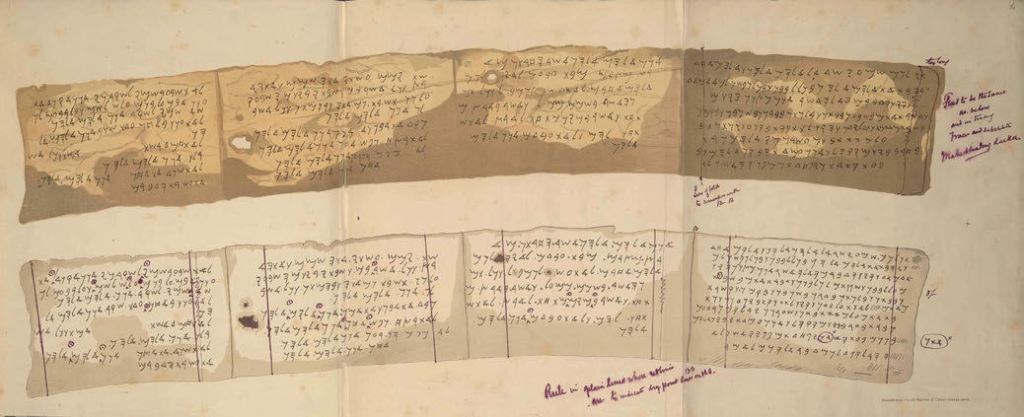
In the 1880’s an antiquities dealer in Jerusalem came into possession of an apparently ancient “scroll” consisting of fifteen strips of leather containing paleo-Hebrew texts. Within a period of five years of their “publication”, the fragments had been declared forgeries by “experts” in Europe, and shortly thereafter, the antiquities dealer, Moses Shapira, committed suicide in a Rotterdam hotel room in 1884. But what if they were authentic? That’s the question I want to pose and try to answer.
-
What, Or Who, Are the Bible’s Heavenly Beings?
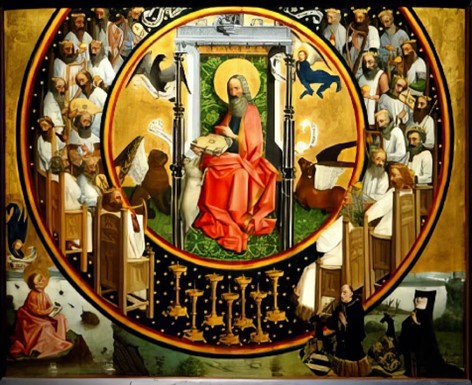
One of the more obscure concepts in the Bible for me has been the idea of Heavenly beings. I say it is obscure because when they are mentioned in texts they remain quite enigmatic, and opinions among biblical scholars and theologians concerning the nature of these beings vary all over the map. In diving into this subject we have to keep in mind that the question is: “What was in the mind of the biblical authors when they referred to a ‘divine council’, or ‘sons of God’, or ‘hosts of heaven’”, NOT what the reality is (something I contend we…
-
The “Fulfillment” of Scripture
Luke 4:[17] And the scroll of the prophet Isaiah was given to him. He unrolled the scroll and found the place where it was written, [18] “The Spirit of the Lord is upon me, because he has anointed me to proclaim good news to the poor. He has sent me to proclaim liberty to the captives and recovering of sight to the blind, to set at liberty those who are oppressed, [19] to proclaim the year of the Lord’s favor.” [20] And he rolled up the scroll and gave it back to the attendant and sat down. And the eyes…
-
Uncleanness, Sin, and Holiness in the Hebrew Bible
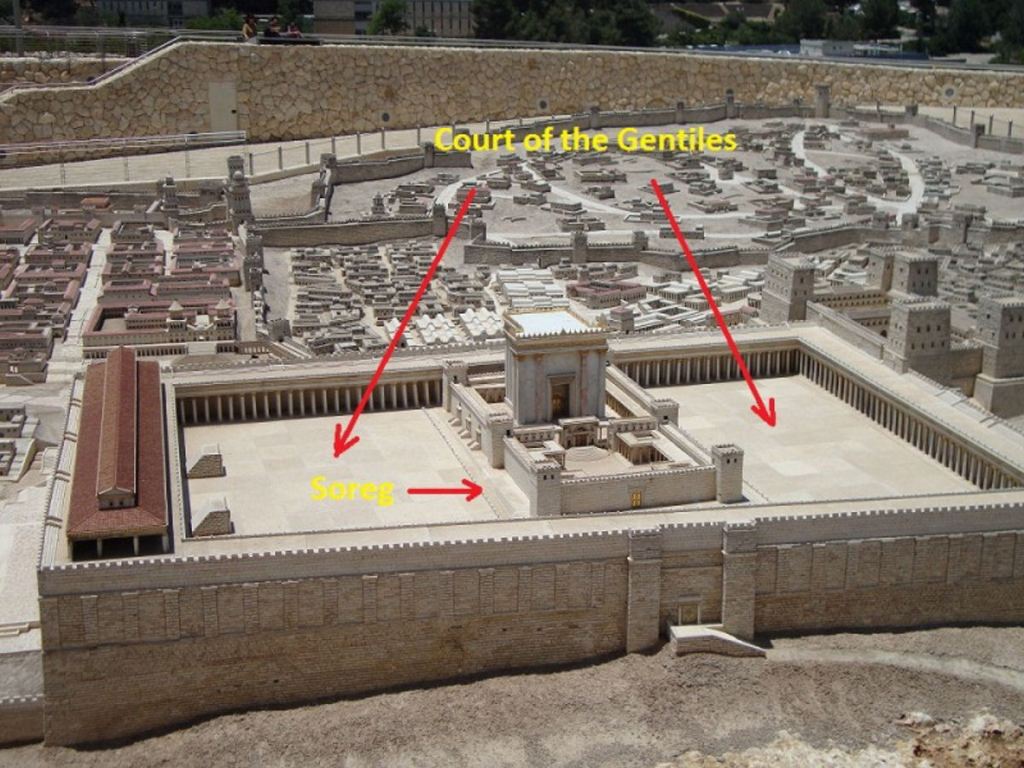
Most modern Christians (and essentially all unbelievers) misunderstand the key patterns used by the Hebrew Bible to convey the concepts related to Holiness. They tend to see a binary pattern that can be summarized as: “Holiness is the absence of Sin”. But that’s not the pattern that the ancient authors of the Torah were guided by. Certainly, there is a relationship between sin and holiness. But it’s just not the one we moderns think of. Let’s see what it is.
-
Where Did YHWH “Come From”?

Most of us are familiar with the Biblical story of YHWH introducing himself to Moses, as Moses was shepherding a flock, as a vision/theophany in a burning bush adjacent to Mt. Sinai/Horeb (Ex 3:1-2, 15). (For the uninitiated, your English Bible’s use of the word “LORD” [all caps] is its symbol for God’s name, YHWH.) There is a long tradition of Israel’s recognition of their God first occurring in the deserts south of Israel, in Midian through this episode. Midian was an area of today’s NW Arabia, home also to a people known as the Kenites. We’ll look at that…
-
Some Narrative Patterns in the Hebrew Bible

One of the dominant features of the Hebrew Bible is its use of purely literary or literal-historical patterns – whether of actions, of the circumstances of characters, or similarities in narrative construction. Interestingly, some of the Bible’s patterns may just be literary devices for their own sake. This article identifies dozens of such forms. But the narrative patterns we’re interested in are those that serve through their repetition/reprise to underscore the importance of the pattern to the story of God and His people. Here we’ll dig into some examples of those that fall into this latter category. What we hope…
-
Make Man In Our Image

What does “Let us make man in our image, after our likeness” (Gen 1:26) mean about us? And, what does it mean that God gives man “dominion” over the living things in His Creation? And, what on earth does this have to do with prohibiting them from worshipping idols? Let’s find out.
-
Who Wrote the Hebrew Bible?
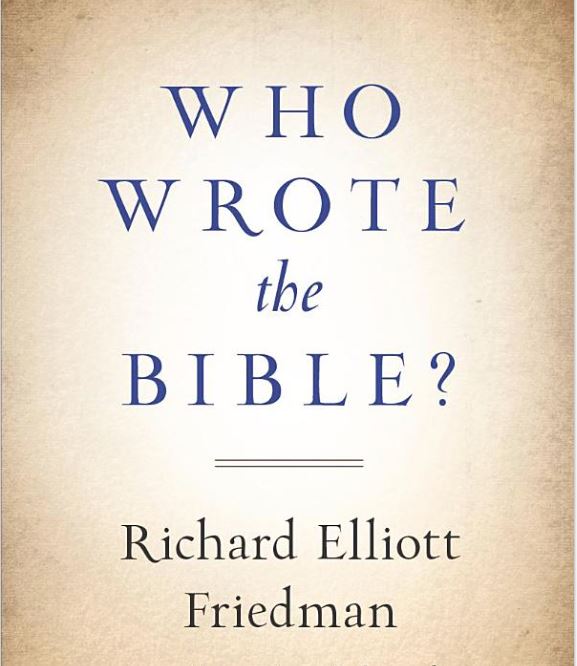
Is it possible to figure out how the Hebrew Bible was written, by whom, and when? Those who study the text for a living would say “yes”. Among them is Richard Elliot Friedman, in his 1987 book “Who Wrote the Bible?” (updated in 2019). In it, Friedman makes an absolutely fascinating and substantially believable case for the origins and authorship of the Hebrew Bible. In this note, we’ll try to outline his major findings and summarize some of the textual data and analytical reasoning he uses to come to his conclusions. And, as we have done previously, we will ask…
-
A Reassessment of the Source(s) and Authenticity of the Hebrew Bible

All scripture is inspired by God and useful for teaching, rebuking, correcting and training in righteousness, that the man of God may be complete, equipped for every good work” (2 Tim 3:16-17). There is a festering dissonance today between the traditional view of the Bible by people of faith (both Jew and Christian), and the data uncovered within its text by those scholars known as Text- or Source-critics – people who study only the text to learn its dating, and authorship/sources. But, (and this will be my key point) I have concluded that the text-critical data concerning when or by…
-
Wrestling With the Origins of the Pentateuch

Modern Biblical scholarship has concluded that the majority of what we now have in the Biblical Pentateuch was substantially written in the seventh to fifth centuries BC. This creates a formidable problem for the traditionalist view (of both Jews and Christians) that holds that these foundational works were written by Moses, in Moses’ timeframe. But should it?
-
Did God Want a Temple, Sacrifices, or a Monarchy?

People casually familiar with the Hebrew Bible and its narrative of the history of Israel generally accept that the cultural symbols and practices that developed in that history were prescribed – even commanded – by their God Yahweh (YHWH). A little study, however, reveals a much more ambiguous situation.
-
In the “Bronze Age”, Where Did the Bronze Come From?
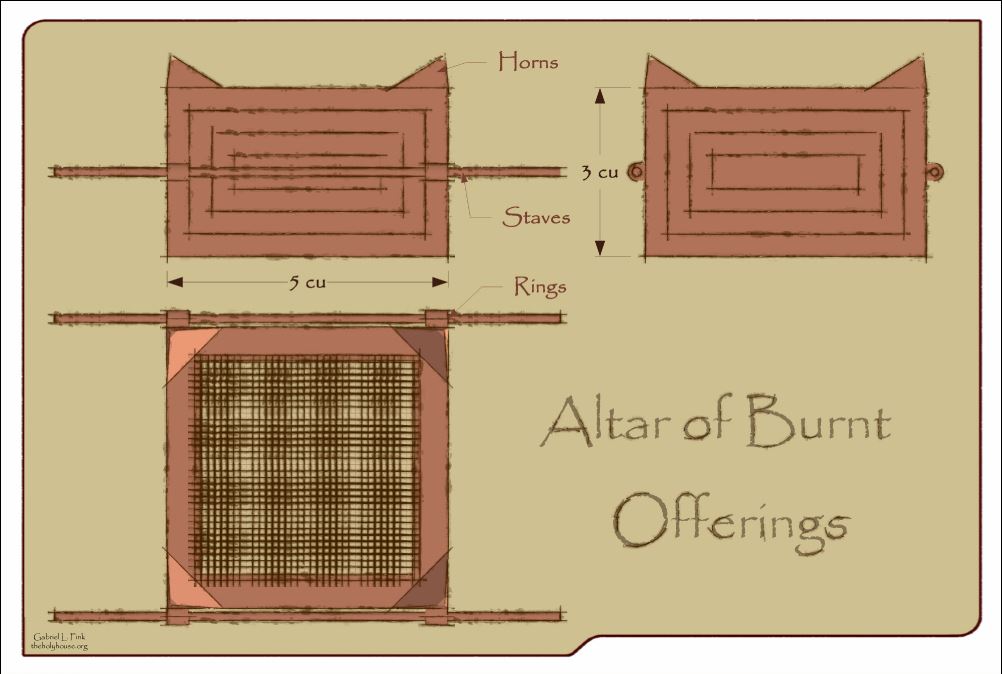
Undoubtedly, this little monograph will be met with yawns of disinterest from most. I started thinking about the question of how the wandering Hebrews could come up with enough bronze to fashion the altar God commanded them to make while researching another Exodus topic. Since an entire epoch of some 2.100 years was named for the metal, which happened to encompass the beginnings of civilization and the first monotheistic religion, I decided to at least ask the question.
-
Freedom, in Paul

Countless words have been spilled analyzing and debating Paul’s intended meaning of the phrase “works of the Law”, and his theological treatment of the Law itself. In contrast, far fewer words have been spilled analyzing and exploring Paul’s concept of the “freedom” he ascribes to those “in Christ”. Our intention here is to show the relationship between these two concepts and, in so doing, dispel some pervasive misunderstandings, at least among evangelicals.
-
Searching for a Consistent Biblical God
I wonder how many people have been thrown off of their inevitable search for God by what they perceive as not just the inconsistency of the characterization of God in the Bible’s Old Testament compared to His portrayal in the New, but by His seemingly severe, some would say immoral, characterization in the Old Testament. Wouldn’t it be wonderful if we could find and describe one, integrated, consistent whole of the Divine Nature across the entire Bible? Imagine being able to perceive God’s essential God-ness through a new lens, and so enable others to see beyond their personal prejudices. Looking…
-
The “X-Files” of the Tanakh
There is some very strange stuff going on, semantically, in the Tanakh – the Old Testament. Our English translations hide much of it, allowing us to blithely assume that unclear verses are either just poorly translated or, perhaps, intended to be purposefully obscure. But, what if their obscurity/ambiguity reveals some much deeper meaning than simply the literal texts in which they appear? And, if there is a deeper meaning, what could it be, and what is it likely to be?
-
Israel, Judah and Jerusalem in Prophecy

Confusion by those reading the Old Testament’s (OT) prophecies regarding Israel, Judah, Jerusalem, and Zion has resulted in profound disagreements by interpreters. Some (Jews, many Dispensationalist Christians, and some “Hebrew Roots” Christians) believe the prophecies should essentially be taken literally. The Jewish Temple will be rebuilt in Jerusalem in the future; all people of Jewish descent will return to the land of Israel in the future, and all others in the world will pay homage to the God of Israel in pilgrimages to Zion. This is the view of the majority of Western Christians, as a result of the popularization…
-
Not One Stone Left Upon Another

Do you know why God had to see to the destruction of the Jerusalem Temple? I didn’t.
-
The Jewish and Christian God

Jews and Christians have almost nothing in common except their God. He is one and the same God. Jews believed they were chosen by God for special blessing, that this blessing was an inheritance due to their birthright, originating with their father Abraham if they would only faithfully live by His Law (discussed, below). They didn’t concern themselves with “going to heaven” (at least until the advent of their Pharisees in the first century BC), but were very concerned about their survival from hostile surrounding nations. And so, to them, God would “save” them, His chosen people, from these earthly…
-
Israel as Metaphor
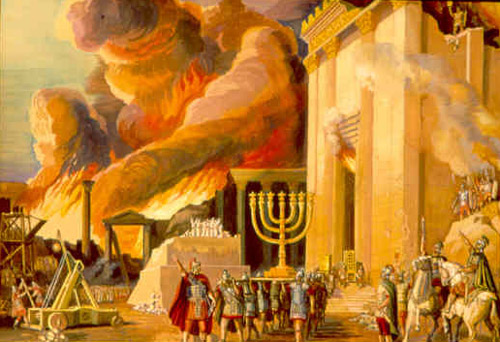
Those familiar with the Jewish Bible — the Tanakh — or what Christians call the Old Testament, have puzzled for centuries over the meaning of the failed history of the Israelites, culminating in the destruction of their Temple and Jerusalem in 70AD, and their destruction or banishment from their homeland in 136 AD following the Bar Kokhba revolt. What exactly does it mean that God chose the Israelites from all the peoples of the world, led them, gave them a homeland and, for a time at least, heaped blessings on them only to have them nearly universally turn their backs…