
Category: Hebrew Bible Compilation
-
How Old is the Hebrew Bible?
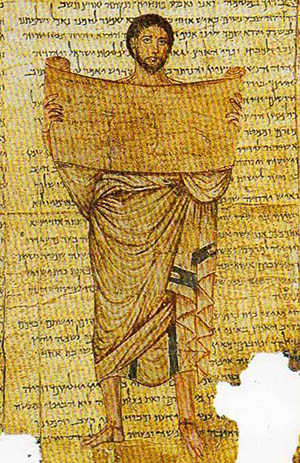
How old are the books of the Hebrew Bible, and why should we care? Since the Bible is likely the most influential book ever written, we deserve to know the truth of its composition and history.
-
The Priestly Slander of Moses

The Hebrew Bible presents conflicting political viewpoints between its authors. The priestly viewpoint seeks to distance itself (and its readers) from the mythic legacy of Moses as the redeemer of the nation of Israel and replace it with a system of abject reverence for, and obeisance to, the Aaronic priesthood. We’ll examine a few examples of how this conflict is played out in the text.
-
Searching for the Bible’s Sources

Many laymen dispute that the Pentateuch was written by several distinct authors. Biblical scholars don’t. But they disagree on who those authors were and what they wrote. If we stipulate that the authors of the Documentary Hypothesis wrote the Pentateuch, what can we discover about their backgrounds and worldviews? Let’s see.
-
The Origins of Judaism

When did “Judaism” begin to be widely practiced (i.e. widespread adherence to what we today recognize as the rules and calendar of the Pentateuch)? Irrespective of when the individual books of the Pentateuch were written, when did the majority of Judeans begin to live them out? The answer is quite shocking.
-
What Did the “Law of Moses” Mean To…?

This post presents a three-part series looking at what the term “Law of Moses” (and similar) meant to different people at different times in the Bible; 1) The Israelites, at various points in their history, 2) Jesus (in His many interactions with others involving His understanding of its meaning), and 3) Paul, who infamously dismissed “works of the law” as valid for justification of his Jewish brethren.
-
Jesus and the Moses Scroll

Our purpose here is to compare and contrast the “Ten Words” (Decalogue) found in the “Moses Scroll” (MS) with both of the other canonical versions found in Exodus and Deuteronomy, but also with the teachings of Jesus. We’ll see if the nuances in the MS Ten Words (and their blessings and curses) can also be detected in Jesus’ teachings. And if they can, can we propose how such a linkage could exist when at the same time it is missing or much harder to find between our published versions of the Decalogue? Let’s see.
-
Moses’ Real Words?
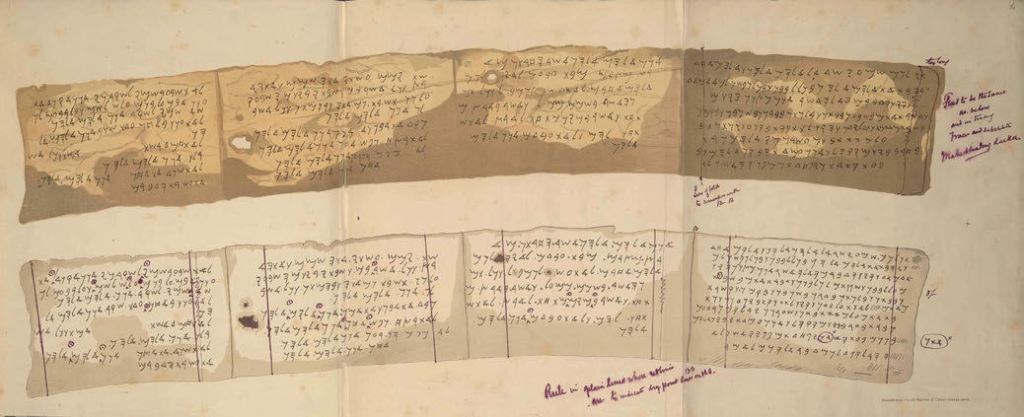
In the 1880’s an antiquities dealer in Jerusalem came into possession of an apparently ancient “scroll” consisting of fifteen strips of leather containing paleo-Hebrew texts. Within a period of five years of their “publication”, the fragments had been declared forgeries by “experts” in Europe, and shortly thereafter, the antiquities dealer, Moses Shapira, committed suicide in a Rotterdam hotel room in 1884. But what if they were authentic? That’s the question I want to pose and try to answer.
-
God’s Issues With the Temple Cult

A casual reading of the Pentateuch leaves one with the impression that, for some unexplained reason, God created a line of priests to mediate between Him and His rescued Hebrews, and laid out in meticulous detail an intricate and fully-developed sacrificial system, tabernacle, and culture. A more careful reading, however, at the very least calls into question the God-ordained pedigree of these details and practices. Scholars, theologians, Rabbis and regular Bible readers have noted these issues for centuries[i],[ii]. And, we know that we have biblical textual scholars telling us that most of the Pentateuch was authored between the 8th and…
-
Who Wrote the Hebrew Bible?
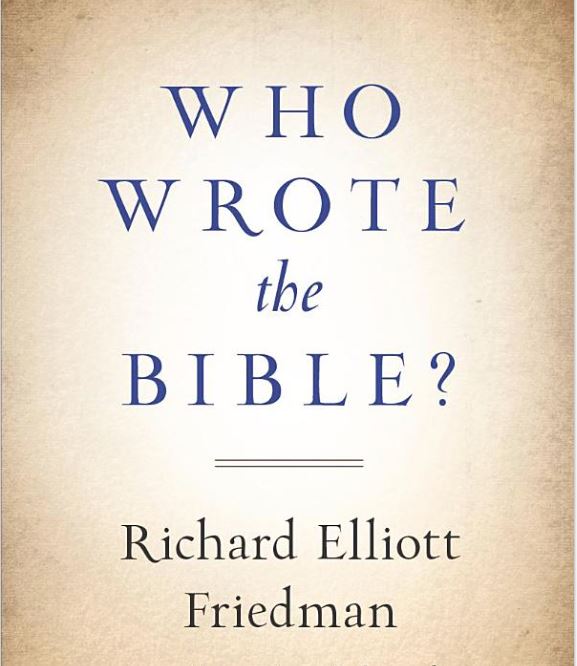
Is it possible to figure out how the Hebrew Bible was written, by whom, and when? Those who study the text for a living would say “yes”. Among them is Richard Elliot Friedman, in his 1987 book “Who Wrote the Bible?” (updated in 2019). In it, Friedman makes an absolutely fascinating and substantially believable case for the origins and authorship of the Hebrew Bible. In this note, we’ll try to outline his major findings and summarize some of the textual data and analytical reasoning he uses to come to his conclusions. And, as we have done previously, we will ask…
-
A Reassessment of the Source(s) and Authenticity of the Hebrew Bible

All scripture is inspired by God and useful for teaching, rebuking, correcting and training in righteousness, that the man of God may be complete, equipped for every good work” (2 Tim 3:16-17). There is a festering dissonance today between the traditional view of the Bible by people of faith (both Jew and Christian), and the data uncovered within its text by those scholars known as Text- or Source-critics – people who study only the text to learn its dating, and authorship/sources. But, (and this will be my key point) I have concluded that the text-critical data concerning when or by…
-
Wrestling With the Origins of the Pentateuch

Modern Biblical scholarship has concluded that the majority of what we now have in the Biblical Pentateuch was substantially written in the seventh to fifth centuries BC. This creates a formidable problem for the traditionalist view (of both Jews and Christians) that holds that these foundational works were written by Moses, in Moses’ timeframe. But should it?
-
Did God Want a Temple, Sacrifices, or a Monarchy?

People casually familiar with the Hebrew Bible and its narrative of the history of Israel generally accept that the cultural symbols and practices that developed in that history were prescribed – even commanded – by their God Yahweh (YHWH). A little study, however, reveals a much more ambiguous situation.
-
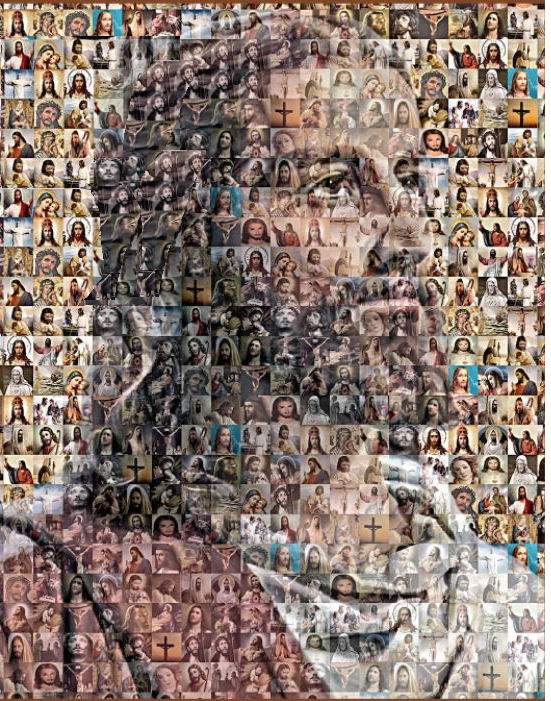
Biblical Narrative As a Mosaic
Most of us read the Bible as at most a narrative of the history of God’s people, culminated by some revolutionary stuff in the New Testament. And, it certainly, on one level, is that. But few of us read the Bible carefully enough or deeply enough to see its deeper construction as an intricate weaving of individual, but connected, narratives that all create a larger meta-narrative.


