A Pilgrim's Search
A Fresh Look at the Bible and Its History
-

Here’s a fact that may startle you: not once in our earliest surviving records of Jesus does Jesus call himself god. The world’s leading scholars on Jesus—including those who fully believe in conservative Christianity—agree this was not something he said or thought about himself.1
-

This paper, authored by Dale Moreau, originally appeared on the Substack “Theological Voice” page. The New Testament is not a simple book. It is a historically embedded, literarily complex, theologically dense collection of documents written by first-century Jews and Jewish Christians whose world was shaped by Second Temple Judaism, the Septuagint, and the social realities of the Roman Empire. Yet most readers approach it with none of that context, no awareness of the scholarly debates that define its interpretation, and no tools beyond a study Bible and a favorite commentary series. This article maps the pedagogical pathway that takes a…
-

When we look at Paul’s enigmatic gospel of salvation, we typically see a legal transaction, an idea originated by Anselm in the Middle Ages. Should we see a courtroom in which God, the judge, finds a clever way to acquit the guilty by punishing an innocent substitute? That entire framework, so deeply embedded in Protestant tradition, obscures what Paul is actually proclaiming. Paul’s gospel is not forensic; it is transformative. It is the announcement that God has begun the work he promised in the Torah and the Prophets — the work of giving Israel and Judah new hearts, writing his…
-
Most laypeople hold the traditionalist view that the Pentateuch – the Torah – was written by Moses sometime after Israel’s Mt. Sinai event. Further, they accept implicitly that Isaiah wrote Isaiah, Jeremiah, Jeremiah, and so forth. Key to these assumptions is that the authors were recording real-time events in Israel’s history, with no ulterior motives. This is not the general assumption subscribed to by biblical scholars, and has not been for hundreds of years. Their stock-in-trade is the study of biblical and extra-biblical texts to try to understand what material influenced the writing, where it might have been written, and…
-

The Jewish Mishna is an enigma. Not its texts, per se. They are quite “practical” and plain as instructions on how to live the Jewish life. What is profoundly mysterious is the mentality of its authors in developing it between the 2nd half of the first century and the end of the second. You will likely notice that this time period includes the destruction of Jerusalem and its Temple in 70 AD, a sixty-year inter-war period of unrest, followed by the last Jewish-Roman war from 132-136 AD.
-

An old Jewish joke says that for every two Jews, you have three opinions, but that could also apply to biblical scholars. Because no two biblical scholars can agree on anything, and they oftentimes disagree with themselves, eagerly hedging their own theories, proposing counter-options. It is true that academics quarrel over theories for a living, but biblical scholarship takes it to a whole other level and is notorious for the complete lack of agreement on even the most basic views on the Bible. Who wrote what and when? For every two biblical scholars, you’ll get three opinions But there’s one…
-

Our purpose here is to expose what the Bible teaches is God’s desire and intentions of, and for us, and as a result, how the rest of one’s traditional religious beliefs and practices are supplanted. Having understood God’s heart for us, we will see which aspects of the Bible reveal it, and which don’t. Those that don’t, we need to recognize are there for different, and by definition, secondary, reasons. The Bible’s story of God’s plan and message isn’t “new”. It is simply non-traditional, and so largely ignored.
-
Christian tradition has long affirmed that Jesus is divine—one “person” of a triune Godhead. This framework interprets His authority, miracles, and exaltation as evidence of inherent deity. Yet the New Testament also presents Jesus as a fully human figure who lived, acted, and suffered within the constraints of human biology. A second model has garnered some support and that is the idea that God manifested Himself as the human Jesus, so-called Modalism[i]. In this model, God presents an image that is indistinguishable from a biological human, and expresses God’s character and power. A coherent alternative to divinity arises when we…
-

Most people who embark on a journey expect to arrive at their destination. Airports contain huge boards showing the status, gate number, and destination of all of its departing airplanes. All of the people boarding a flight for a particular destination fully expect to arrive at that destination. But this situation isn’t true of every pursuit. Our premise here is that there are those embarked on the abstract journey of “knowing” that don’t always want to succeed. They don’t want to “arrive”.
-

The Bible’s Exodus narrative is quite specific about Moses’s history in Egypt: his adoption by the Queen; His rise to responsibility and power under Pharaoh; his crime, and his flight to Midian to escape justice. And from Moses’s introduction in this narrative, the Exodus author goes out of his way to inform us that Moses is from the tribe of Levi. We’ll look for Moses in the historical record, we’ll also try to understand the significance of his Levite identity. And, we’ll propose his place in the historical record of Egypt.
-
Where is the evidence for Israel in Egypt and their Exodus from it? When we look for its memory in Egypt we don’t find it. When we look for it at Jericho we don’t find it. When we look for it in Egyptian or Mesopotamian records we don’t find it. You would think something as momentous as an entire nation emigrating from one land to another would get some mention in the historical (not just the Biblical) record. But we don’t see it, explicitly. Did it not happen (at least as recorded in the Bible)? Or, did it happen, but…
-
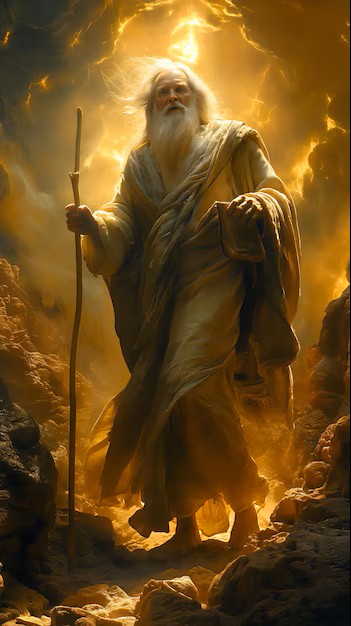
“Righteousness” to Israel came to mean being acceptable to God. Most know that the Ten Commandments given by God to Israel at Sinai served as the foundation for Israel’s idea of righteousness. The evolution of Israel’s received understanding of their position vis-à-vis the status of “righteous” before God was dependent on their progressive revelation by God of His will for therm. And, they had to fight through many false declarations intent on obscuring the truth to benefit men. While the Decalogue remained the bedrock of Israel’s moral imperative, their view did not remain static but developed through their history. Our…
-

For Bible Nerds: The “Synoptic Problem” is not a “problem” but a question: “How is it that we have three Gospels relating many of the same stories and sayings of Jesus in sometimes near-identical words?” Did they copy from each other? Did they copy from some common source we no longer have? And of these Gospels, which was written first? Luke?
-

As you may have noticed in the past on this blog, the foot/endnote system didn’t work. If you’re one of those who read a piece and want to track to an in-line footnote to see what it says, and then smoothly click on its index to return to where you were, WordPress’s system generally (not always) flunked that challenge. However, having spent some time on the phone with their support people I at least figured out how to manually correct these links: reference-to-note-back to-reference. So, I have invested many hours to clean up these note references in all of my…
-
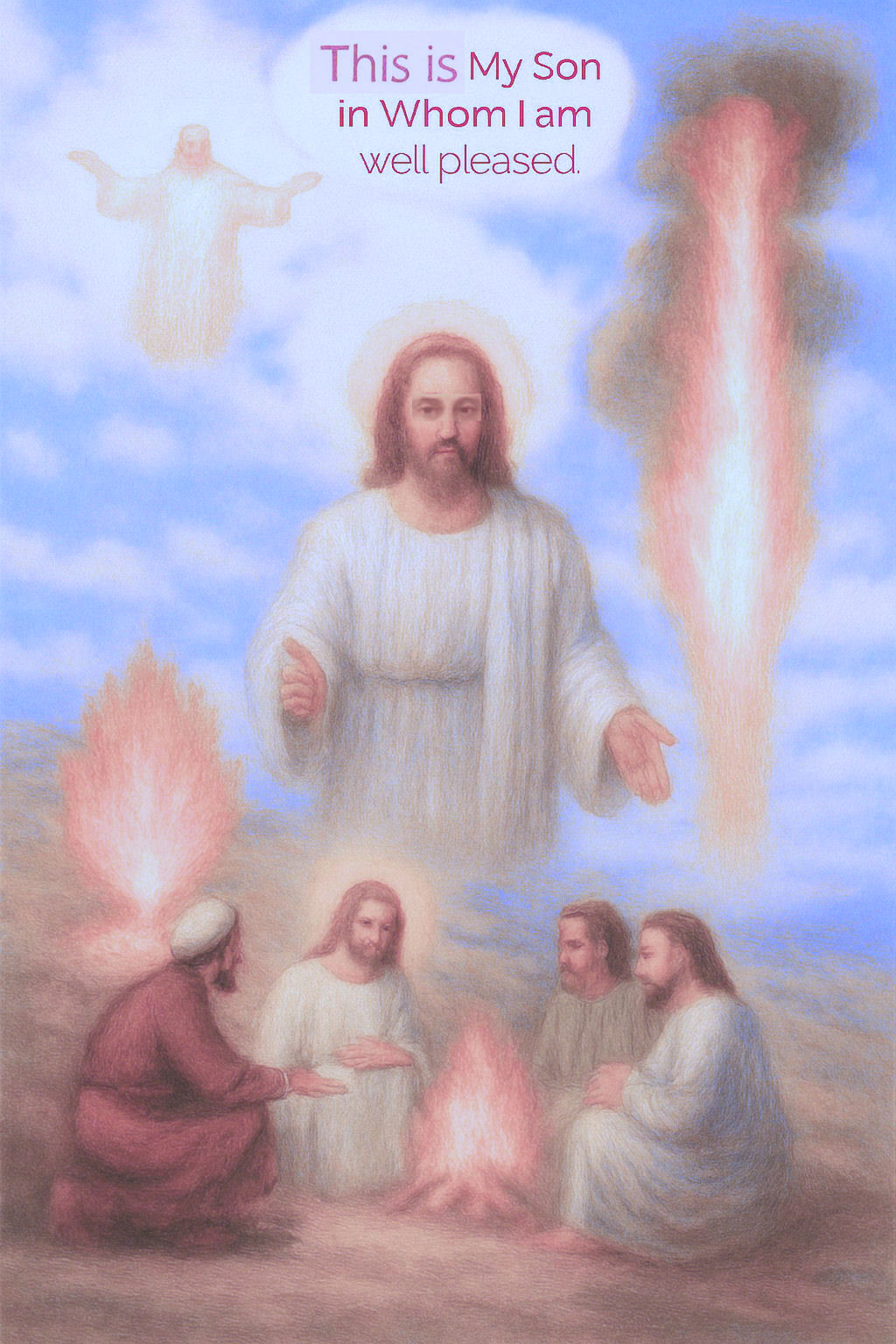
Only some people believe that Jesus of Nazareth was divine, the same thing as God. Almost none of those believe that God is a singularity. They would say that He is “three in One”. Does the assertion of Jesus’s divinity by itself create a dichotomy between these two ideas, as many claim? The purpose of this piece is to demonstrate that a single Divinity does not represent a dichotomy but rather a transcendent truth that goes by the label “Modalism”. We will look at some of the voluminous textual evidence that supports this case and find that, far from being…
-

The US today is infected by a cancerous malignancy that has nearly completely destroyed the healthy portions of its host. The difference between a cultural malignancy and a biological one is that the cultural form has an attitude. It rejoices in its destruction. It celebrates the death of the healthy, unlike the biological which is simply a death-creation machine. Where did this disease start? In the classroom. A century ago, the education establishment was infiltrated by Marxists. Decade after decade, their influence in that establishment grew to the point that today, the majority of teachers in public education are if…
-

For centuries, the traditional, Christian interpretation of Jesus’ death has been that it was an atonement for the sins of those who would choose to “believe” and follow Him. This scenario portrayed a kind of cosmic cleansing for those who believed, though no one told us what that meant. A common assumption is that having one’s sins atoned for/forgiven is having them excused. For the record, not everyone completely bought the cosmic cleansing story, citing texts (e.g. Luke) that didn’t completely embrace the sacrificial atonement theme.
-
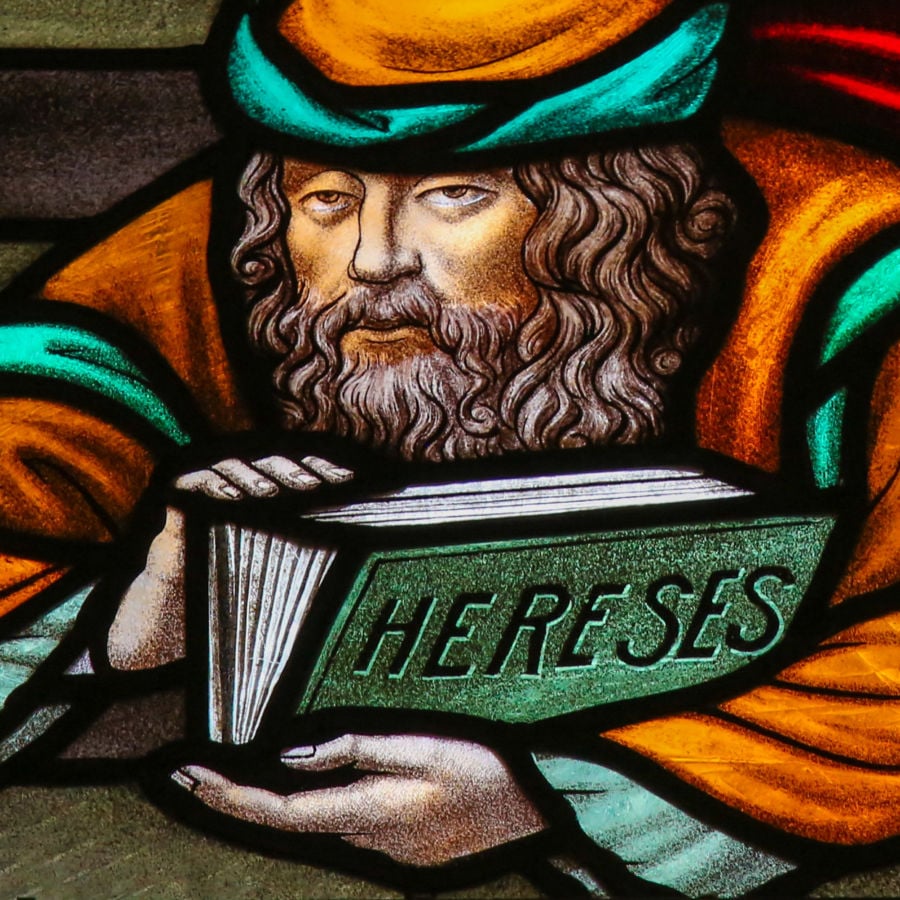
Just a quick note. Over the past many years in reading the work of “Biblical Historians” I have been struck by what, perhaps, should have been self-evident to me from the beginning. These “scholars” are not trying to understand why, for example, Jesus’ disciples all chose (with the exception of John who was exiled to an island to live out his life) to be martyred rather than renounce their faith — at least according to the accepted tradition.
-

Many Western Christians [i] and secular individuals have misunderstood the core message of the Bible’s Good News for centuries. This analysis aims to clarify the true Gospel, obscured since the Reformation, by examining relevant New Testament and Hebrew Bible passages to determine whether they support or challenge what I’m referring to as the “New Covenant Gospel”, first proposed by Dr. Jason A Staples. This interpretation diverges from the traditional Gospel message fundamentally.
-

Recently a very long-standing dear friend of mine asked my thoughts on Paul’s phrase “he emptied himself” in Phl 2:7. He said he had been considering the meaning of the phrase for some time. I confessed I hadn’t thought about it. But, as it turns out, many hundreds of bible scholars and theologians have ever since the formation of the very early church. Let’s see what we can find out.
-
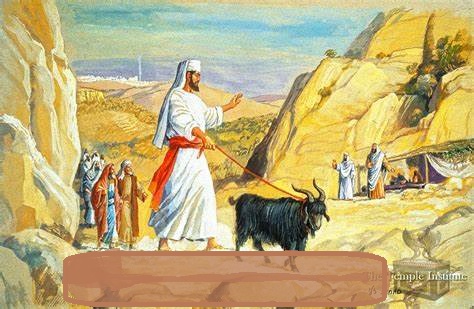
I spend virtually zero time reading the Talmud. However, I recently stumbled onto a video presentation that describes some radically strange stuff there having to do with the Yom Kippur ceremony, especially after 30 AD. Especially for Christians, this is a must-know piece of Jewish legend.
-
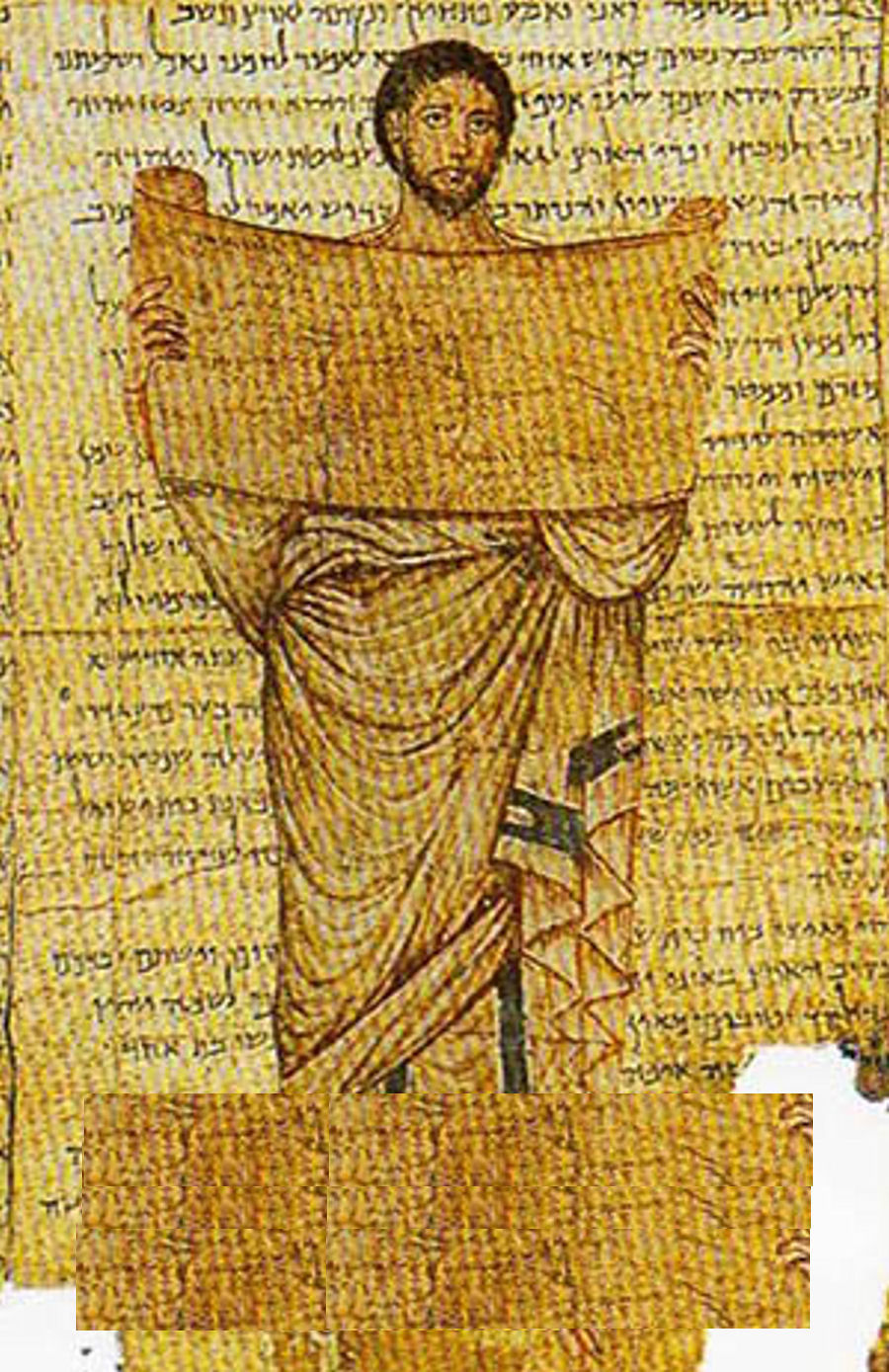
How old are the books of the Hebrew Bible, and why should we care? Since the Bible is likely the most influential book ever written, we deserve to know the truth of its composition and history.
-

Many laymen dispute that the Pentateuch was written by several distinct authors. Biblical scholars don’t. But they disagree on who those authors were and what they wrote. If we stipulate that the authors of the Documentary Hypothesis wrote the Pentateuch, what can we discover about their backgrounds and worldviews? Let’s see.
-

When did “Judaism” begin to be widely practiced (i.e. widespread adherence to what we today recognize as the rules and calendar of the Pentateuch)? Irrespective of when the individual books of the Pentateuch were written, when did the majority of Judeans begin to live them out? The answer is quite shocking.
-

What is the proper interpretation of the Bible’s passages describing the Eschaton — the end and resolution of the world? Most, for the last 1200 years or so, have believed that when they die, they will go to “heaven”, despite the paucity of biblical evidence for this view. But what happens at the end of all things? Surely it is a point in time beyond which all of God’s plans for His Creation are realized.
-
In a recent video interview, Dr. Jason Staples presented the outlines of his argument that lexically, Jesus referred to Himself as YHWH in both Luke and Matthew. Now, if you’re comfortable with the whole “son of God” characterization, this may be a bit jarring
-
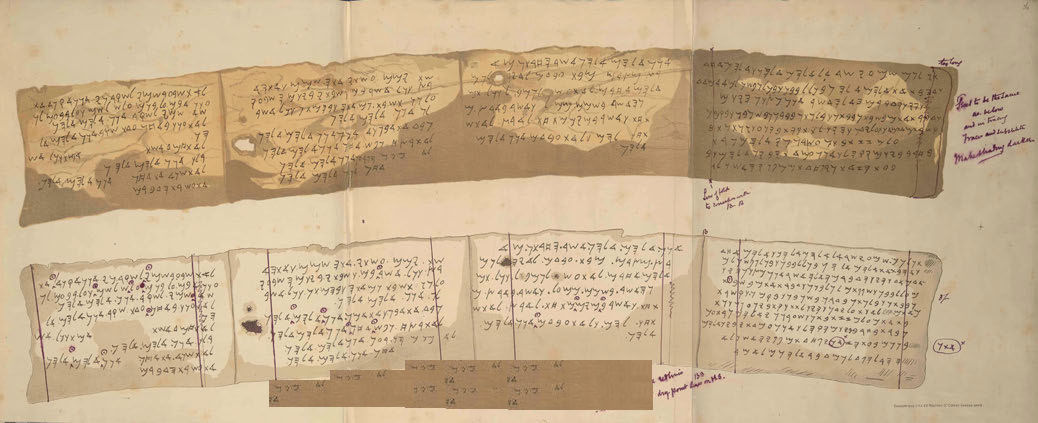
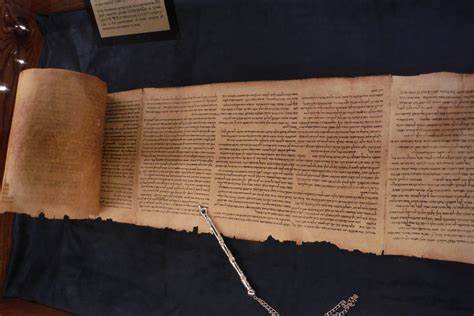
In the 1880’s an antiquities dealer in Jerusalem came into possession of an apparently ancient “scroll” consisting of fifteen strips of leather containing paleo-Hebrew texts. Within a period of five years of their “publication”, the fragments had been declared forgeries by “experts” in Europe, and shortly thereafter, the antiquities dealer, Moses Shapira, committed suicide in a Rotterdam hotel room in 1884. But what if they were authentic? That’s the question I want to pose and try to answer.
-
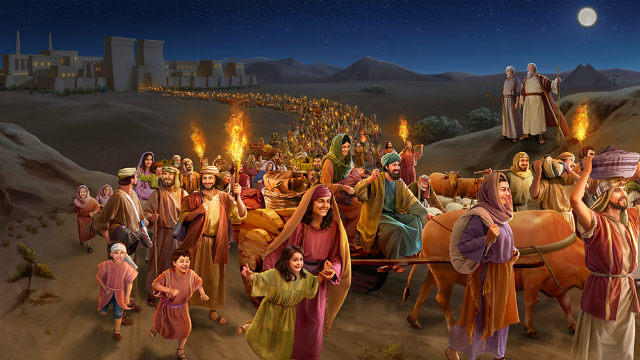
The Exodus itinerary is a riddle wrapped in a mystery inside an enigma. We don’t know where virtually any of its stopping points were. At best we know something about what was there, and, rarely, how long they traveled to get there. And, of course, there’s the inertia of the traditional explanation (i.e. via Sinai’s St. Catherine’s) and its advocates more or less dominating the discussion (and generating quite emotional reactions to any proposed alternative). Truth in advertising: I don’t subscribe to the most popular theories that have Israel crossing the Gulf of Aqaba either at Nuweiba or at its…
-
Rom 8:26 “Likewise the Spirit helps us in our weakness. For we do not know what to pray for as we ought, but the Spirit himself intercedes for us with groanings too deep for words.” A recent post on social media mentioned an interview with NT Wright (A Deep-Dive into the Book of Romans: Dr. N.T. Wright – Theology in the Raw) in which he makes a point regarding the above (and other Romans’) passages of Paul that for me was both startling and eye-opening. Let’s look at Wright’s narrative of the Romans story, and unpack his startling point.
-

The New America could care less what their country is or represents. They’re only concerned with themselves. The New America is the product of failed public education, failed parenting, failed social policies, open borders, and not just resistance to achievement but disdain for any, ANY differentiation of one vs another on the basis of an individual’s achievement. This is the state of the union today.
-

Given the current situation in Israel, not to mention the context of the disputes over the past 80 years, I think it is worthwhile to evaluate what the Bible has to say about Israel’s claims to their land today. The Bible is overflowing with hundreds of instances of God promising the land of Israel (“Canaan”) to the Israelites, both post-Egypt and post-Assyrian and Babylonian exiles. Certainly, it is a popular opinion today that modern Israel – the nation established by the UN in 1948 – has some form of biblically mandated franchise on these promises of the land known as…
-

Most of us are familiar with the Biblical story of YHWH introducing himself to Moses, as Moses was shepherding a flock, as a vision/theophany in a burning bush adjacent to Mt. Sinai/Horeb (Ex 3:1-2, 15). (For the uninitiated, your English Bible’s use of the word “LORD” [all caps] is its symbol for God’s name, YHWH.) There is a long tradition of Israel’s recognition of their God first occurring in the deserts south of Israel, in Midian through this episode. Midian was an area of today’s NW Arabia, home also to a people known as the Kenites. We’ll look at that…
-
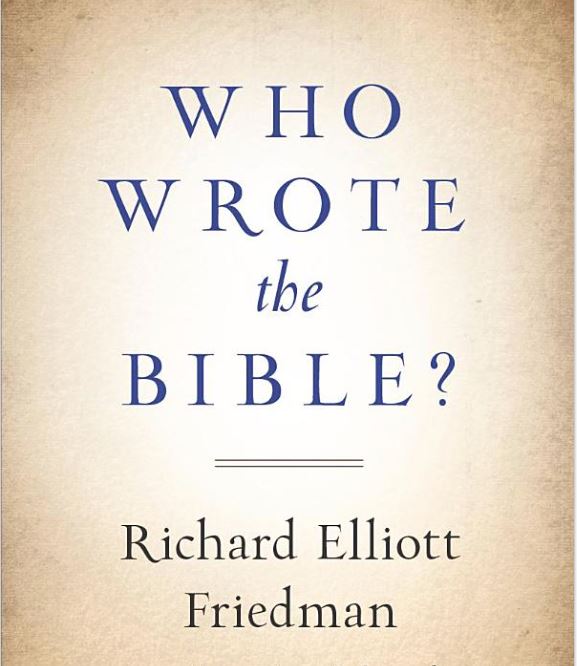
Is it possible to figure out how the Hebrew Bible was written, by whom, and when? Those who study the text for a living would say “yes”. Among them is Richard Elliot Friedman, in his 1987 book “Who Wrote the Bible?” (updated in 2019). In it, Friedman makes an absolutely fascinating and substantially believable case for the origins and authorship of the Hebrew Bible. In this note, we’ll try to outline his major findings and summarize some of the textual data and analytical reasoning he uses to come to his conclusions. And, as we have done previously, we will ask…
-

All scripture is inspired by God and useful for teaching, rebuking, correcting and training in righteousness, that the man of God may be complete, equipped for every good work” (2 Tim 3:16-17). There is a festering dissonance today between the traditional view of the Bible by people of faith (both Jew and Christian), and the data uncovered within its text by those scholars known as Text- or Source-critics – people who study only the text to learn its dating, and authorship/sources. But, (and this will be my key point) I have concluded that the text-critical data concerning when or by…
-

Most of us think about our spiritual lives (when we think of them at all) as cerebral, passive things: things that just are, likely supported by some “quiet time”, perhaps some Bible reading, and prayer. However, our spiritual strength is only truly developed when, like a muscle in our body, it is stressed, and stressed repeatedly.
-
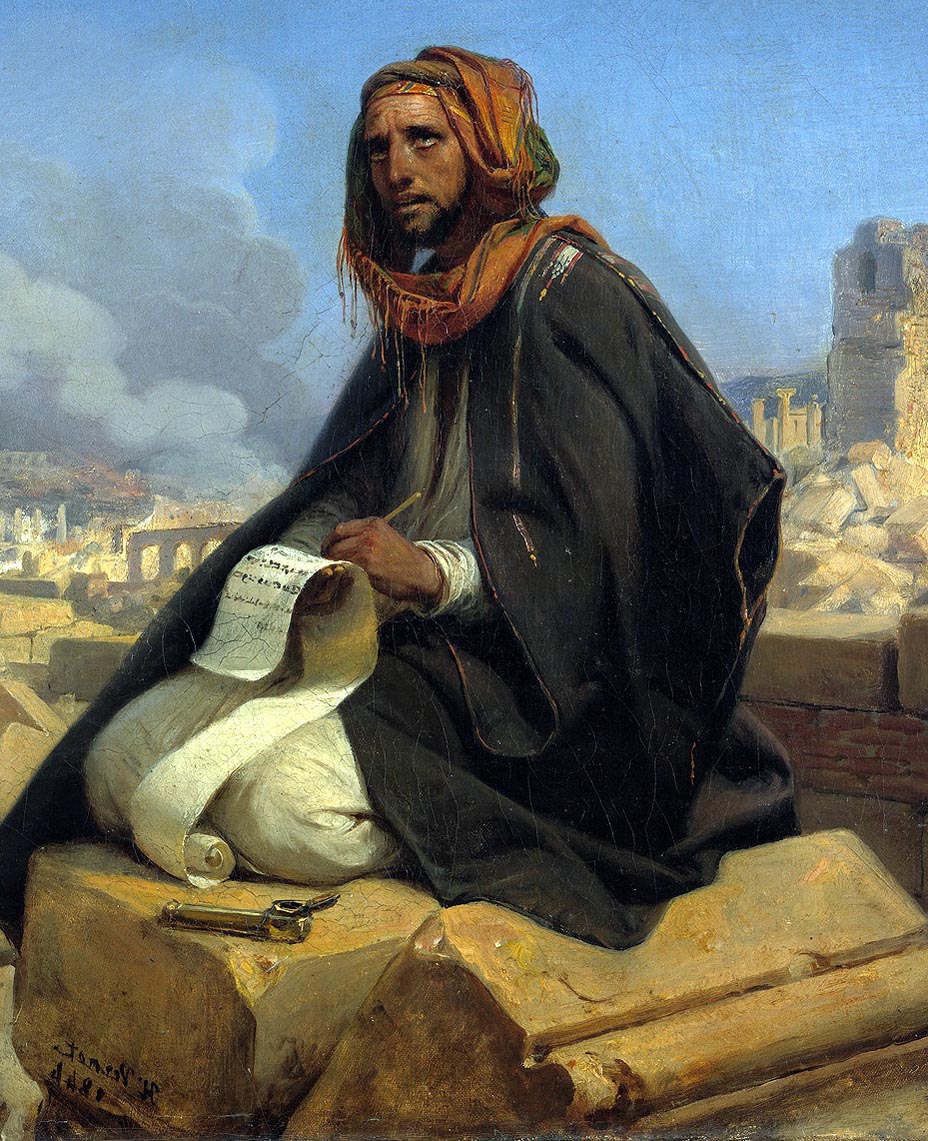
There is substantial controversy surrounding the proper interpretation of the announcement of a New Covenant between God and Israel and Judah (Je 31:31-34, Ezk 36:24-28). Both the Jewish and Christian interpreters spin its interpretation to suit their theological views, leaving no consensus. Let’s see if by working through the texts we can discover the truth.
-

Modern Biblical scholarship has concluded that the majority of what we now have in the Biblical Pentateuch was substantially written in the seventh to fifth centuries BC. This creates a formidable problem for the traditionalist view (of both Jews and Christians) that holds that these foundational works were written by Moses, in Moses’ timeframe. But should it?
-
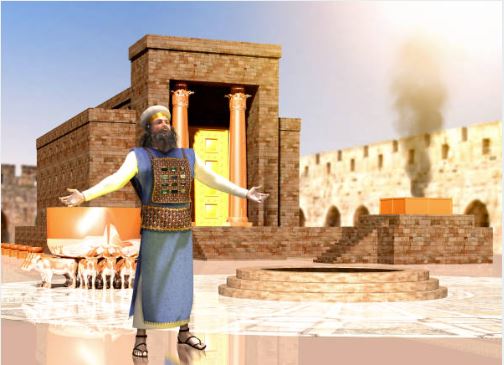
People casually familiar with the Hebrew Bible and its narrative of the history of Israel generally accept that the cultural symbols and practices that developed in that history were prescribed – even commanded – by their God Yahweh (YHWH). A little study, however, reveals a much more ambiguous situation.
-
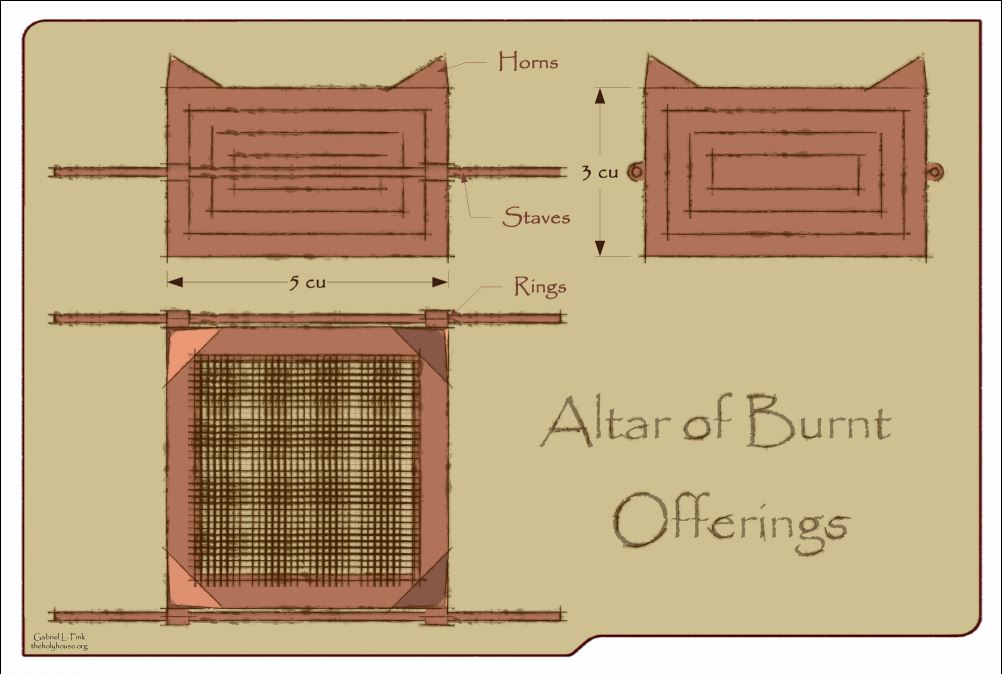
Undoubtedly, this little monograph will be met with yawns of disinterest from most. I started thinking about the question of how the wandering Hebrews could come up with enough bronze to fashion the altar God commanded them to make while researching another Exodus topic. Since an entire epoch of some 2.100 years was named for the metal, which happened to encompass the beginnings of civilization and the first monotheistic religion, I decided to at least ask the question.
-

The book of John is the fourth of four Gospels of Jesus Christ and is unique among those in its portrayal of the story. John doesn’t so much focus on narrating a history of what Jesus did, as is common in Matthew, Mark, and Luke, but on proclaiming who Jesus was, and what His life, death, and resurrection meant. In this note, we’ll briefly look at how John saw Jesus in relation to God, typically identified as “God the Father” in our English translations.
-

The Kingdom of God is the precinct in which its citizens interact with each other and outsiders per God’s will. So, as Christians, how does God want us to act both to model and to implement His Kingdom “on earth as it is in Heaven”? Implementing the Kingdom of God “on earth, as it is in Heaven” is more than an enterprise of personal transformation. It is also an enterprise of transforming the society in which we live to reflect its values. Here we intend to analyze how Christians caring for others and desiring to transmit God’s blessing to as…
-

In way of introduction, I have been forming my Christian beliefs, in some cases based on other’s views, in others personal study, for now some 20+ years. Recently, I have explored some of the beliefs and doctrines of the Eastern Orthodox Church, and, surprisingly perhaps, have found substantial overlap with my own. I say surprisingly, because I have never experienced any teaching of the Orthodox Church, a Church who claims its beliefs to be the authentic beliefs of the very earliest Christians. I would characterize my own beliefs as still shackled in some ways to traditional Western Christian doctrines (e.g.,…
-

We all have an instinctive revulsion of the wanton destruction of one of us by the hand of another. But why? If the victim is not one of our family or close relations, how is it that we feel the evil of his loss? How are we – the victim and I – connected? Where does our sense of the fact that his taking is evil come from? This piece is an exploration of a recent “revelation” I’ve been considering that points to a much more profound loss than the loss of just this one person.
-

There is some very strange stuff going on, semantically, in the Tanakh – the Old Testament. Our English translations hide much of it, allowing us to blithely assume that unclear verses are either just poorly translated or, perhaps, intended to be purposefully obscure. But, what if their obscurity/ambiguity reveals some much deeper meaning than simply the literal texts in which they appear? And, if there is a deeper meaning, what could it be, and what is it likely to be?
-

In the second three chapters of Ephesians, Paul casts his revolutionized view of human life and interrelationships that, as much as any portion of his epistles, brings into sharp focus the life transformation that followers of Christ should both expect and strive for.
-

Modernity has gradually abandoned the love of Jesus as the key tenet of society with predictably disastrous effects. Ever since the Enlightenment (1650-1900) mankind has committed itself to a mission of analyzing technical and societal problems and, through its own IQ, skills, and determination (you know, “hard work”, etc.), “fixing” them.
-

The stark differences between ideological factions in the United States are, to me, intractable. As factions, they will never again lock arms, sing Kumbaya, and collectively do what’s in the best interest of the nation as a whole, irrespective of what they, individually, may need to give up to achieve that end. Why is this?
-

The premise of this note is that in order to rescue this civilization, Christ Himself is going to have to “appear” in the world to demonstrate to its inhabitants that He is the way, the truth, and the life. And, since we Christians are the members of His body on earth, that job falls to us.
-

In an article at The Daily Wire, Joseph Curl reports that a 23-year-old Chinese crane operator, Xiao Qiumei, who had 100,000 followers on social media, fell 160 feet to her death while filming herself on a giant crane. She was the second woman to die in China in July by way of a fall while recording herself on camera.
-
The West, I argue, has turned a corner from which it will be impossible, short of a miracle, to un-turn. We’ve become addicts of narcissism, ignorant judgements, and feigned righteousness. We’re continuously fed their messages of “just a little more” so that our impending overdose is all but assured. But, perhaps most depressing is the fact that we don’t even realize it.
-

People who read the Bible somewhat seriously are well aware of the Biblical story leading up to the nation of Israel; their near-total rejection of their redeeming God; His attempts to retrieve them from their apostasy; and their ultimate destruction as a nation and collection of tribes in 70 and 135 AD. What some may fail to notice is that even before they entered the “promised land”, God had foretold their apostasy and that, as a result, they would endure the curses articulated in His covenant made with them at Horeb.
-
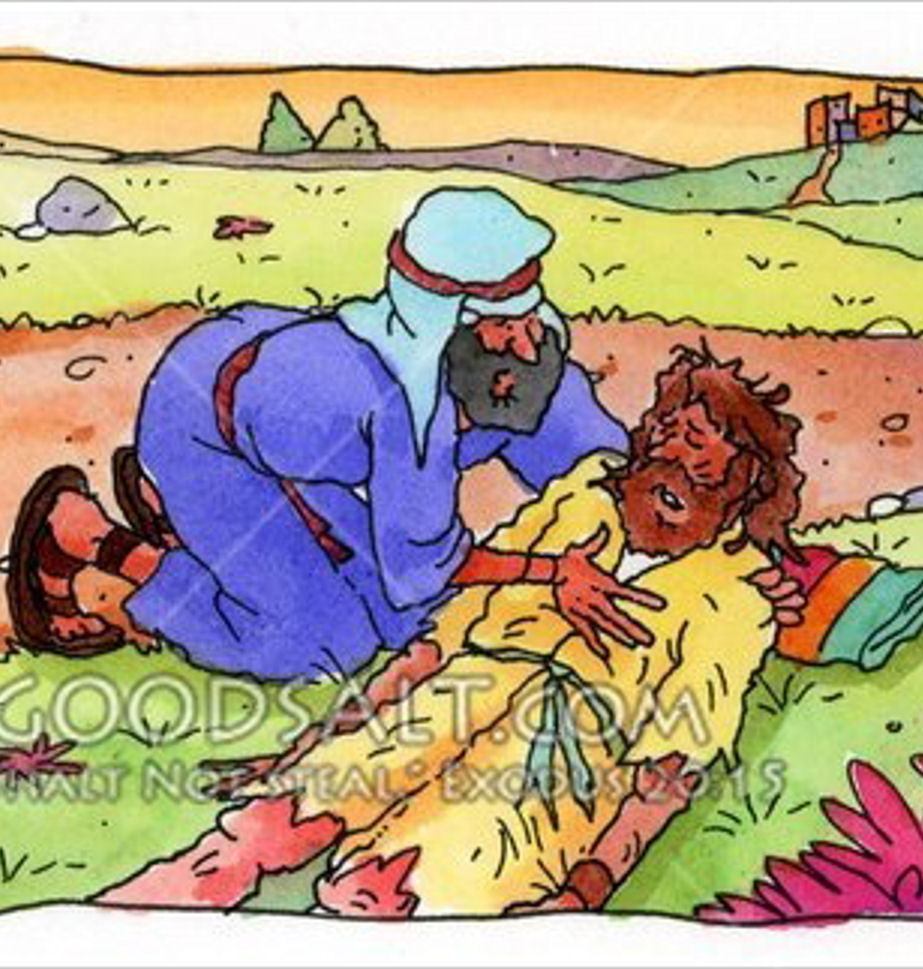
Most will recognize this title as one of the most famous admonitions of Jesus of Nazareth. But most of us don’t have much experience in fulfilling it. How can we turn this around?
-

Anyone who has spent any time in Israel knows that it is a land of hills, and therefore of constant elevation change from one location to another. From the cliffs overlooking the Rift Valley of the Dead Sea and Masada in the South, to Qumran, to the Central Highlands, to the Golan Heights and Mount Herman in the far north. (If you’ve been there you may have heard the saying: “Everything is uphill in Jerusalem”.) How did this topography influence the Biblical authors?
-
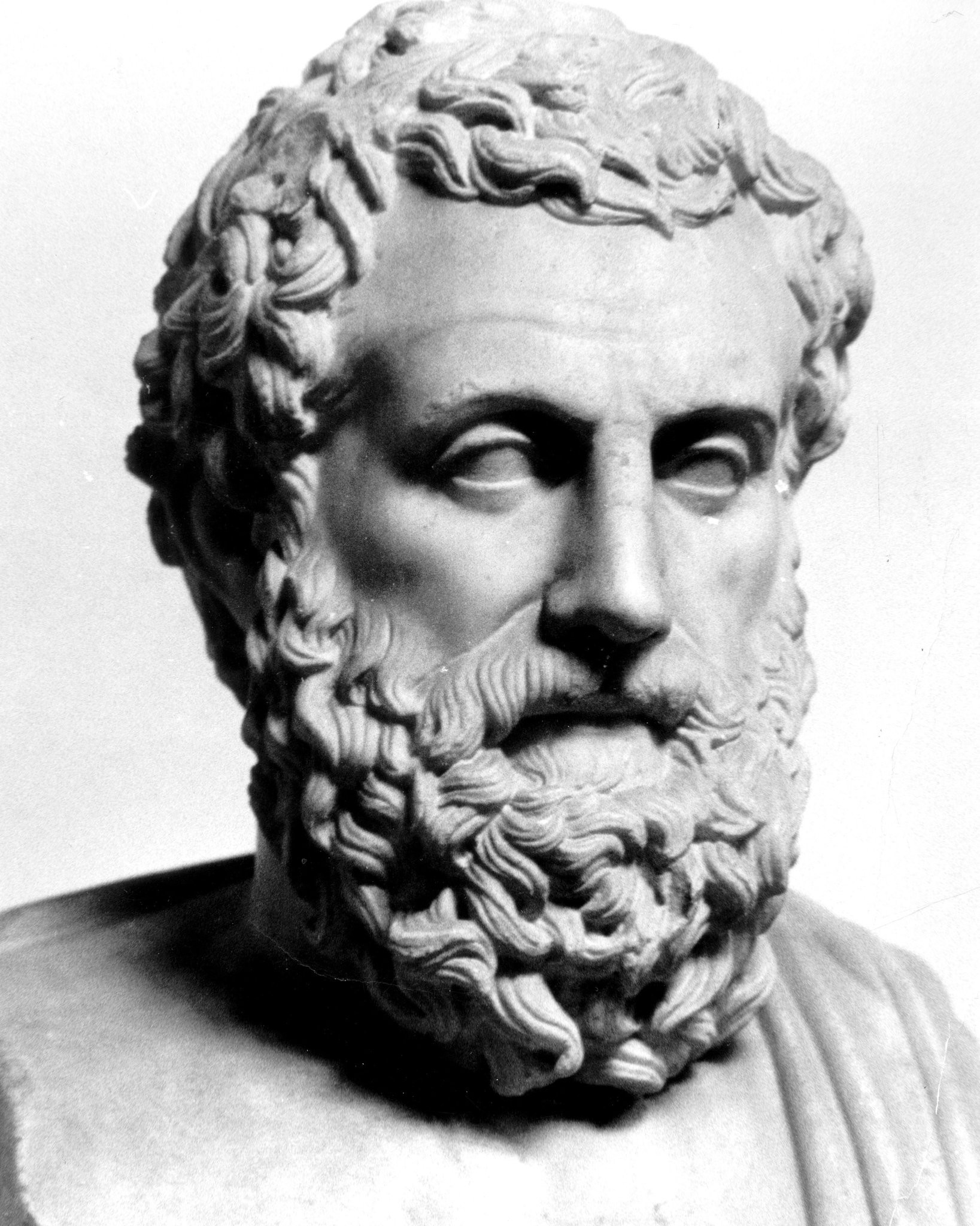
Our democratic institutions evolved out of those invented by the Greeks. The Greeks were intoxicated by the idea of rational speech – logos. Their principle was that logos was at the heart of the Greek-invention and revered culture of political discourse. And “discourse” only occurred when those involved shared in the same virtues and all sought after the same common good, setting aside their personal interests. To the Greeks, their edification came from striving together to achieve a common good for their citizens. To them, politics was the process of seeking the highest possible good for the people. Nothing could…
-

Calvinism defames and assaults the character of God. Here’s how.